







 ⭐ Popular
Demon Slayer: Kimetsu no Yaiba Infinity Castle
AnimationJul 18, 2025
Demon Slayer: Kimetsu no Yaiba Infinity Castle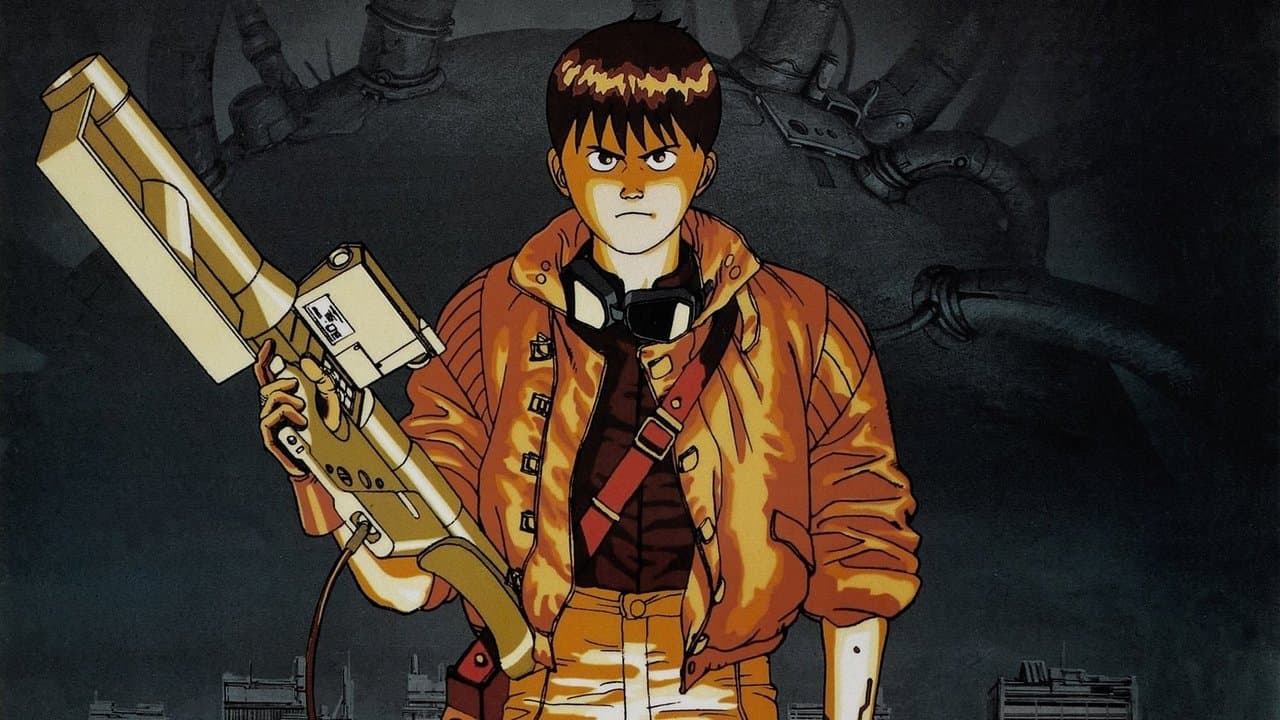
Details
Rating · Quality score from voters
Popularity · Search interest now
Based on TMDb activity
Links may earn Incoming a commission at no extra cost to you. Streaming data via JustWatch — may not reflect today's catalog.
Incoming Editorial TeamVerified
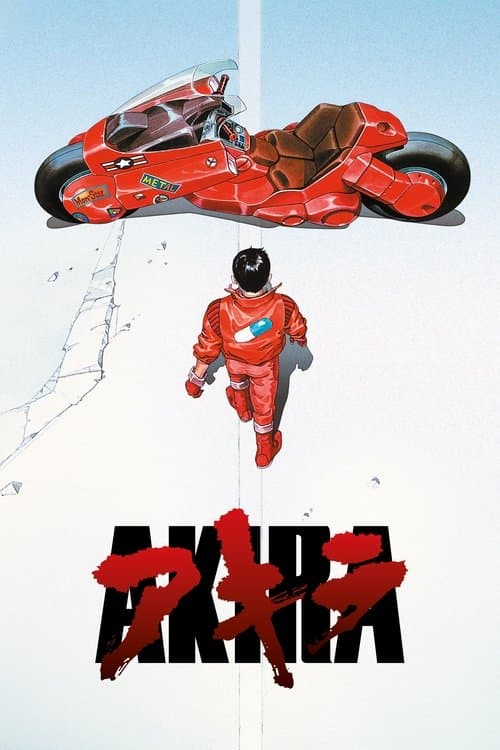
Akira is a Japanese animated science-fiction action film produced by MBS, releasing on June 10, 1988. Set in a dystopian Neo-Tokyo, it follows a biker gang member transformed into a dangerous psychic force and the efforts to stop him.
Akira releases on June 10, 1988. It is available to stream on Crunchyroll and the Crunchyroll Amazon Channel, and available for digital rental on Amazon Video, Apple TV Store, and Fandango At Home.
Akira is available to stream on Crunchyroll and the Crunchyroll Amazon Channel. It can also be rented digitally through Amazon Video, Apple TV Store, and Fandango At Home.
Akira was produced by MBS. It is a Japanese-language animated production.
Akira is an animated science-fiction action film. It is set in a dystopian future city and centers on psychic experimentation, government secrecy, and urban gang conflict.
A secret military project transforms a biker gang member into a destructive psychic force threatening Neo-Tokyo. Two teenagers and a group of psychics work to stop him before the situation spirals beyond control.
Akira, the animated science-fiction film produced by MBS, Sumitomo Corporation, and Toho, arrives in theaters on June 10, 1988. It is a Japanese-language production, and it enters release carrying the kind of source material—Katsuhiko Otomo's serialized manga of the same name—that had already cultivated a readership before a single frame of the film was screened. What the film promises, on the basis of what is known about it, is a story set in a place called Neo-Tokyo, where a covert military project goes badly wrong and a member of a motorcycle gang is transformed into something the city cannot contain: a psychic force of enormous and destabilizing power. Two teenagers and a band of psychics become the counterweight to that force. Whether they are adequate to it is, of course, the question the film will answer.
The genre coordinates here are animation, science-fiction, and action, a combination that in 1988 occupies a particular and contested space. Animated features in Japan have a history of treating adult themes with an ambition that their Western counterparts have rarely pursued. The science-fiction action film, meanwhile, is not a mode that animation has consistently been trusted to carry at feature length outside of that context. Akira arrives into both of those tensions simultaneously. It is not a children's film by any description suggested by its premise—secret military experiments, psychic catastrophe, a city threatened from within by forces its institutions cannot manage—and it does not appear to be presenting itself as one.
The production background that is publicly attached to the film centers on the scale of the undertaking. Adapting a sprawling manga into a single theatrical feature requires compression and selection; the source material's scope presumably exceeds what any two-hour film could accommodate. What is notable is that Otomo himself was involved in the adaptation, meaning the person responsible for creating Neo-Tokyo and its inhabitants was also making decisions about what to include and what to leave on the page. That kind of authorial continuity is not guaranteed in adaptations, and its presence here raises the question of whether the film represents an extension of the manga's vision or a deliberate reinterpretation of it for a different medium and a different audience experience.
The military project at the center of the story is described only in the broadest terms in available information: it is secret, it involves psychic capability of some kind, and its consequences are severe enough to threaten an entire city. The biker at the center of the transformation—the one who becomes "a rampaging psychic psychopath," in the language of the source description—presumably begins the film as an ordinary figure in Neo-Tokyo's street-level world, which would make the scale of what happens to him a specific kind of horror: not a monster introduced from outside but a person remade by something institutional and concealed. The two teenagers and the psychics who oppose him are presented as the film's other pole, but the nature of their counteraction—whether it is physical, psychological, political, or something else entirely—remains unstated in what is currently available.
Neo-Tokyo as a setting carries implicit meaning that the film will either develop or take for granted. The prefix signals that this is not simply Tokyo; it is a city rebuilt or reconstituted after something, a place whose very name encodes a history of destruction and reconstitution. Science-fiction cities of this type tend to be sites where institutional failure and technological overreach converge, where the gap between official order and street-level reality is wide enough for catastrophe to develop unnoticed until it cannot be contained. Whether Akira uses its setting to pursue that kind of critique or treats Neo-Tokyo primarily as backdrop is one of the genuinely open questions about the film.
The action genre framing suggests kinetic sequences—the motorcycle gangs of the premise imply chase and confrontation—but science-fiction of this type, particularly when psychic power is central, often locates its most significant action in less physical registers. The clash between a psychic individual of uncontrolled power and a group attempting to stop him is a dramatic situation that can be resolved through force or through something more ambiguous. Animation as a medium can render psychic power visually in ways that live action of this era typically cannot, which gives the film a formal reason to lean into those sequences rather than underplay them.
The film holds an 8.0 on IMDb across more than 223,000 votes and a 91 on Rotten Tomatoes, figures that, even accounting for the self-selecting nature of who rates films on such platforms, suggest a work that has generated sustained engagement across decades. A Metascore of 68 indicates a more measured critical response at some point in its history, a gap that often reflects the difficulty critics have placing work that doesn't fit established expectations at the time of evaluation.
For anyone with an existing interest in Japanese animation, in science-fiction that takes its premises seriously, or in the history of how animated film has moved between national contexts and audience expectations, Akira is the obvious thing to seek out. Those approaching it without that background will find a film whose premise—military secrecy, psychic catastrophe, urban survival—functions as a reasonably self-contained entry point, even if the deeper architecture of the world it builds is drawn from a source that extends far beyond the film's running time.
⭐ PopularDemon Slayer: Kimetsu no Yaiba Infinity Castle
AnimationJul 18, 2025
Demon Slayer: Kimetsu no Yaiba Infinity Castle 📈 Trending
Disclosure Day
Science FictionJun 10, 2026
Disclosure Day 📈 Trending
Backrooms
HorrorMay 27, 2026
Backrooms
Spider-Man: Brand New Day
Science FictionJul 29, 2026
Spider-Man: Brand New Day 📈 Trending
Supergirl
ActionJun 24, 2026
Supergirl 📈 Trending
Hope
Science FictionJul 15, 2026
HopeSign in to join the conversation.