Details
- Language
- Japanese
- Studio
- ufotable
- Series
- Demon Slayer: Kimetsu no Yaiba
- TMDb Rating
- 7.7 (855 votes)
- Directed by
- Haruo Sotozaki
- Written by
- Hikaru Kondô, Koyoharu Gotouge
Rating · Quality score from voters
TMDb
7.7/10
IMDb
8.3/10
Rotten Tomatoes
98%
Metacritic
67/100
Popularity · Search interest now
Popular
107.0
Based on TMDb activity
Starring








Where to watch
Links may earn Incoming a commission at no extra cost to you. Streaming data via JustWatch — may not reflect today's catalog.
Incoming Editorial TeamVerified
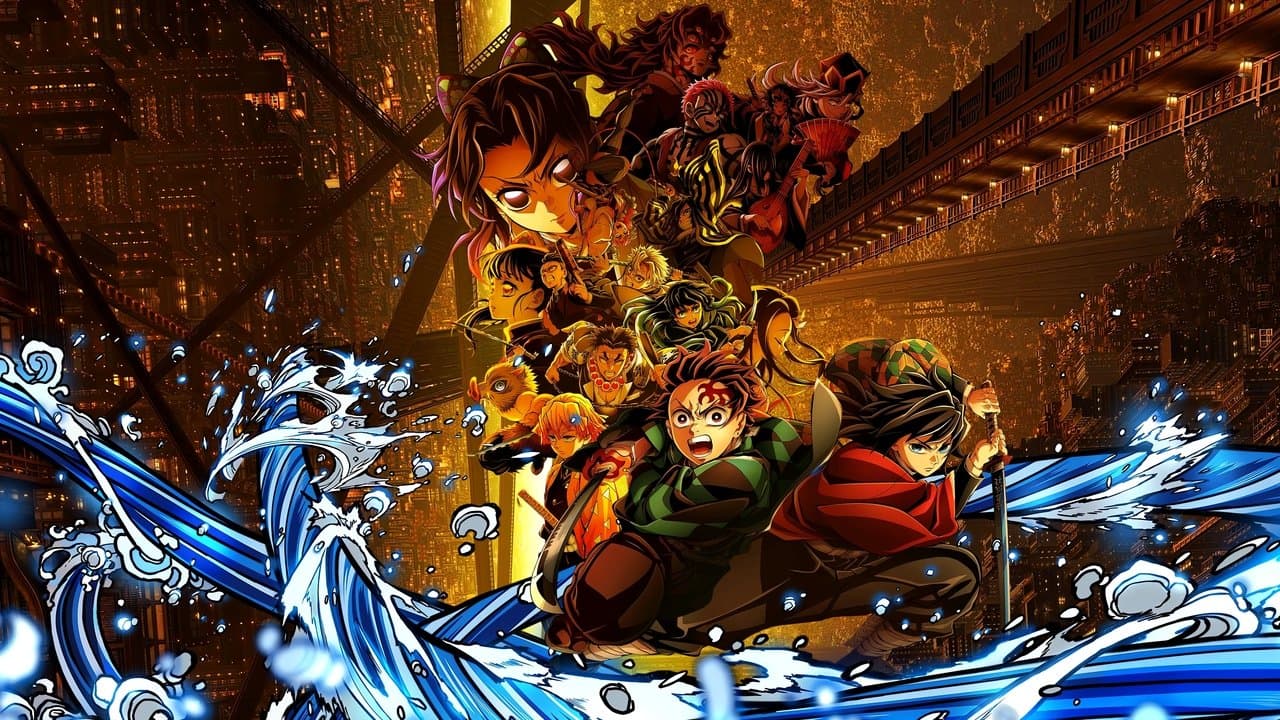
The Demon Slayer Corps are drawn into the Infinity Castle, where Tanjiro, Nezuko, and the Hashira face terrifying Upper Rank demons in a desperate fight as the final battle against Muzan Kibutsuji begins.
Trailer
Gallery (20)
About this release
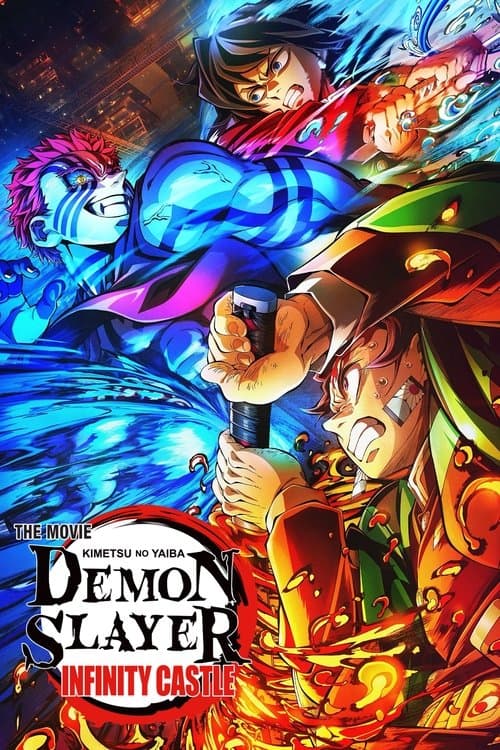
The theatrical film Demon Slayer: Kimetsu no Yaiba Infinity Castle — subtitled in Japanese as 劇場版「鬼滅の刃」無限城編 第一章 猗窩座再来, which translates roughly to "Infinity Castle Arc, Chapter One: Return of Akaza" — opens in theaters on July 18, 2025. The film is produced by ufotable, with Aniplex and Shueisha attached as co-producers, continuing the same studio arrangement that has driven the franchise since the original television series.
The Demon Slayer franchise, based on Koyoharu Gotouge's manga published through Shueisha, has become one of the more commercially dominant properties in contemporary anime. The television series ran across multiple seasons, each adapting a discrete arc from the source material, and the pattern has included one prior theatrical release: Demon Slayer the Movie: Mugen Train, which adapted the Mugen Train arc and, upon its 2020 Japanese release and subsequent international rollout, broke box-office records in Japan before becoming a significant theatrical event worldwide. That film occupied an unusual structural position — it served simultaneously as a bridge between the first and second television seasons and as a standalone cinematic event. Infinity Castle appears to occupy a similar but arguably larger position, given that the Infinity Castle arc represents the manga's climactic sequence. This is, by the internal logic of the story, the endgame.
The subtitle's reference to Akaza — "猗窩座再来," Return of Akaza — is notable. Akaza is an Upper Rank Three demon, one of the most powerful demons beneath Muzan Kibutsuji himself, and his prior appearance in Mugen Train served as that film's devastating final act. His inclusion in the chapter subtitle signals that the confrontation left unresolved in that film, or at least the weight of what he represents, remains central to this new entry. The broader setup positions Tanjiro Kamado, his demon-transformed sister Nezuko, and the Hashira — the nine highest-ranking swordsmen of the Demon Slayer Corps — inside the Infinity Castle, a labyrinthine supernatural structure associated with the demon Doma and, more significantly, with Muzan Kibutsuji's inner circle. The Upper Rank demons gathered there represent the most formidable opponents the Corps has encountered across the entire series. The description frames this as the beginning of the final battle against Muzan, which in narrative terms means this first chapter is likely to end before that confrontation resolves — a structural choice that positions the film as the opening of a multi-part theatrical conclusion rather than a self-contained story.
ufotable's involvement is the most concrete production detail available, and it carries real weight in this context. The studio has been responsible for the series' visual identity throughout, and its approach to action choreography — particularly the rendering of the Breathing Techniques and their elemental visual metaphors — has been one of the more discussed aspects of the franchise's reception. Theatrical budgets and production timelines typically allow for more elaborate sequences than episodic television, as was evident in Mugen Train and even more so in certain climactic television episodes that were produced and presented with feature-film-scale ambition. What ufotable will do with the Infinity Castle's spatial disorientation — staircases that lead nowhere, rooms that invert, architecture designed to disorient — as an animation challenge is a question the available material doesn't answer directly, but the setting itself presents formal opportunities that a studio of that technical orientation would be expected to approach deliberately.
Several things remain genuinely open. The film is described as the first chapter of the Infinity Castle arc, but the total number of planned films is not confirmed in the available data. Whether this represents a two-part or three-part theatrical release shapes how much narrative ground this first chapter is expected to cover, and consequently how it will function as a viewing experience for audiences who know the source material and those who don't. The Hashira ensemble — nine characters with distinct fighting styles, histories, and relationships to Tanjiro — each have their own confrontations in this arc in the manga, which raises a structural question about which of those fights this chapter prioritizes and which it defers. The subtitle's emphasis on Akaza suggests one answer, but the ensemble scope of the arc is broad enough that the chapter's actual shape is not obvious from the title alone.
There is also the question of subtitling and dubbing logistics for international release. Mugen Train had a staggered global rollout that created a months-long gap between Japanese theatrical release and availability in other markets. Whether Infinity Castle follows a similar pattern, or whether the franchise's expanded international profile pushes toward a closer simultaneous release window, isn't addressed in the available information. For viewers outside Japan, July 18 may or may not be the relevant date.
The audience for this film is not particularly ambiguous. Viewers who followed the television series through its Swordsmith Village and Hashira Training arcs have been waiting for precisely this material. The Infinity Castle arc is the portion of the source manga that generated the most discussion as it was originally published, and the decision to bring it to theaters rather than adapt it as a television season signals a degree of scale-consciousness on the part of the producers that will register with that existing audience. For viewers less familiar with the franchise, the film is unlikely to function as an entry point — it arrives laden with character histories and relationships that the television series built over several years. What ufotable and the producing partners appear to be offering, at minimum, is a theatrical-scale rendering of the material that the series' existing audience has been tracking toward since Tanjiro first picked up a sword.
Comments
Sign in to join the conversation.
Loading…