







House of the Dragon
Sci-Fi & FantasyAmericanAug 21, 2022
House of the Dragon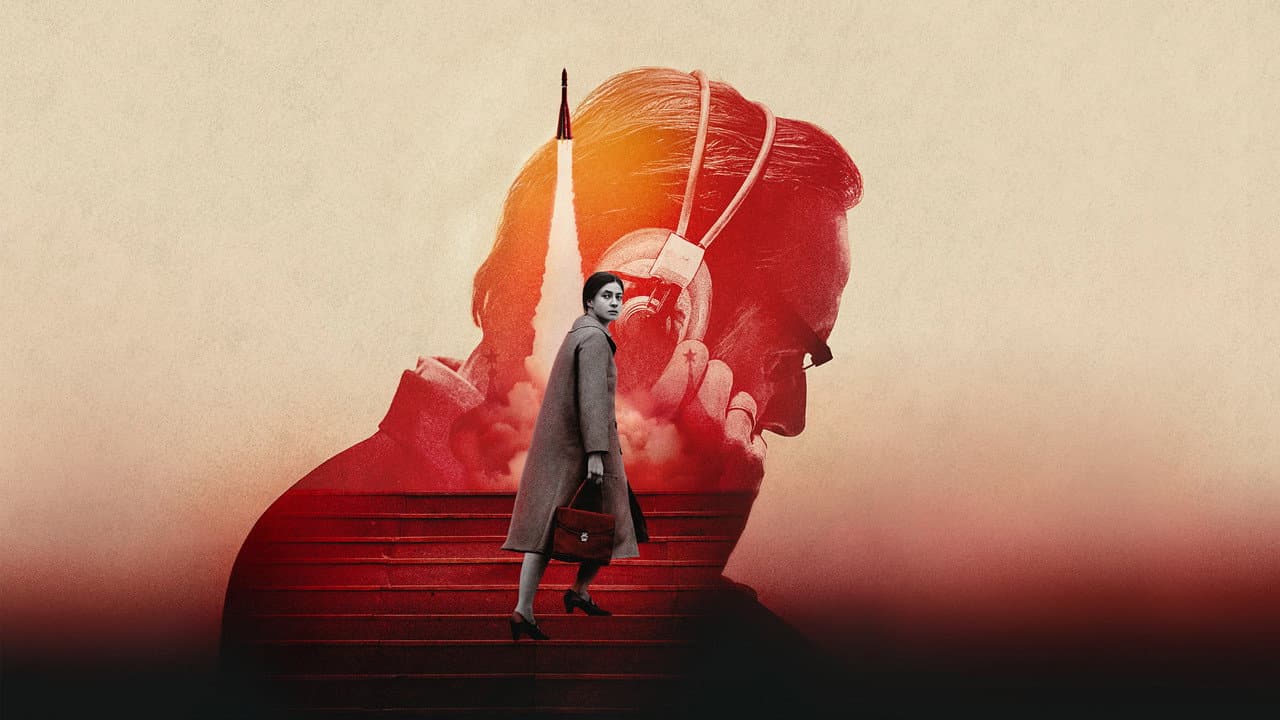
 Warm
Details
Rating · Quality score from voters
Popularity · Search interest now
Based on TMDb activity
Incoming Editorial TeamVerified
Step into a thrilling chapter inspired by For All Mankind. Same alt-history universe. Different perspective: the Soviet Union's. Go behind the Iron Curtain with the cosmonauts, engineers, and intelligence officers who risked it all in the race for the Moon.
On May 28, 2026, Sony Pictures Television and Tall Ship Productions will release Star City, an eight-episode drama set in the alternate-history universe established by For All Mankind. Where that series examined the American space program through a counterfactual lens — one in which the Soviet Union landed on the Moon first, keeping the Space Race alive well past its real-world endpoint — Star City shifts the point of view entirely across the Iron Curtain, following the cosmonauts, engineers, and intelligence officers who prosecuted the Soviet side of that contest.
The relationship between the two series is worth pausing on. For All Mankind, which premiered in 2019, built its alternate history on a single divergence point and then let decades of consequences unspool across multiple seasons. It became one of the more ambitious science-fiction dramas of recent years, using the Space Race as an engine for exploring Cold War ideology, institutional pressure, and personal sacrifice. What it largely did not do — at least from its American vantage point — was render the Soviet program as anything more than a formidable, somewhat opaque rival. Star City is, in that sense, a correction of perspective: a companion series that takes the opposite seat at the table.
The show's title refers to the closed military town outside Moscow formally known as Zvyozdny Gorodok, the real-world training and administrative hub for Soviet cosmonauts. The choice of name signals something about the series' intentions — this is not a story told from the Kremlin or from some abstract sense of Soviet ideology, but from the specific, pressurized world of the people who actually lived and worked inside the program. The source description emphasizes cosmonauts, engineers, and intelligence officers as the central perspectives, suggesting a story that is as much about institutional machinery and espionage as it is about the experience of spaceflight itself.
The involvement of Tall Ship Productions connects the project to the creative infrastructure behind For All Mankind, which that company produced in partnership with Apple TV+. Star City, however, is being released under Sony Pictures Television rather than Apple, and the metadata does not specify a distribution platform for this new series. That gap is notable. Viewers who followed For All Mankind through Apple TV+ will want to know where Star City actually lands — whether it arrives on a streaming service, through broadcast, or some other arrangement — and that information is not yet public.
The language question is similarly interesting. The series is listed as English-language, originating in the United States. That is a meaningful creative choice. A drama about Soviet scientists and spies could reasonably have been produced in Russian, or at minimum in a bilingual format, and the decision to tell it primarily in English will shape how audiences experience the characters' relationship to their own world. It also has precedents in the genre: The Americans conducted its entire run in English while depicting Soviet intelligence operatives living undercover in the United States. Whether Star City adopts a similar convention — or whether it incorporates Russian-language elements in some structured way — is one of the more substantive questions the available information leaves open.
Eight episodes is a compact order for a drama with this much potential scope. For All Mankind typically runs ten episodes per season, and its story has had the room to accumulate detail across years of fictional time. A first season of eight episodes will need to establish an entirely new ensemble, build out a version of the Soviet program as it exists in this alternate timeline, and do so in a way that is accessible to viewers who may not have watched For All Mankind while still being rewarding to those who have. The source description frames Star City as "inspired by" the earlier series and set in the "same alt-history universe," which leaves open how directly the narratives will intersect — whether characters or events from For All Mankind will appear in recognizable form, or whether the connection is primarily thematic and cosmological.
There is also the question of how the show handles the specific historical texture of the Soviet space program. The real Zvyozdny Gorodok was a world of genuine drama: rivalries between chief designers, political interference from above, the deaths of Komarov and others, the systematic suppression of failures from public view. In an alternate history where the Soviets have already achieved a major triumph — landing on the Moon before the Americans — the internal pressures of that world would be different but not necessarily less intense. Success generates its own bureaucratic and ideological complications, and the source description's emphasis on people who "risked it all" suggests the series intends to take those complications seriously.
Viewers who watched For All Mankind and found themselves curious about the Soviet characters glimpsed at the margins of that story are the most obvious audience for Star City. So are viewers drawn to Cold War drama more broadly — the kind of audience that sustained The Americans or found its way to films dealing with the psychological costs of ideological competition. Science-fiction viewers interested in alternate history as a genre rather than in space opera spectacle will likely find the premise congenial. Whether Star City satisfies that audience across eight episodes depends on creative execution that no amount of premise-reading can predict, but the structural conditions — an established universe, a deliberately underexplored perspective, a focused episode count — at least suggest a production that knows what it is trying to do.
House of the Dragon
Sci-Fi & FantasyAmericanAug 21, 2022
House of the Dragon
Ashes to Crown
DramaChineseJun 2, 2026
Ashes to Crown
For All Mankind
DramaAmericanNov 1, 2019
For All Mankind ⭐ Popular
Outlander
DramaAmericanAug 9, 2014
Outlander
Perfect Crown
ComedyKoreanApr 10, 2026
Perfect Crown
Daredevil: Born Again
DramaAmericanMar 4, 2025
Daredevil: Born AgainSign in to join the conversation.