Starring






Incoming Editorial TeamVerified
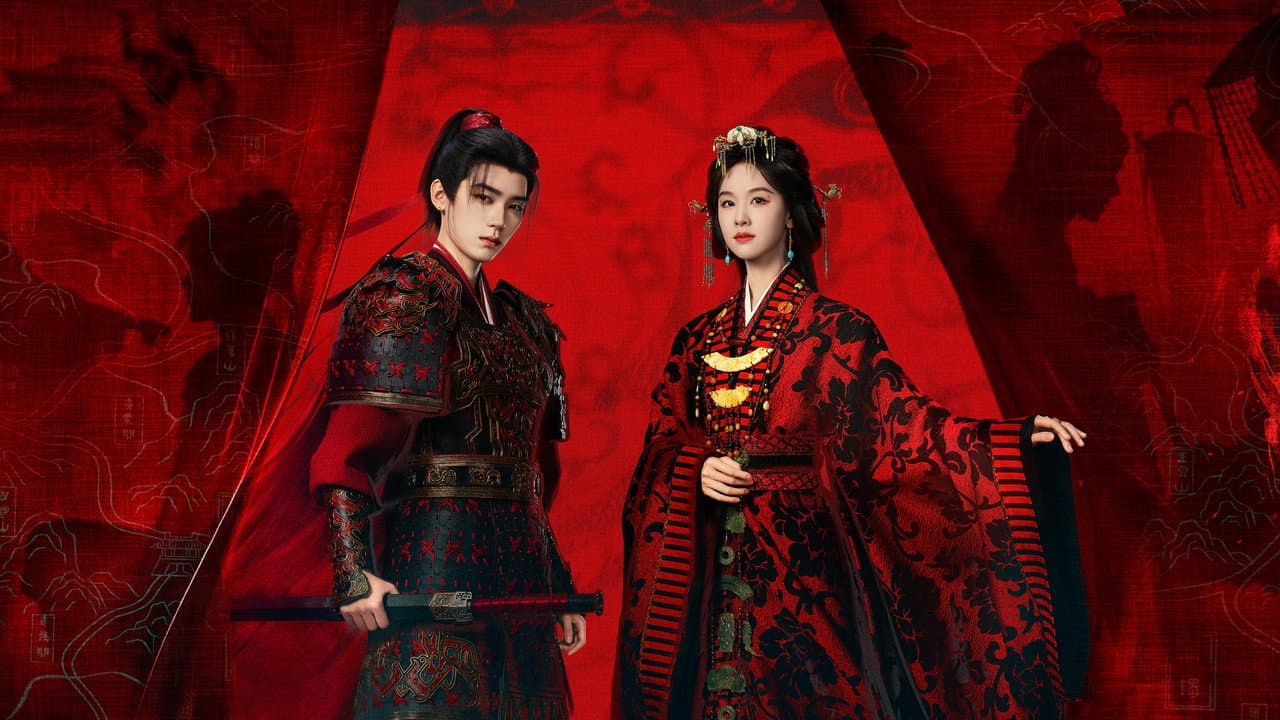
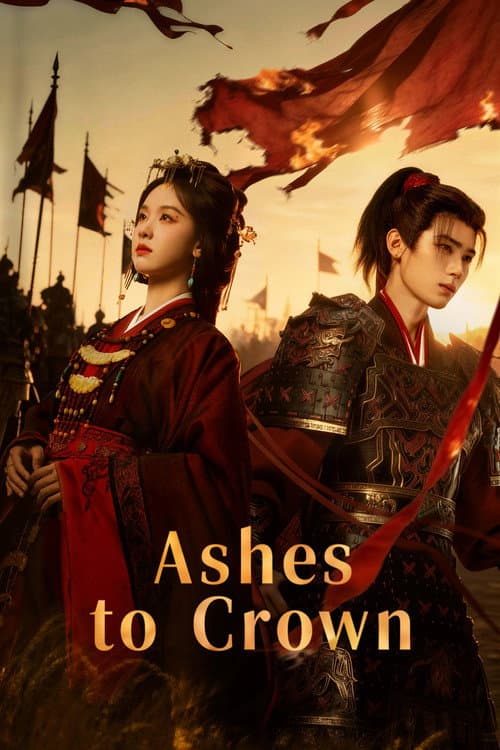
Ashes to Crown (翘楚) is a Chinese-language historical drama series following Chu Zhao, a general's daughter who resists being used as a political pawn and maneuvers to secure the imperial throne for a young prince. The series is scheduled to premiere on June 2, 2026.
Trailer
Gallery (11)
Episodes
✓ Previously aired
Key features
- ·Chinese-language historical drama series
- ·Premieres June 2, 2026
- ·Original Chinese title: 翘楚
- ·Imperial court political intrigue storyline
- ·Military campaign storyline
- ·Female-led narrative
FAQ
When does Ashes to Crown release?
Ashes to Crown is scheduled to premiere on June 2, 2026.
What is the Chinese title of Ashes to Crown?
The original Chinese title is 翘楚 (Qiáochǔ).
What is Ashes to Crown about?
The series follows Chu Zhao, a general's daughter, who resists being used as a pawn in a power struggle, helps a young prince secure the imperial throne, and then works to protect the State of Chu from internal strife and foreign threats.
Who are the main characters in Ashes to Crown?
The central characters are Chu Zhao, a general's daughter, and Xie Yanlai, her ally, along with the young prince they work to place on the throne and the antagonist Xiao Xun.
What language is Ashes to Crown in?
The series is in Chinese (Mandarin).
About this release
A Chinese historical-fantasy drama titled Ashes to Crown — known in its original language as 翘楚 — is set to release on June 2, 2026, produced by Youku and Think Hot Studio. The series runs to 24 episodes across a single season, following Chu Zhao, the daughter of a general, as she resists being reduced to a political instrument in another man's bid for imperial power.
The premise is anchored in a recognizable mode within Chinese television: the court intrigue drama, a genre with deep roots in the country's streaming landscape and one that has generated significant international attention over the past decade. Stories centered on women navigating or outright defying the rigid structures of dynastic power have become a distinct and durable subgenre — neither pure romance nor straightforward action, but something suspended between strategic maneuvering and personal survival. Ashes to Crown appears to position itself within that tradition, though with what degree of fidelity to or departure from its conventions remains to be seen.
What the available material does establish is a narrative that moves in two distinct phases. The first concerns Chu Zhao's immediate crisis: faced with being used as a pawn by Xiao Xun, a figure whose ambitions run toward seizing power rather than serving the throne, she refuses the role assigned to her. With the help of Xie Yanlai, she escorts the emperor's grandson to the imperial court and, through a confrontation there, helps secure the young prince's claim to the throne, effectively cutting off Xiao Xun's path. This first movement is tightly bounded — a single crisis with a clear resolution. The second phase opens outward. A new emperor does not bring stability; it brings a different set of pressures, both internal to the court and external, from foreign threats pressing on the State of Chu. Chu Zhao's role shifts from fugitive and protector to something more sustained: a figure operating within the court's political currents while also leading troops in the field. The arc, as described, ends with her having rewritten her own fate and, more broadly, spared the people of Chu from the worst consequences of war.
The pairing of Xie Yanlai with Chu Zhao across both phases suggests a central relationship that evolves as the stakes change — from survival alliance to something operating on the larger canvas of statecraft and military command. Whether that relationship develops romantically, remains strategic, or complicates into something harder to categorize is one of the more significant open questions. The genre tradition certainly accommodates all three possibilities, and sometimes all three at once.
Think Hot Studio is credited alongside Youku as a producing entity, though the available information does not specify writers, directors, or principal cast members by name. That absence is notable for a 24-episode series with enough production backing to carry a formal English-language title alongside its Chinese one. The show's genre metadata classifies it under both drama and science fiction/fantasy — a pairing that, in the context of a Chinese historical setting, likely signals the presence of wuxia or xianxia elements rather than anything approaching science fiction in the Western sense. Fantastical combat, possibly cultivation or supernatural martial arts, may be woven into what is otherwise a court-politics narrative. The description does not make this explicit, and the degree to which the fantasy register shapes the storytelling versus serving as atmospheric texture is genuinely unclear from what has been shared.
The international title, Ashes to Crown, does a certain amount of thematic work on its own — tracing a trajectory from degradation or destruction to authority — and maps reasonably well onto the described arc. The Chinese title, 翘楚, carries a different connotation: the phrase traditionally denotes someone who stands out above others, an outstanding figure or exemplar. That the two titles emphasize different aspects of the same character — one her journey, the other her eventual distinction — suggests at least some care in how the show is being positioned for different audiences.
The 24-episode format places it solidly within the mid-length range for Chinese streaming dramas, which frequently run longer. A contained season of that length allows for the two-phase narrative structure to breathe without the kind of padding that longer runs sometimes invite. Whether the pacing across those 24 episodes is disciplined is something only the episodes themselves will answer.
Viewers already drawn to Chinese historical dramas — particularly those featuring politically active female protagonists who function as military and strategic figures rather than solely romantic ones — will find the premise directly in their established interests. The Youku platform has a defined audience for this kind of production domestically, and the formal English-language title signals some expectation of reach beyond mainland Chinese viewers, whether through the platform's international arm or through the subtitle and streaming ecosystem that has carried similar shows to wider audiences. Those less familiar with the genre but curious about court-politics narratives with an action dimension have a reasonably accessible entry point in the described setup: a woman, a succession crisis, a new and unstable reign, and the work of making something durable out of all of it.
Comments
Sign in to join the conversation.
Loading…