 ⬆️ Rising
Star Wars: The Mandalorian and Grogu
ActionMay 20, 2026
Star Wars: The Mandalorian and Grogu
 Cool
Details
Popularity · Search interest now
Based on TMDb activity
Not currently available for streaming or purchase.
Links may earn Incoming a commission at no extra cost to you.
Incoming Editorial TeamVerified
United Europe, the Baltic Sea coast. It is the Day of Thanksgiving, the most important national holiday since the denazification of the late 1960s, carried out almost two decades after the end of World War II. A war won by the Nazis. Europeans denounced the crimes of Nazism and took on themselves the blames of the victors.
A Polish-language alternate-history drama arrives in cinemas on April 25, 2026, under the title Verily Hitler Is Dead — rendered in its original Polish as Zaprawdę Hitler umarł — produced by Studio Munka, CANAL+ Polska, and Orka. The film posits a Europe that Nazi Germany won, and then, decades later, chose to reckon with.
The premise is disorienting in the specific way that the best alternate-history conceits tend to be: not a world of jackboots and ongoing terror, but something stranger and arguably more unsettling — a continent that has already passed through its own version of denazification, not as a condition imposed by Allied victors but as an act of collective self-examination undertaken by the victors themselves. The film is set on the Day of Thanksgiving, described as the most important national holiday in a United Europe, commemorating the denazification that swept the continent in the late 1960s, nearly two decades after the conclusion of a war the Nazis won. The geography is the Baltic Sea coast. The occasion is ceremonial, nationalistic in the new sense, freighted with the particular weight of a society that has formally acknowledged atrocity without having been forced to do so by an external power.
That inversion is the conceptual engine of the film. In our own history, denazification was a process administered by the occupying Allied forces — American, British, French, and Soviet — and its efficacy has been debated by historians ever since, precisely because it was coerced rather than voluntary. The world of Verily Hitler Is Dead removes that external pressure entirely. Europeans, in this timeline, denounced the crimes of Nazism of their own accord and, the premise specifies, took on themselves the blame that in our world was distributed among the defeated. What that self-assumption of guilt looks like in practice — institutionally, psychologically, at the level of individual lives on a holiday that commemorates it — is the film's apparent subject.
This is a mode of science fiction with a recognizable European literary lineage. The genre designation here is drama and science fiction, and the pairing is apt: the film appears less interested in the technological or geopolitical mechanics of Nazi victory than in the moral and emotional texture of the society that survived it and tried, belatedly, to account for itself. That kind of speculative fiction, which uses a counterfactual premise to interrogate real historical and ethical questions about guilt, memory, and national identity, has a long tradition in European literature and film, though it remains relatively rare as a mainstream cinematic project.
The Polish origin of the film adds a layer of significance that is impossible to ignore. Poland, in actual history, was among the countries most devastated by the Nazi occupation — it lost roughly a fifth of its total population, including nearly all of its Jewish population, through execution, forced labor, and the systematic machinery of the Holocaust. A Polish production imagining a Europe in which the Nazi project succeeded and then subsequently denounced itself, with Europeans absorbing the moral liability of victors, is not a neutral artistic choice. The film is produced with the institutional support of CANAL+ Polska and Studio Munka, which is affiliated with the Polish Film Institute and has been associated with emerging and mid-career Polish filmmakers. Orka rounds out the production trio. The original language is Polish, which positions the film within a national cinema that has, across decades, produced some of the most searching work about war, occupation, and survival.
What remains genuinely open about the film is considerable. The creative team — director, screenwriter, cast — is not specified in the available materials, which makes it difficult to place the project within any particular filmmaker's body of work or aesthetic tradition. Whether the Day of Thanksgiving functions as a backdrop for an intimate personal story or whether the film takes a more panoramic, sociological approach is not clear. The Baltic Sea coast setting suggests a specific regional atmosphere — northern, coastal, seasonal — but how that geography serves the narrative is an open question. Equally unclear is the film's tonal register: alternate-history films can range from the coldly procedural to the overtly satirical, and the title itself — Verily Hitler Is Dead, with its quasi-biblical solemnity — suggests a degree of irony or ceremony that could be played in any number of ways. The subtitle and the premise together imply that Hitler's death is, within this world, a historical fact treated with the gravity of scripture, the founding moment around which this invented holiday and this invented society organize themselves. Whether the film interrogates that solemnity or inhabits it is among the things the available information does not resolve.
The April 2026 release positions the film in the spring festival corridor that Polish cinema has used effectively in recent years to reach both domestic audiences and international attention at European festivals.
Those most likely to seek out Verily Hitler Is Dead will include audiences already drawn to counterfactual European history on screen, viewers with an interest in Polish cinema and its ongoing engagement with the memory of the Second World War, and anyone curious about how a film conceived within one of the war's most traumatized national traditions reimagines a Europe that never experienced defeat — and what that Europe's moral vocabulary might look like when it finally tries to speak about what it did.
⬆️ RisingStar Wars: The Mandalorian and Grogu
ActionMay 20, 2026
Star Wars: The Mandalorian and Grogu
Spider-Man: Brand New Day
Science FictionJul 28, 2026
Spider-Man: Brand New Day 🔥 Hot
Peddi
ActionJun 3, 2026
Peddi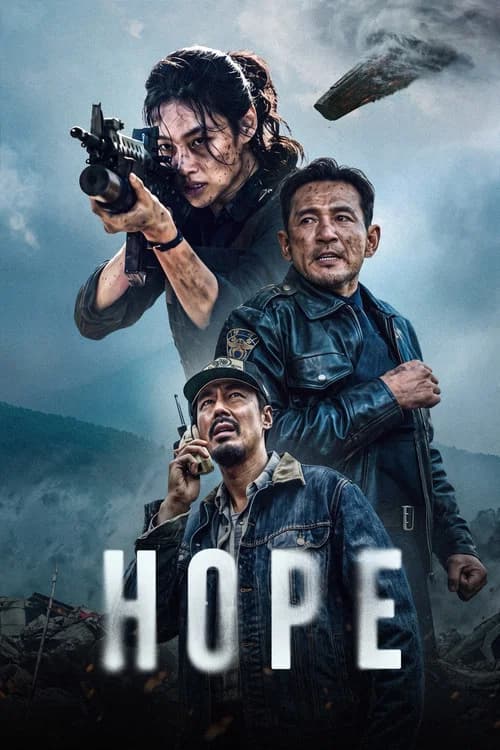 📈 Trending
Hope
Science FictionJul 15, 2026
Hope 📈 Trending
Supergirl
ActionJun 24, 2026
Supergirl 📈 Trending
Masters of the Universe
ActionJun 3, 2026
Masters of the UniverseSign in to join the conversation.