









The Shawshank Redemption
DramaSep 23, 1994
The Shawshank Redemption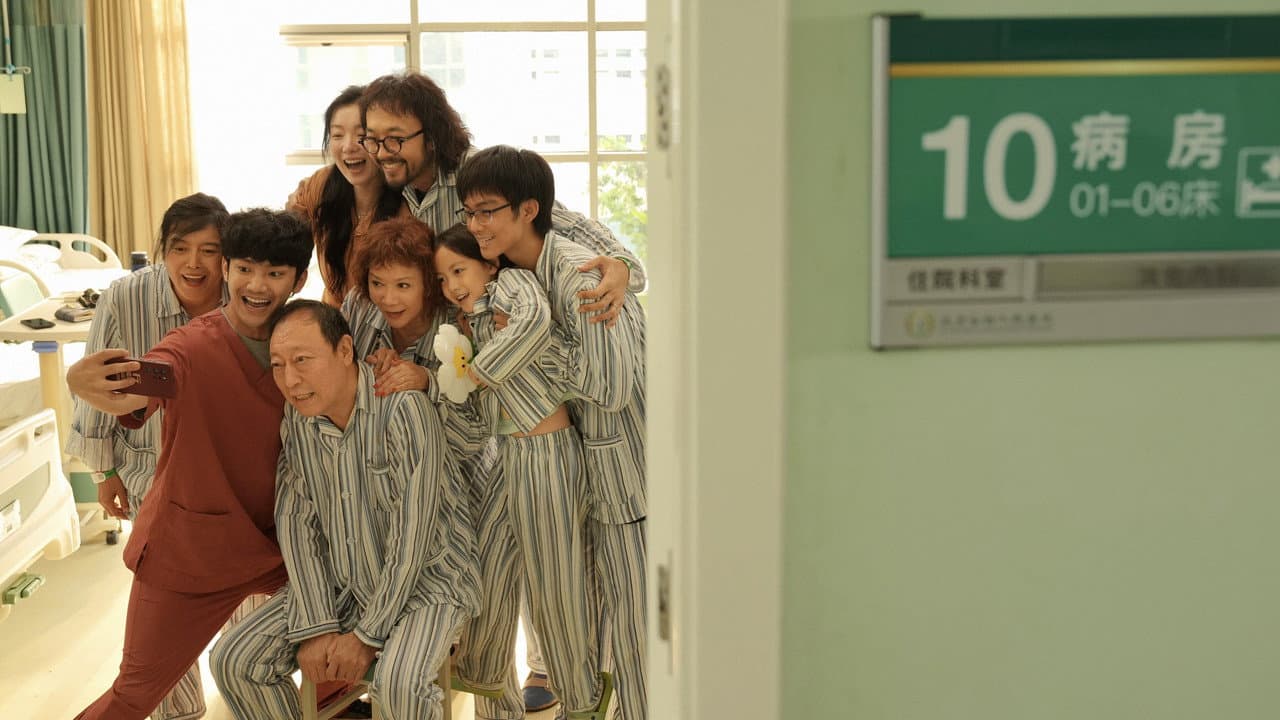
Details
Popularity · Search interest now
Based on TMDb activity
Incoming Editorial TeamVerified
Being Towards Death (original title: 10间敢死队) is a Chinese-language film releasing on April 25, 2026. The story follows Zhang Xiaobing, a suicidal man who takes a debt-paying caregiver position in a cancer ward and finds renewed purpose through connection with terminal patients.
Being Towards Death is scheduled for release on April 25, 2026.
The film follows Zhang Xiaobing, a suicidal and financially struggling man who takes a caregiver job in a cancer ward, where his interactions with terminal patients help him reclaim his will to live.
The original Chinese title is 10间敢死队.
The film is in Chinese (Mandarin).
A Chinese drama-comedy built around a suicidal man finding unexpected solidarity in a cancer ward may not sound like obvious commercial territory, but Being Towards Death — released in mainland China on April 25, 2026, and produced jointly by As One Production, Shanghai Maoyan Film, and Kunshan Zhouzhuang Shuangqiao Film — is precisely that. Its Chinese subtitle, 10间敢死队, translates roughly as "the ten-room suicide squad," a phrase that signals the film's intention to hold grief and dark humor in the same hand.
The premise centers on Zhang Xiaobing, a man whose circumstances have reduced him to a kind of negative space: bereaved, financially ruined, and actively suicidal. The specific nature of his bereavement and the debts that follow him are not elaborated in available materials, but those two facts — loss and economic desperation — together form the engine that pushes him into the story's central situation. He accepts a job as a paid caregiver in a cancer ward, a transaction that is nakedly transactional on his end: he needs the money, and the patients need someone to be present. What the film appears to trace is how that mercenary arrangement gradually becomes something else, a mutual reclamation of will between people who have, for different reasons, arrived at the edge of life.
That structural symmetry — the suicidal man and the terminally ill patients, each needing something the other can supply — sits within a tradition of Chinese dramedies that locate tenderness inside institutional settings: hospitals, care homes, bureaucratic offices. The genre combination listed for the film, drama and comedy, suggests that the ward scenes will not be staged as unrelenting elegy. The subtitle's bravado, "suicide squad," implies a collective black humor among the patients and perhaps Zhang Xiaobing himself, a gallows camaraderie that functions as its own form of life force. Films working in this register have to balance the risk of sentimentality against the risk of flippancy about serious illness and suicidality — it is a narrow corridor, and how Being Towards Death navigates it remains to be seen.
The film's Wikipedia entry carries the English title Death Saved My Life, which is perhaps a more direct statement of the film's apparent thesis than its formal title. Being Towards Death is a phrase with philosophical weight, associated with Heidegger's concept that a genuine confrontation with one's own mortality is what makes authentic living possible. Whether the film engages with that idea at any explicit level, or whether the title is more loosely evocative, is not something the available material clarifies. What the juxtaposition of the two titles does suggest is that the film is thinking about death from two angles simultaneously: as an abstraction that, properly encountered, restores the value of life, and as a literal, bodily fact that the patients in the ward are living with daily.
The production involves three entities whose contributions are not separately delineated in available materials. Shanghai Maoyan Film is the distribution and production arm of Maoyan Entertainment, one of the larger players in Chinese theatrical ticketing and film financing, which places the project within the mainstream of commercial Chinese cinema rather than on its independent margins. As One Production and the Kunshan-based Zhouzhuang Shuangqiao Film round out the producing credits, though their specific roles — whether in financing, production infrastructure, or regional co-production arrangements — have not been specified publicly at this stage. The Kunshan connection is geographically specific enough to be notable; Kunshan is a city in Jiangsu Province adjacent to Shanghai, and Zhouzhuang within it is known as a water-town heritage site, though whether any of the film is set there is not confirmed in the available data.
Several things remain genuinely open. The cast is not identified in the materials available, which means the film's performance anchors — who plays Zhang Xiaobing, who plays the ward patients — are unknown quantities for now. In Chinese dramedies of this kind, casting carries significant weight; the genre depends on an ability to modulate between registers without losing credibility in either. Similarly, the director's identity has not surfaced in the structured data, which makes it difficult to place the film within any particular filmmaking lineage or to anticipate its visual or tonal approach. The ten patients suggested by the subtitle — if there are indeed ten — represent a potentially unwieldy ensemble, and how much individual development each receives, or whether they function more as a collective organism, is an open question.
The film's release date, a Saturday in late April 2026, places it in China's spring theatrical window, outside the intensely competitive Lunar New Year and National Day holiday clusters. That scheduling suggests a mid-tier commercial ambition: not a tentpole release positioned for maximum holiday traffic, but a film expected to find its audience through word of mouth over a multi-week run. The current popularity metric is modest, indicating that the film is not yet generating wide anticipatory attention, which for a project whose cast and director are not yet publicly circulating is not surprising.
The audience most likely to seek out Being Towards Death would include viewers drawn to Chinese dramedies that treat mortality without euphemism, particularly those familiar with the strand of contemporary Chinese cinema that explores social vulnerability — caregiving labor, medical debt, the informal economies that form around illness — with a mixture of social observation and emotional directness. For viewers outside that context, the film's premise is legible enough on its own terms: a man who wants to die is put in proximity to people who are dying involuntarily, and something shifts for all of them. That is a setup that has functioned across many film cultures, and how Being Towards Death inflects it within its specific Chinese institutional and emotional landscape is what the April 2026 release will finally answer.
The Shawshank Redemption
DramaSep 23, 1994
The Shawshank Redemption 📈 Trending
Rosebush Pruning
ComedyApr 23, 2026
Rosebush Pruning 📈 Trending
The Super Mario Galaxy Movie
FamilyApr 1, 2026
The Super Mario Galaxy Movie 🔥 Hot
Minions & Monsters
AdventureJun 24, 2026
Minions & Monsters
The Shadow's Edge
ActionAug 16, 2025
The Shadow's Edge
The Devil Wears Prada 2
ComedyApr 29, 2026
The Devil Wears Prada 2Sign in to join the conversation.