Details
- Language
- English
- Studio
- Illumination
- Series
- The Super Mario
- TMDb Rating
- 8.2 (3.6k votes)
- Directed by
- Aaron Horvath, Michael Jelenic
- Written by
- Matthew Fogel
- Theme
- found family
- For
- kid friendly
Rating · Quality score from voters
TMDb
8.2/10
IMDb
6.3/10
Rotten Tomatoes
42%
Metacritic
37/100
Popularity · Search interest now
Popular
81.7
Based on TMDb activity
Hype score
leaderboard →71
/ 100↑ +1.6 in 24h
#89 globally#53 in movie
30-day trendWP 87 · YT 45
The Super Mario Galaxy Movie attracts substantial video game adaptation curiosity online.
Starring





Where to watch
Links may earn Incoming a commission at no extra cost to you. Streaming data via JustWatch — may not reflect today's catalog.
Incoming Editorial TeamVerified
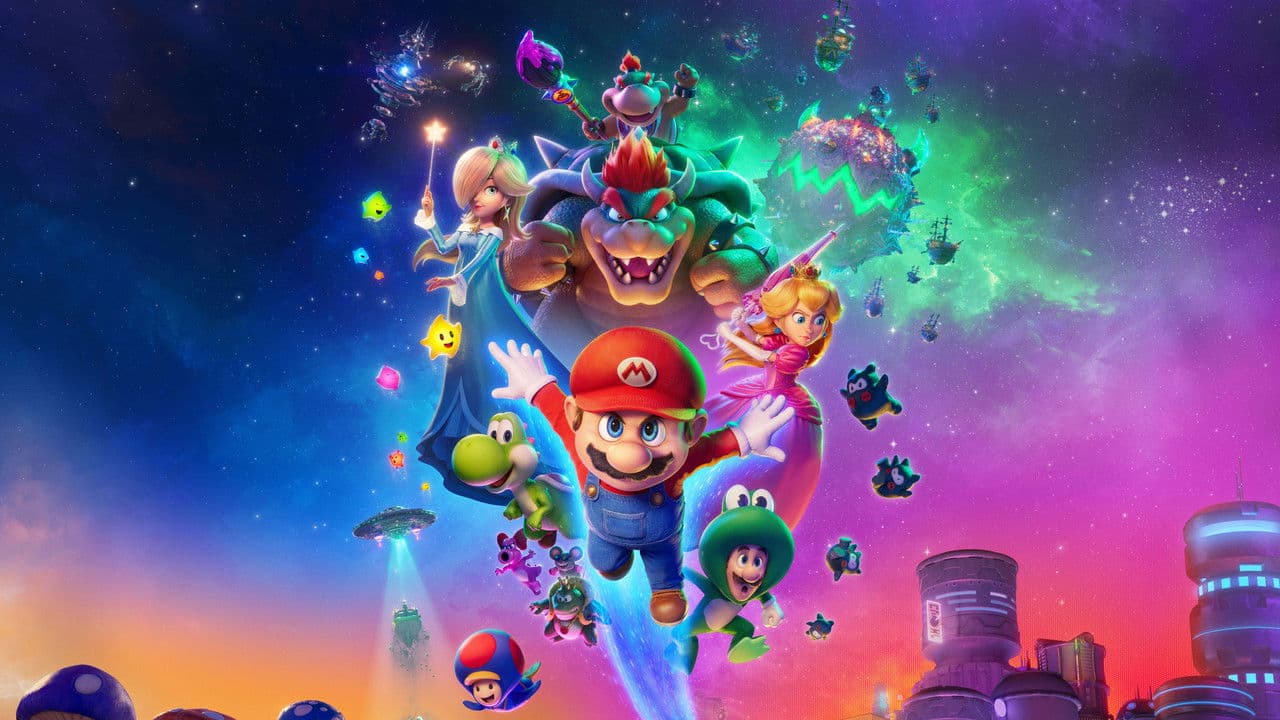
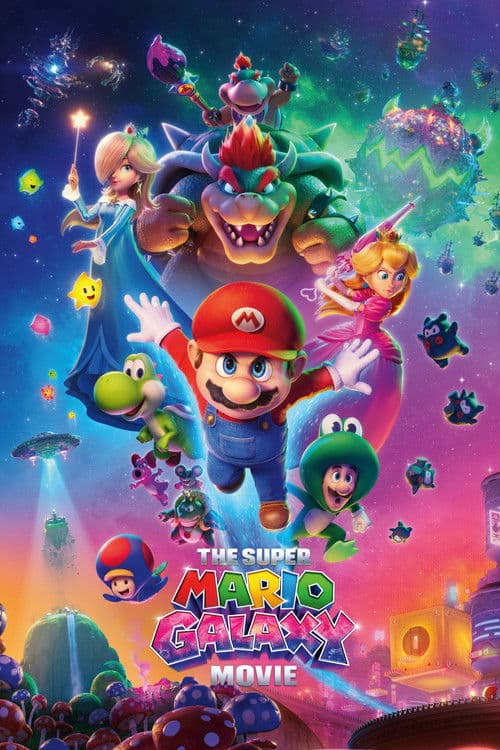
The Super Mario Galaxy Movie is an animated film releasing on April 1, 2026. Following the events of a prior installment, Mario and Luigi contend with Bowser Jr., who seeks to free his imprisoned father and reclaim the family's power, driving the brothers on a journey across space alongside returning and new companions.
Trailer
Gallery (21)
About this release
The Super Mario Galaxy Movie is scheduled for release on April 1, 2026, an animated family film whose title announces both its setting and its lineage with the kind of directness that leaves little room for ambiguity. Beyond what that title signals — and what the premise confirms — the specific creative team behind the production has not been disclosed in available materials, leaving the film's authorship, for now, an open question.
What is disclosed is the story's basic architecture. The previous installment in this film continuity established Mario and Luigi's world and culminated in the defeat of Bowser, who had attempted to force a marriage with Princess Peach. That film's resolution — Bowser's capture and captivity — becomes the inciting condition of this sequel. The antagonist here is not Bowser himself but Bowser Jr., his heir, who is working to liberate his father and, as the framing has it, restore a family legacy. It is a fairly classical sequel logic: the defeated villain's offspring arrives to carry the grievance forward, shifting the emotional register from a story about thwarted tyranny to something closer to a dynastic revenge narrative. Whether the film plays that premise earnestly or as broad comedy — or, as is typical in animated family features, both simultaneously — remains to be seen.
The shift to a cosmic setting is notable and worth some examination on its own terms. The title's invocation of "galaxy" travel aligns the film with the 2007 Nintendo video game Super Mario Galaxy, which moved the franchise's familiar platforming mechanics into an outer-space context built around small, self-contained planetoids and gravitational puzzles. That game is widely regarded within gaming culture as one of the more formally inventive entries in the Mario catalog, and it generated a sequel of its own in 2010. Whether this film draws on those games as direct source material — using their specific locations, characters, or cosmology — or simply borrows the conceptual premise of interstellar travel without replicating game-specific content is not clarified in currently available information. The distinction matters: one approach positions the film as an adaptation for an audience already familiar with those games, while the other uses the galaxy conceit as a narrative device that serves the sequel's plot without requiring any prior knowledge of the Nintendo titles beyond the broader franchise.
The involvement of "companions new and old" is mentioned in the source materials, which suggests the film will introduce at least some new characters alongside figures established in the first film. Who those new figures are, and whether any of them correspond to characters from the Galaxy games specifically, is not detailed. This kind of deliberate vagueness in early promotional framing is standard practice for animated sequels with built-in fan audiences — enough is revealed to confirm continuity and establish stakes, but the elements most likely to generate discussion are withheld.
The April 1, 2026, release date is worth flagging, not because it carries any obvious significance beyond the calendar, but because spring releases for major animated family films occupy a particular position in the theatrical marketplace. They arrive after the winter awards corridor and before the summer blockbuster concentration, a window that tends to favor films with broad family appeal and recognizable intellectual property. The Mario franchise, as a global brand with decades of cultural saturation across gaming generations, carries a level of recognition that extends well beyond any single demographic. The 2023 theatrical Mario film demonstrated that the property could draw substantial audiences across age groups, which is presumably part of the calculation behind a sequel of this scope.
One structural question the available materials leave entirely open is tone. The first film was classified as a comedy-adventure, and this film carries the same genre designations — family, comedy, adventure, fantasy, animation — but the premise of a son attempting to free his imprisoned father introduces a potentially more emotionally weighted dynamic than the original's wedding-plot antagonism. Bowser Jr. as a character has appeared across numerous Mario games in roles that range from petulant antagonist to something approaching a sympathetic figure with genuine attachment to his father. How this film handles that relationship — whether it leans into the sentimentality latent in the premise or keeps the character firmly in the register of comedic villainy — will likely determine a fair amount of how the film is received beyond its opening weekend.
The film's popularity metric in available tracking data is notably high relative to other upcoming releases, which reflects both the franchise's established audience and the anticipation carried over from the predecessor film's theatrical performance. That enthusiasm is real, but it also creates a particular kind of pressure: audiences who responded strongly to the first film will arrive with calibrated expectations, and a sequel that simply replicates the original's structure without earning its cosmic expansion runs the risk of feeling perfunctory.
The audience most likely to seek this out is, predictably, broad: families with young children for whom the Mario name is a household constant, adults who grew up with the games and brought the first film into their viewing rotation, and anyone with a baseline investment in the continuing story established by the predecessor. The Bowser Jr. premise may also attract viewers curious about how a major animated franchise handles the specific narrative challenge of a villain's child — a figure who is, by definition, acting out of inherited loyalty rather than original malice. That is a different kind of antagonist than the franchise has centered before, and what the film does with that difference is the question that the April 2026 release will finally answer.
Our coverage
- The $1 Billion Disconnect: Why The Super Mario Galaxy Movie Split Critics and Audiences
The Super Mario Galaxy Movie crossed $1 billion worldwide with a 42% critics score and 87% audience score on Rotten Tomatoes. Here's what the divide actually tells you about the film — and whether you should watch it.
Comments
Sign in to join the conversation.
Loading…