 ⭐ Popular
The Odyssey
AdventureJul 15, 2026
The Odyssey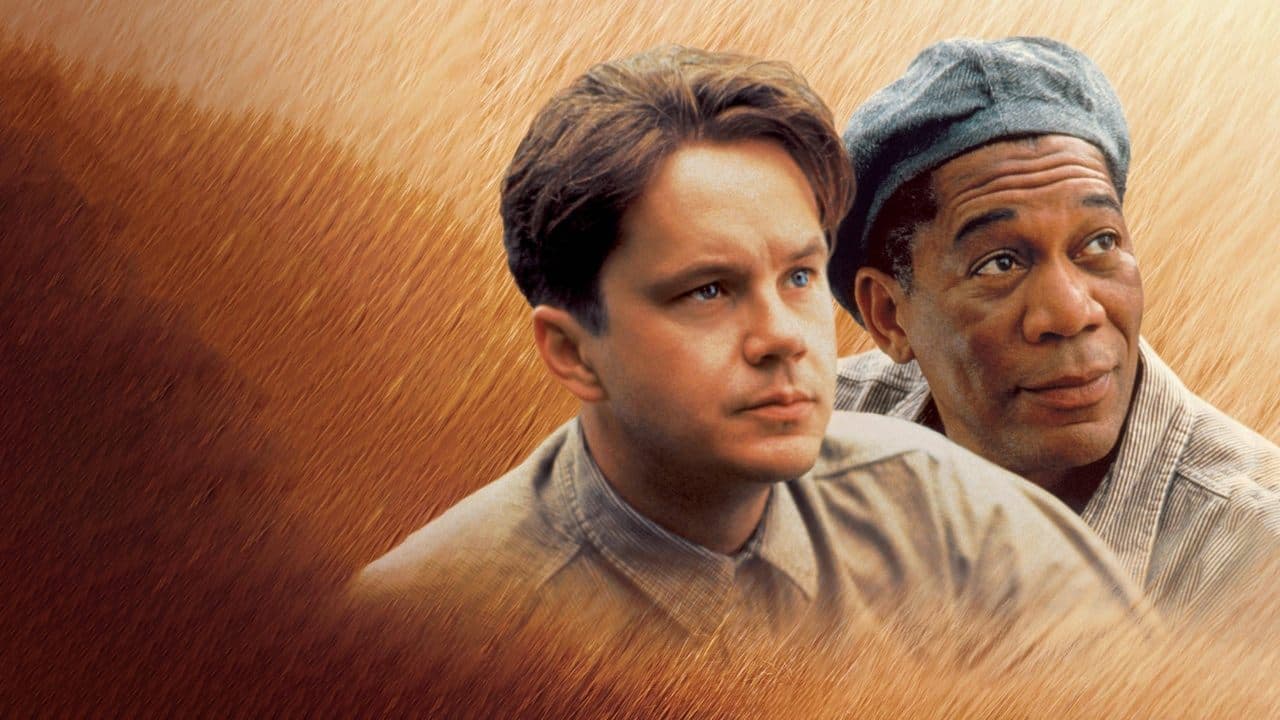
Details
Rating · Quality score from voters
Popularity · Search interest now
Based on TMDb activity

Tim Robbins
Andy Dufresne

Morgan Freeman
Ellis Boyd 'Red' Redding

Bob Gunton
Warden Norton

William Sadler
Heywood

Clancy Brown
Captain Byron T. Hadley

Gil Bellows
Tommy

James Whitmore
Brooks Hatlen

Mark Rolston
Bogs Diamond

Jeffrey DeMunn
1946 D.A.

Larry Brandenburg
Skeet

Neil Giuntoli
Jigger

Brian Libby
Floyd

David Proval
Snooze

Joseph Ragno
Ernie

Jude Ciccolella
Guard Mert
Links may earn Incoming a commission at no extra cost to you.
Incoming Editorial TeamVerified
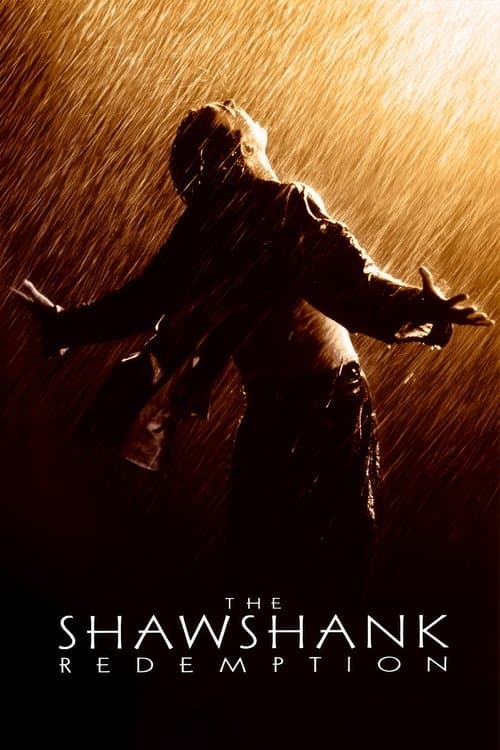
The Shawshank Redemption is a drama and crime film produced by Castle Rock Entertainment, releasing September 23, 1994. Set in the 1940s, it follows banker Andy Dufresne as he navigates life inside Shawshank prison after being convicted of double murder.
The Shawshank Redemption releases on September 23, 1994. It is a theatrical film produced by Castle Rock Entertainment.
The Shawshank Redemption is available to stream on MGM Plus. It can also be rented digitally through Amazon Video, Apple TV Store, and Google Play Movies.
The film is categorized as drama and crime. It follows a convicted banker's experiences inside a prison, touching on themes of institutional corruption, friendship, and perseverance.
The film follows Andy Dufresne, a banker imprisoned in the 1940s for the double murder of his wife and her lover. At Shawshank prison, he puts his accounting skills to work for the warden and develops a close relationship with a fellow inmate named Red, gaining respect among the prison population for his integrity and sense of hope.
Castle Rock Entertainment's The Shawshank Redemption opens in theaters on Friday, September 23, 1994, a drama set largely within the walls of a prison and built around a story that spans decades. It is a film about confinement, institutional power, and what it costs a person — psychologically, morally, practically — to maintain hope inside a system designed to extinguish it.
The setup is austere and deliberately unglamorous. Andy Dufresne, a banker described as upstanding, is convicted in the 1940s for the double murder of his wife and her lover and sent to Shawshank prison. Whether he committed the crime is the kind of question the film's premise keeps deliberately in suspension. What the story concerns itself with instead is what happens next: a man trained in numbers and financial precision finds himself deposited into a world governed by violence, hierarchy, and the arbitrary authority of a warden he will come to serve as an unofficial accountant. The juxtaposition is not subtle, but it is purposeful. Dufresne's professional skills — the ones that presumably marked him as respectable in the outside world — become instruments of survival and complicity inside Shawshank, put to work for an administrator the source material describes plainly as amoral.
Crime and drama as a genre pairing tends to organize itself around momentum: the heist, the investigation, the chase, the verdict. The Shawshank Redemption appears to resist that structure almost entirely. The narrative engine here is duration — the slow accumulation of years, the texture of a long stretch in prison, and the question of what a person becomes across that span of time. The film introduces Red, an older inmate who comes to admire Dufresne, and frames much of the story through that relationship. Red's admiration is directed specifically at two qualities: integrity and what the description calls an unquenchable sense of hope. These are not action-film virtues. They are quiet ones, and the film seems to understand that their dramatization requires patience from both filmmakers and audience.
The prison film as a form has a long tradition in American cinema, tending to cluster around two poles — the brutal exposé that emphasizes degradation and injustice, and the more allegorical mode that uses incarceration as a crucible for character. The Shawshank Redemption appears to lean toward the latter, using the 1940s setting to create a degree of historical remove. That distance allows the film to treat Shawshank less as a specific institution subject to policy scrutiny and more as a kind of closed world with its own moral atmosphere — one that Dufresne's presence slowly, and apparently without melodrama, begins to alter.
What remains genuinely open heading into the release is how the film handles the tension at its center. A banker imprisoned for murders he may or may not have committed, performing financial services for a corrupt warden — the ethical position Dufresne occupies is neither clean nor easily resolved. He is complicit in institutional wrongdoing while simultaneously being wronged by the institution. The film's materials suggest that the other inmates, Red foremost among them, read Dufresne as a figure of moral integrity, which raises the question of how the screenplay squares that reputation with the actual circumstances of his daily existence inside the prison. Admiration for someone in a morally compromised position is itself a complicated thing, and whether the film interrogates that complexity or simply accepts the inmates' judgment of Dufresne at face value will determine a great deal about how seriously it engages with its own premise.
There is also the question of time. Prison narratives that unfold across long stretches run the risk of episodic looseness — a series of incidents rather than a shaped arc. The emphasis on Dufresne's "long stretch" suggests the film is committed to duration as a structural element, not merely a backdrop. How Castle Rock and the filmmakers have managed that pacing — whether the film earns its length or simply accumulates it — is something theaters will settle starting this weekend.
The 1940s period setting introduces its own layer of consideration. Production design and costuming will either ground the story in a specific historical atmosphere or recede into generic period texture. The decade chosen places Shawshank in a particular moment in American history — postwar prosperity and anxiety existing simultaneously — though whether the film makes any deliberate use of that historical context is not something the available materials address.
The Shawshank Redemption is the kind of release that will draw viewers who favor character-driven drama over plot mechanics, who are willing to spend time with a story that measures itself in years rather than scenes. The presence of an older prisoner as a narrative anchor alongside the protagonist suggests a film interested in mentorship, accumulated wisdom, and the social bonds that form in constrained circumstances. Those already inclined toward prison narratives as a genre, or toward dramas that use extreme settings to examine ordinary human virtues, will find what they are looking for in the premise. The more interesting audience may be the one that arrives skeptical of those premises and discovers whether the film has earned what it is clearly reaching for.
The Shawshank Redemption holds IMDb's #1 spot with a 9.3 rating. Morgan Freeman's surprise debut blues album just sent global search interest back to his defining role.
⭐ PopularThe Odyssey
AdventureJul 15, 2026
The Odyssey
Shelter
ActionJan 28, 2026
Shelter
The Shadow's Edge
ActionAug 16, 2025
The Shadow's Edge 📈 Trending
Rosebush Pruning
ComedyApr 23, 2026
Rosebush Pruning
The Last Sunrise
RomanceAug 26, 2026
The Last Sunrise
Spider-Man: Brand New Day
Science FictionJul 28, 2026
Spider-Man: Brand New DaySign in to join the conversation.