
Details
- Language
- English
- Studio
- Pixar
- Series
- Toy Story
- TMDb Rating
- 7.4 (669 votes)
- Directed by
- Andrew Stanton
- Written by
- Andrew Stanton, Kenna Harris
- Theme
- underdog
Rating · Quality score from voters
TMDb
7.4/10
IMDb
7.4/10
Rotten Tomatoes
92%
Metacritic
73/100
Popularity · Search interest now
Trending
317.7
Based on TMDb activity
Hype score
leaderboard →93
/ 100↑ +15.1 in 24h
#12 globally#9 in movie
30-day trendWP 92
Toy Story 5 generates substantial search volume, reflecting broad anticipation for Pixar's latest sequel.
Starring


Where to watch
Links may earn Incoming a commission at no extra cost to you. Streaming data via JustWatch — may not reflect today's catalog.
Incoming Editorial TeamVerified
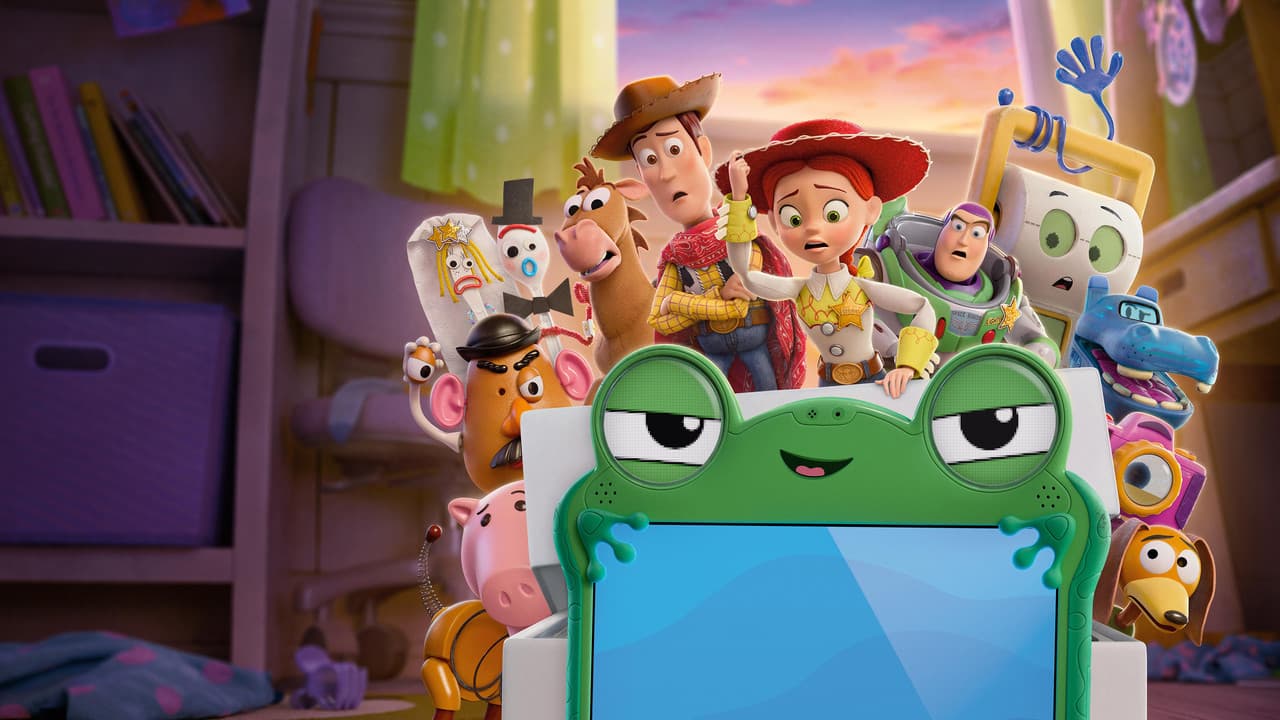
Toy Story 5 is an animated feature film from Pixar Animation Studios continuing the Toy Story franchise. It is scheduled for release on June 17, 2026. The story follows Buzz, Woody, Jessie, and the rest of the toy gang as they contend with a new threat to playtime after Bonnie receives a Lilypad tablet.
Trailer
Gallery (21)
Key features
- ·Animated feature film by Pixar
- ·Theatrical release June 17, 2026
- ·Returns Buzz, Woody, and Jessie
- ·New antagonist: a tablet device
- ·Part of the Toy Story franchise
- ·English-language release
FAQ
When does Toy Story 5 release?
Toy Story 5 is scheduled to release in theaters on June 17, 2026.
What is Toy Story 5 about?
The film follows Buzz, Woody, Jessie, and the rest of Bonnie's toys as they face a new threat to playtime after Bonnie becomes obsessed with a Lilypad tablet she receives as a gift.
Is Toy Story 5 a sequel?
Yes, Toy Story 5 is a continuation of Pixar's Toy Story franchise, following Toy Story 4, which was released in 2019.
Who made Toy Story 5?
Toy Story 5 is produced by Pixar Animation Studios.
Where can I watch Toy Story 5?
Toy Story 5 is confirmed for a theatrical release; streaming availability has not been announced in the available data.
About this release
Pixar's Toy Story 5 is scheduled for release on June 17, 2026, continuing a franchise that has now stretched across more than three decades of American animated filmmaking. The studio has confirmed the film's central premise: Bonnie, the child who inherited Woody, Buzz, Jessie, and the rest of the toy collection at the close of the third installment, receives a Lilypad tablet as a gift, and her subsequent obsession with it forces the toys into direct conflict with what the studio is framing as an all-new threat to playtime itself.
The Toy Story franchise is, at this point, one of the longest-running and most commercially durable properties in animation history. The original 1995 film was Pixar's debut feature and is widely credited with establishing computer-generated imagery as a commercially viable mode of theatrical animation. The sequels — the second in 1999, the third in 2010, and the fourth in 2019 — each arrived with enough spacing to mark genuine generational intervals, and each attempted to locate a new emotional or thematic register rather than simply repeat the mechanics of its predecessor. The fourth film, which sent Woody on a path toward independence and concluded with him parting ways with the group, left the franchise in an ambiguous position: a logical ending had been reached, yet the property remained too commercially significant to leave dormant indefinitely.
The fifth film's premise is notable for the specific nature of its antagonist. Rather than a rival toy, a villainous collector, or an existential threat to the toys' sense of identity, the declared conflict here is a tablet computer — specifically, the attention a child devotes to it over the toys themselves. This is a meaningful structural choice. The franchise has always used the toy's perspective to examine how children relate to objects and, by extension, to imagination and play. Positioning a consumer device as the central obstacle is a logical evolution of that conceit, drawing the series into commentary on screen time, digital distraction, and the competition between physical play and passive consumption that is a lived reality for the demographic Bonnie now represents. Whether the film treats this tension with nuance or resolves it with the expected affirmation of analog play over digital engagement is one of the more genuinely open questions surrounding the project.
What the available information does not clarify is the state of the core voice cast. The franchise has historically relied on Tom Hanks as Woody and Tim Allen as Buzz Lightyear, and their presence or absence from this installment is a matter of considerable interest to any audience familiar with the series. The fourth film introduced characters played by new cast members and retired Woody from his traditional role as the group's anchor, which raises real questions about how the ensemble is configured for a fifth outing. The metadata confirms Buzz, Woody, and Jessie are present, but the circumstances of their participation — and the weight each is given relative to the others — remain unaddressed in any publicly available detail.
Similarly, the Lilypad tablet is described as a product Bonnie receives as a gift, but the nature of the threat it poses to the toys is not elaborated upon in what has been shared. Does the tablet contain software or characters that compete with the toys in some literal, animated sense? Does the conflict play out primarily in Bonnie's drifting attention, or does the story assign the device some more active antagonistic role? The phrase "head to head" in the premise description suggests something more active than a child simply preferring to scroll rather than play, but what that means in practice has not been disclosed. The franchise has a history of giving its threats physical presence and personality — Sid, Lotso, the antique dealer Gabby Gabby — and it would be consistent with that tradition for the Lilypad to manifest its danger in more concrete narrative terms.
The June 2026 release date places the film squarely in the summer theatrical window, where animated family features have historically performed well. Pixar has occupied that slot repeatedly over the years, and Toy Story specifically has launched in summer dating back to the original. What has shifted in the intervening years is the studio's relationship with theatrical releases — several recent Pixar productions went directly to Disney+ during the pandemic period, and the theatrical return of properties like this one carries added commercial significance as the studio works to reestablish its box-office presence. A fifth Toy Story film represents one of the cleaner bets available to Pixar in that context, given the franchise's demonstrated multigenerational appeal and its ability to draw audiences who grew up with the earlier films alongside children encountering the characters for the first time.
The audience for Toy Story 5 is, almost by definition, unusually broad. Children who are currently Bonnie's approximate age will encounter the Lilypad conflict as something immediately recognizable from their own lives. Adults who saw the original in theaters in 1995 will be approaching their fifties. The franchise has always been aware of this dual address — the emotional material in the third film, in particular, was calibrated for viewers who had grown up with Woody and Buzz rather than grown into them. How the fifth film positions itself along that axis — whether it leans toward the child audience engaging with a story about screen time, or toward the adult audience's accumulated relationship with these characters — will likely determine much of how it is received when it arrives in June of next year.
Our coverage
- Project Hail Mary Made $684 Million With No Franchise, No Sequel, and No Universe. Pay Attention
Ryan Gosling alone in a spaceship, an alien made of rock and sound, and $684 million at the global box office. No sequel planned. No cinematic universe. Project Hail Mary is the most important film of 2026 — and Hollywood is going to learn the wrong lessons from it.
- The Four Years That Nearly Broke Pixar — and the Film That Fixed It
After Lightyear and Elemental, Pixar was a studio in crisis. Toy Story 5 just crossed $1 billion worldwide. Here's what happened in between.
Comments
Sign in to join the conversation.
Loading…