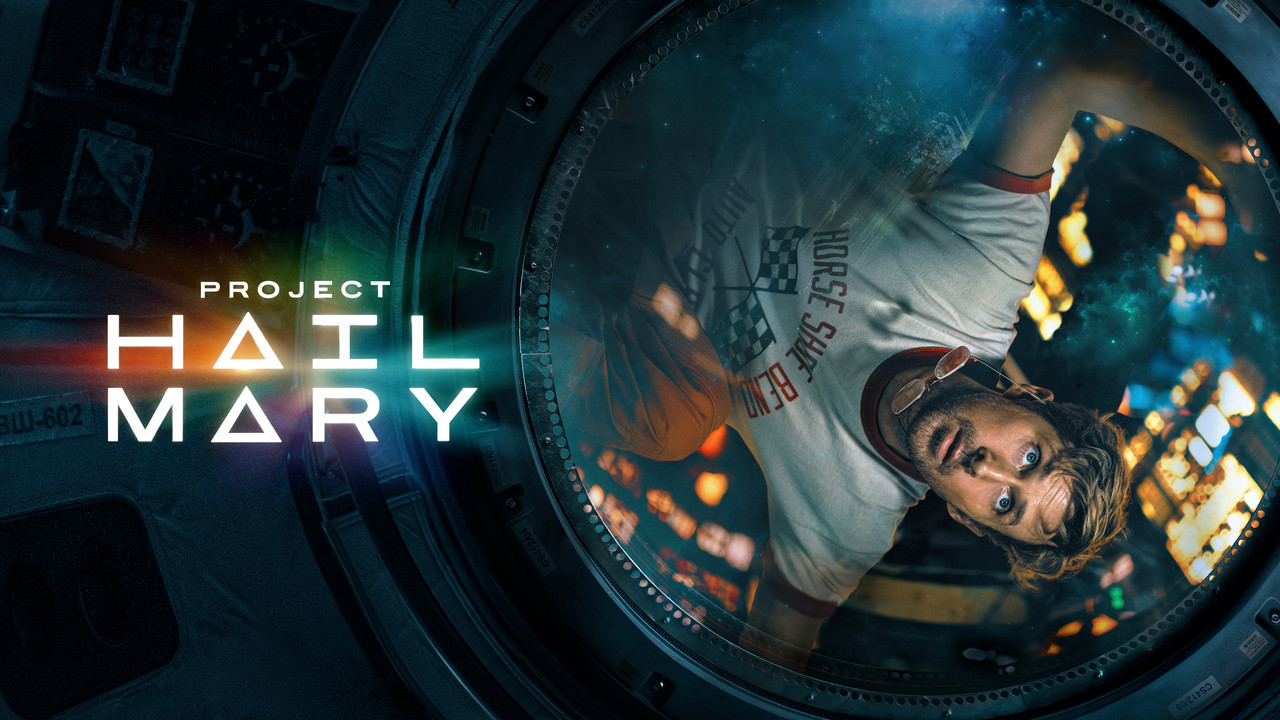
Project Hail Mary opened on March 20, 2026. It had no franchise, no sequel hook, no cinematic universe, and no returning superhero. It opened to $80.5 million domestically — the biggest March opening ever recorded, and the largest debut of the year at the time of its release.
It has since earned $684 million worldwide.
For context: The Martian (2015), the last adaptation of an Andy Weir novel and one of the most beloved original science fiction films of the last decade, earned $630 million. Project Hail Mary is bigger. And unlike The Martian, it was not a Ridley Scott production with an all-star ensemble. It was a story about one man, one alien, and a problem that could end both their worlds.
The 95% Rotten Tomatoes score and a CinemaScore of A suggest this was not a fluke. The 95% audience score confirms that the critical reception was not critics operating in a vacuum. The RT consensus reads: "A visually dazzling space odyssey that's carried along effortlessly by the gravitational pull of Ryan Gosling at his most winning, Project Hail Mary is a near-miraculous fusion of smarts and heart." Everyone, it seems, liked this movie.
What happens next — whether Hollywood learns the right lessons or the wrong ones — will determine whether Project Hail Mary changes anything, or whether the industry simply adds Ryan Gosling to the list of names that "open films."
The Number Nobody Wants to Say Out Loud
$684 million is a striking figure. It becomes more striking when you list what it was not — and more striking still when you put it next to its actual peers.
| Film | Year | Budget | Domestic | Worldwide | RT |
|---|---|---|---|---|---|
| The Martian | 2015 | $108M | $228M | $630M | 91% |
| Oppenheimer | 2023 | $100M | $330M | $983M | 93% |
| Project Hail Mary | 2026 | $200M | $344M | $684M | 95% |
The peer group for Project Hail Mary is not other 2026 films. It is the short list of original, non-franchise films of the last decade that actually broke through at scale. The Martian — the last Andy Weir adaptation, and arguably the closest structural comparison — earned $630 million worldwide. Project Hail Mary surpassed it. Oppenheimer is the only non-franchise film to significantly outgross both, and Nolan's singular cultural position is not something studios can replicate at will.
It was not a sequel. It was not a reboot. It was not based on a pre-existing cinematic IP — the Andy Weir novel was published in 2021, and film rights were acquired before the book was even in print. There is no Project Hail Mary animated series, no video game tie-in, no established fanbase waiting to validate an adaptation they'd already emotionally committed to. The movie had to earn its audience entirely on its own terms.
It was also not cheap. The production budget was approximately $200 million (net of UK tax credits), making it the most expensive theatrical release in Amazon MGM's history. That is a genuine financial commitment to original material at a scale the industry routinely reserves for sequels and superhero properties.
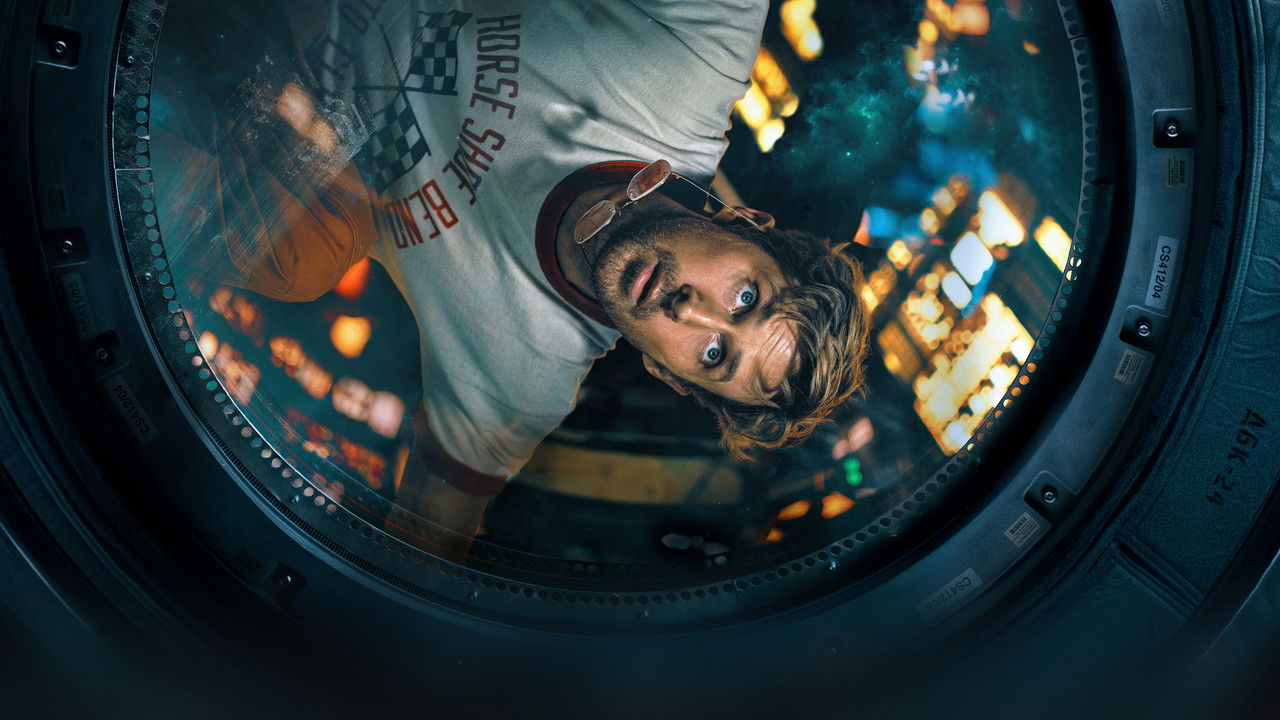
The opening weekend of $80.5 million placed it in rare company for a non-franchise original: behind only Oppenheimer's $82.4 million opening in the entire modern era of comparable releases. That is the actual peer group — Nolan's biographical epic about the atomic bomb, not the latest entry in an established universe.
The global opening weekend was $140.9 million — a figure that puts it among the largest international debuts for any non-franchise original in history. The domestic total of $344 million and the near-even international split ($340 million) confirm something further: this was not a domestic anomaly. Project Hail Mary worked globally — in the same markets where K-drama and international content are accelerating fastest, a story about an American molecular biologist and an alien from a binary star system still crossed cultural and linguistic boundaries.
Why Andy Weir Keeps Working
It would be easy — and wrong — to attribute this purely to source material.
The Martian (2015) was also an Andy Weir adaptation. It also worked, earning $630 million on a story that was similarly structured: one person, an inhospitable environment, a series of increasingly complex problems requiring science and ingenuity to solve. Ridley Scott directed. Matt Damon starred. Fox distributed.
Project Hail Mary surpassed it by $54 million, without the equivalent of an established director-star pairing coming in with pre-built credibility. Phil Lord and Christopher Miller — who co-directed and produced — are known primarily for The LEGO Movie (2014) and 21 Jump Street (2012). They produced Spider-Man: Into the Spider-Verse but did not direct it. Ryan Gosling's dramatic science fiction credentials were limited. And yet.
What Weir's work actually provides is not a recognizable IP. It is a structure. Both The Martian and Project Hail Mary are problem-solving stories at heart — competence porn, in the vernacular of internet culture: a protagonist who is extremely good at something, placed in a situation where that expertise is the only tool available, and required to apply it repeatedly under escalating stakes. The emotional satisfaction is not derived from plot twists or romantic arcs. It is derived from watching someone figure something out.
That structure translates because intellectual engagement is not a cultural preference. It is a human one.
Phil Lord put it plainly in a pre-release interview: "The soul of it is problem solving, and it is about how cooperation is the building block — the fundamental unit of solving big problems." That framing — cooperation as the fundamental unit — is the key to understanding why the film works on a scale that confounds conventional franchise logic.
Rocky Is the Film
At some point in Project Hail Mary, most viewers will realize that the film's real emotional center is not Ryland Grace.
It is Rocky.
Rocky — a spider-like alien from 40 Eridani, a star system 16.5 light-years from Earth, physically incapable of surviving in Grace's atmosphere and unable to speak in any human-audible frequency — is the film's beating heart. The relationship between Grace and Rocky, two strangers from incompatible biologies who share an extinction-level problem and an absolute absence of any common cultural reference point, is what the film is actually about.
The film is not quite a solo showcase, despite appearances. Sandra Hüller — who earned a Best Actress Oscar nomination for Anatomy of a Fall (2023) — plays Eva Stratt, the mission architect whose decisions set Grace's journey in motion. Her presence in what is nominally a two-character film (one of whom is an alien) is a quiet signal about the level of creative ambition involved.
Rocky was performed on set by James Ortiz via live puppetry — not CGI, not motion capture, but a physical puppet rig operated in real time. Ortiz, who is SAG-eligible and has been confirmed Oscar-eligible for Best Supporting Actor (the first live-puppetry performance ever to meet that standard), delivered a character who communicates through light patterns, vibrations, and a translation device of Grace's own improvised construction.
The film's central argument — that cooperation between fundamentally different intelligences is not just possible but is the only mechanism through which genuinely hard problems get solved — is made entirely through this relationship. And it lands. Across 428 reviews, with a 95% score, and across $684 million in global grosses, it lands.
That is what the Weir structure provides: a container in which cooperation can be shown rather than stated. The science is the texture. The friendship is the substance.
The Lessons Hollywood Will Learn (And The One It Should)
When an original film earns $684 million, the industry will conduct an autopsy. The results of that autopsy will determine what gets greenlit next.
Here is the lesson Hollywood will learn: Ryan Gosling opens movies. The same industry that spent 2025 debating whether audiences had reached peak IP fatigue — a conversation Toy Story 5 complicated by proving legacy franchises can still work when the creative stakes are genuine — will now add Gosling to the list of names that "open films" and move on. He starred in Barbie (2023), The Fall Guy (2024), and now Project Hail Mary (2026). The data supports the conclusion. The likely outcome is that studios will pursue Gosling for more projects, pay him accordingly, and describe those projects as "original content" regardless of whether they actually are.
Here is the lesson Hollywood should learn: the film worked because the script — written by Drew Goddard — made no concessions to franchise architecture. There is no post-credits sequence. There is no Easter egg positioning a sequel. There is no expanded universe. The story ends. It ends well. The ending is earned by everything that preceded it, and there is nothing held back for a follow-up that may or may not get made.
Gosling has said publicly: "I already made a movie where I was Neil Armstrong. I'd like to make a movie where I'm a regular person flipping out." The appeal of Project Hail Mary to him was precisely that Ryland Grace is not a hero by design. He is a middle school science teacher who happens to be the only person who can solve this problem, and who spends the majority of the film in a state of controlled panic. That is a specific kind of role that a specific kind of script makes possible. It requires a writer who is not managing franchise continuity.
The industry will not learn that lesson. It will learn: Ryan Gosling, original concept, space, international release. The next greenlit project fitting that pattern will have a sequel clause in its contract from day one.
The Awards Conversation Nobody Has Finished
Project Hail Mary is in active contention for the 2027 Academy Awards. The film is not eligible for this year's Emmy cycle — it is a theatrical release, not a streaming original — but the Oscar conversation has been running since its March release.
Ryan Gosling carries the film for 90% of its runtime with no co-star who shares his register of communication. The performance is physically and technically demanding in ways the film does not announce. Best Actor conversation is legitimate.
The more unusual awards conversation is around James Ortiz. His Rocky performance — delivered through live puppetry, physically exhausting, emotionally precise — has generated genuine debate about what "supporting actor" means when the performance is mediated through a puppet. The Academy has never nominated a puppeteer in an acting category. The SAG and Oscar eligibility confirmation means it can happen. Whether it will is a different question, and one that the Academy's category-logic problems — well documented across the genre bias discussions around The Boys and Spider-Noir — will have to navigate.
Phil Lord and Christopher Miller as co-directors are Best Director contenders. The film's cinematography, production design, and score — all built to simulate the particular disorientation of space as a place that is technically dangerous and somehow also very quiet — are awards-caliber in standard craft categories.
The 2027 Oscars will test whether the Academy has the appetite to recognize a film that made its $684 million by being genuinely, uncomplicatedly good at what it set out to do. No IP. No franchise. No universe. A man, an alien, and a problem.
It is, in the most literal sense, what movies are for.
Frequently Asked Questions
Is Project Hail Mary based on a book? Yes. Project Hail Mary is adapted from Andy Weir's 2021 novel of the same name, published by Ballantine Books. Film rights were acquired in March 2020 — before the book was in print — for a reported three million dollars. Weir is also known for The Martian (2011), which was adapted into Ridley Scott's 2015 film starring Matt Damon.
Who directed Project Hail Mary? Phil Lord and Christopher Miller co-directed, and also served as producers alongside Amy Pascal, Ryan Gosling, and Andy Weir. The screenplay was written by Drew Goddard. Lord and Miller are best known for The LEGO Movie (2014) and 21 Jump Street (2012), and served as producers on Spider-Man: Into the Spider-Verse (2018).
How much did Project Hail Mary make at the box office? $684 million worldwide — $344 million domestic and $340 million international — as of its theatrical run. It is the highest-grossing original (non-franchise, non-sequel) film of 2026, and surpassed the global gross of The Martian (2015), the previous Andy Weir adaptation, by approximately $54 million.
Who plays Rocky in Project Hail Mary? Rocky — the alien from the 40 Eridani system — was performed by James Ortiz via live on-set puppetry. Ortiz has been confirmed SAG-eligible and Oscar-eligible for Best Supporting Actor, making him the first live-puppetry performer ever to meet that standard.
Where can I stream Project Hail Mary? Project Hail Mary is currently streaming on Prime Video. It became available on the platform on July 3, 2026, after a 105-day theatrical window.
Will there be a sequel to Project Hail Mary? As of August 2026, no sequel has been announced and no sequel clause has been publicly confirmed. The film ends as a standalone work, consistent with the source novel.