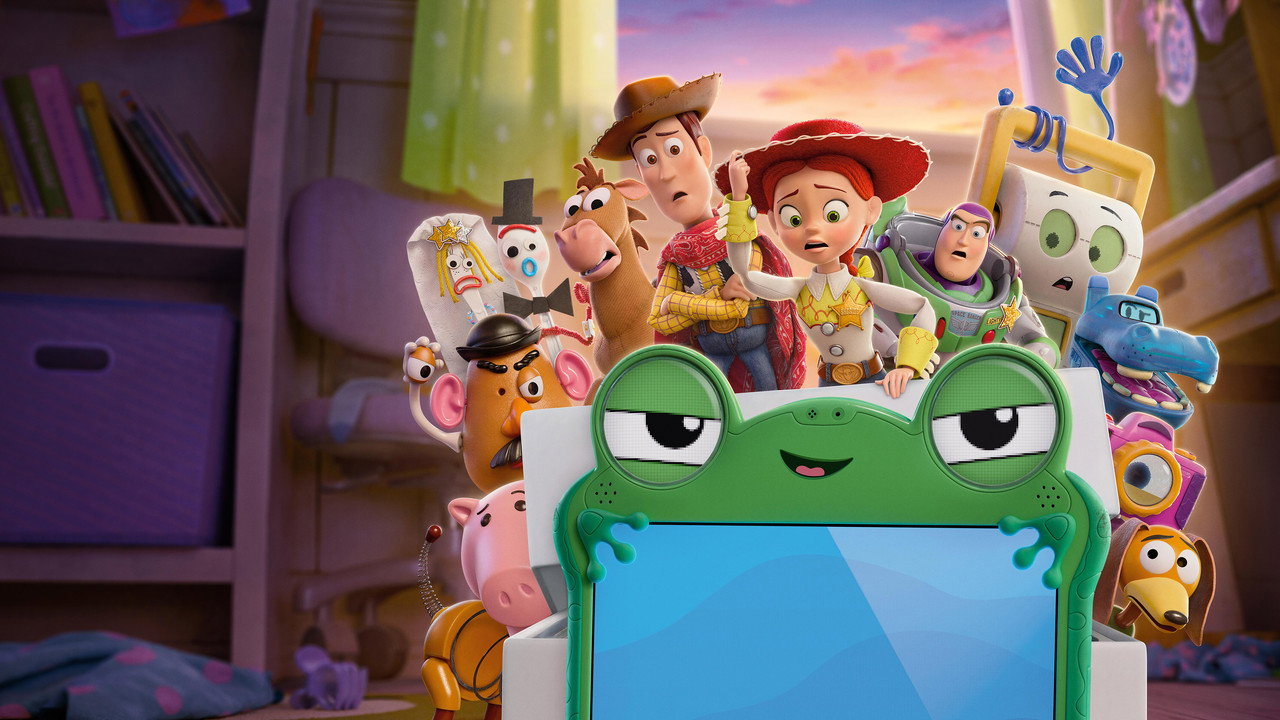
Toy Story 5 has crossed $1 billion at the global box office. It opened to $160 million domestically — the best opening in franchise history, the second-best animated domestic debut of all time. Critics gave it 93% on Rotten Tomatoes. Audiences gave it 94%.
Those numbers are the conclusion. To understand what they mean, you have to go back to 2022.
| Film | Worldwide Box Office | Critics (RT) | Audience (RT) |
|---|---|---|---|
| Lightyear (2022) | $226M | 74% | 84% |
| Elemental (2023) | $496M | 73% | 93% |
| Inside Out 2 (2024) | $1.67B | 91% | 94% |
| Toy Story 5 (2026) | $1B+ | 93% | 94% |
How Pixar Lost the Room
For nearly three decades, Pixar operated as something close to a guarantee. You went to a Pixar film expecting to cry, to laugh, and to leave with the vague feeling that you'd just watched something that mattered. That expectation survived sequels, acquisitions, and leadership changes. It did not survive corporate streaming mandates.
Under former Disney CEO Bob Chapek, Pixar films were routinely redirected to Disney+ to build subscriber numbers during the pandemic. Sending Soul (2020), Luca (2021), and Turning Red (2022) straight to streaming retrained family audiences to wait. What was once a premier cinematic event became something you browsed on a Tuesday night.
When Pixar CCO Pete Docter pushed the studio back into theaters, the market reacted with indifference:
- Lightyear (2022): A solemn sci-fi origin story that baffled audiences expecting classic Buzz Lightyear banter. $226 million worldwide — a commercial flop by Pixar standards. Critics gave it 74%.
- Elemental (2023): Debuted to $29.6 million domestically — the worst opening in Pixar history — sparking genuine industry questions about whether the studio's theatrical model was broken. Critics: 73%.
A studio that had never made a flop had suddenly delivered two in a row.
Inside Out 2 Was a Lifeline — But Not the Proof
Inside Out 2 (2024) shattered records with $1.67 billion worldwide — the highest-grossing Pixar film in history — and Hollywood declared Pixar back. But industry insiders knew better.
Inside Out 2 succeeded because Anxiety was a brilliant, universally relatable conceit for a post-pandemic generation. It proved Pixar could still sell tickets to an acclaimed sequel. What it did not prove was that the studio could justify expanding a story that had already ended.
Toy Story 5 was a far more dangerous gamble. Toy Story 4 (2019) had already delivered a definitive farewell for Woody and Buzz. Making a fifth film carried the smell of corporate cynicism — a cash-grab from Disney's executive suite rather than a creative necessity.
To earn its existence, Toy Story 5 needed something rare: an undeniable creative justification.
Andrew Stanton, Lilypad, and the iPad Kid
The first signal that this film was serious was the hiring of Andrew Stanton. As the director of Finding Nemo (2003) and WALL-E (2008) — two of the most acclaimed films in Pixar history — Stanton had not helmed a Pixar animated feature in over a decade. Bringing him back, alongside co-director Kenna Harris, was a statement about ambition over assembly line.
Stanton brought Tom Hanks and Tim Allen back together and gave them a premise that justified it. The threat in Toy Story 5 is Lilypad — a sleek AI tablet voiced by Greta Lee — gifted to Bonnie and designed to capture her entire attention. For thirty years, the toys' existential crisis was being outgrown or replaced by another toy. Lilypad represents something far more modern: a device that doesn't just compete for attention but redefines what caring for a child looks like.
By making an AI tablet the villain, Stanton tapped directly into the "iPad kid" anxiety that millions of parents have been living with for years. The trailer went viral months before release not because of nostalgia but because it touched something live. The film isn't just about plastic figures — it's a commentary on childhood in the digital age.
The Score That Tells Two Stories
Toy Story 5 arrived with critics already sceptical — after Toy Story 4's widely praised ending, the default assumption in many press screenings was that a fifth film was unnecessary. That headwind is visible in the 93% Tomatometer: excellent, but the lowest in franchise history.
The audience number tells a different story.
| Film | Critics | Audience |
|---|---|---|
| Toy Story (1995) | 100% | 92% |
| Toy Story 2 (1999) | 100% | 87% |
| Toy Story 3 (2010) | 98% | 90% |
| Toy Story 4 (2019) | 96% | 94% |
| Toy Story 5 (2026) | 93% | 94% |
A 94% audience score ties Toy Story 4 for the highest Popcornmeter in franchise history — matching the film many assumed was the emotional ceiling. Audiences who showed up did not feel like they had been served a cash-grab. They felt like the film had earned its place.
Together, the scores make a case better than either could alone: Toy Story 5 is the rare sequel that arrives already doubted and leaves already loved. That, more than the $1 billion gross, is what makes it the proof Pixar needed to give itself.
The film's cultural footprint has extended well past its June release date. Disney secured a Taylor Swift original — "I Knew It, I Knew You" — which debuted at number one on the Hot 100 the week the film opened, injecting Toy Story 5 into the pop music conversation simultaneously. Two months later, it is still in the global top three on the hype chart. That kind of staying power does not happen by accident.
Frequently Asked Questions
Why did Pixar make Toy Story 5 after Toy Story 4's definitive ending? Toy Story 4 closed Woody's traditional arc, but director Andrew Stanton developed a new narrative built around children's modern shift toward AI devices and screen time. Toy Story 5 reframes the toys' purpose in an age dominated by digital attention — a premise strong enough to justify the franchise's return.
Who directed Toy Story 5? Andrew Stanton, co-directed with Kenna Harris. Stanton previously directed Finding Nemo (2003) and WALL-E (2008). Toy Story 5 marks his return to Pixar animation after more than a decade.
Who plays Lilypad? Greta Lee (Past Lives, The Morning Show) voices Lilypad, an AI-powered tablet that competes with Woody and Buzz for Bonnie's attention and affection.
Is Pixar fully back after Lightyear and Elemental? Commercially, yes. Inside Out 2 (2024) became the highest-grossing Pixar film ever, and Toy Story 5 has crossed $1 billion worldwide. Whether the creative recovery is complete is a longer conversation — but a film directed by Andrew Stanton, with a premise that has something to say, is a stronger argument than box office numbers alone.
Where does Toy Story 5 rank in the franchise by box office? It is the highest-grossing film in the franchise, crossing $1 billion worldwide. Domestically, its $160 million opening weekend is the best in franchise history and the second-best animated domestic debut of all time.