 ⬆️ Rising
Star Wars: The Mandalorian and Grogu
ActionMay 20, 2026
Star Wars: The Mandalorian and Grogu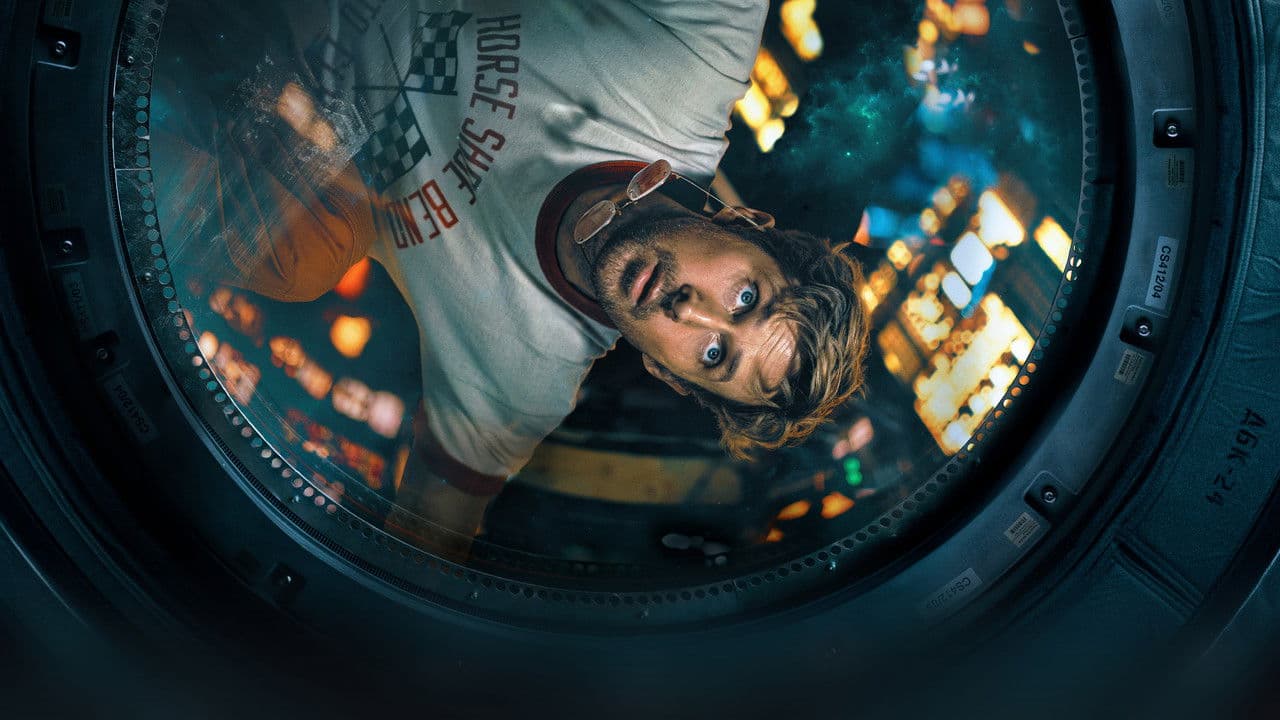
Details
Rating · Quality score from voters
Popularity · Search interest now
Based on TMDb activity
Hype score
leaderboard →Project Hail Mary drives search interest from science fiction enthusiasts.

Ryan Gosling
Ryland Grace

Sandra Hüller
Eva Stratt

James Ortiz
Rocky (voice)

Lionel Boyce
Carl

Milana Vayntrub
Olesya Ilyukhina

Ken Leung
Yao

Priya Kansara
Mary (voice)

Mia Soteriou
Dr. Browne

Annelle Olaleye
Olivia

Maya Eva Hosein
Rekha

Bastian Antonio Fuentes
Parker

Alice Brittain
Hardware Store Cashier

Michael Akinsulire
Air Force Officer

Travis Jay
Tilt-A-Whirl

Geoffrey Lumb
Aircraft Carrier Officer
Links may earn Incoming a commission at no extra cost to you. Streaming data via JustWatch — may not reflect today's catalog.
Incoming Editorial TeamVerified
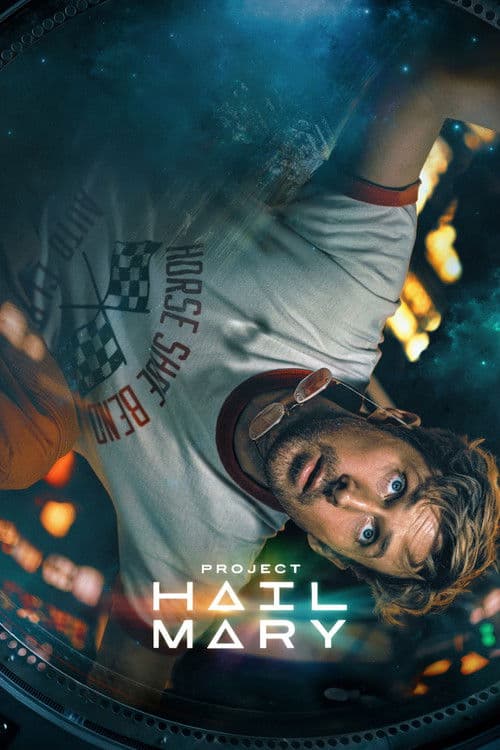
Science teacher Ryland Grace wakes up on a spaceship light years from home with no recollection of who he is or how he got there. As his memory returns, he begins to uncover his mission: solve the riddle of the mysterious substance causing the sun to die out. He must call on his scientific knowledge and unorthodox ideas to save everything on Earth from extinction.
The film adaptation of Andy Weir's novel Project Hail Mary is scheduled to arrive in theaters on March 15, 2026. The project has spent several years in development, and its release will mark one of the more anticipated crossovers from science fiction publishing into mainstream cinema in recent memory — not least because the source material carries a TMDB audience rating of 8.653 across more than 7,100 votes, a figure that suggests unusually strong pre-release enthusiasm even before a frame of footage has been widely assessed.
The story follows Ryland Grace, a science teacher who wakes aboard a spacecraft an unspecified number of light years from Earth, with no memory of who he is, how he got there, or what he is supposed to do. The central premise is structured as a double mystery: Grace must recover his own identity at the same time he pieces together the nature of his mission, which turns out to involve nothing less than diagnosing and reversing a phenomenon that is causing the sun to dim. A mysterious substance is sapping solar energy, and Earth's governments have apparently dispatched Grace — alone and unconscious for the transit — as their best remaining hope. The amnesia device is not merely a thriller hook; it functions as a delivery mechanism for exposition, allowing an audience to learn the science alongside the protagonist rather than receiving it as a lecture at the start.
The novel from which the film derives was published in 2021 and drew frequent comparisons to Weir's earlier work, The Martian, which was itself adapted into a commercially successful film by Ridley Scott in 2015. That film demonstrated an audience appetite for scientifically earnest survival narratives — stories in which the protagonist's primary tool is applied reasoning rather than brute force or weaponry. Project Hail Mary operates in a similar register, with its lead character relying on unorthodox scientific thinking to navigate circumstances that would overwhelm conventional responses. The genre tradition here is a specific and somewhat demanding one: hard science fiction in which the problem-solving is meant to feel plausible rather than fantastical, even when the setting is interstellar space.
What distinguishes Project Hail Mary from its closest predecessor, at least on the page, is the presence of an alien. The keywords attached to the film include "alien," "language-barrier," and "interspecies-friendship," which signals that Grace does not spend the entire narrative in isolation. At some point, he encounters another being, and a significant portion of the story's emotional and intellectual weight rests on how two entities from entirely different biological and cognitive backgrounds manage to communicate and, eventually, cooperate. The language-barrier element is not incidental — in the novel it is treated with genuine rigor, and whether the film adaptation preserves that rigor or softens it for pacing purposes is one of the more consequential open questions heading into the release.
The film is categorized as both science fiction and adventure, a pairing that positions it closer to mainstream blockbuster territory than to the quieter, more cerebral end of the genre. How the production has balanced the intellectual density of the source material against the demands of a broad theatrical audience is unknown at this stage. Weir's novel is unusually technical — chapters turn on questions of chemistry, astrophysics, and thermodynamics — and adapting that texture for screen without either dumbing it down or alienating non-specialist viewers represents a genuine craft challenge. No director has been named in the available materials, and no casting information is included in the structured data, which means the creative team behind the adaptation remains, for now, a significant unknown.
The memory-loss framing also raises structural questions. In prose, an unreliable or amnesiac narrator can be managed with relative ease — the reader simply knows what the narrator knows, nothing more. On screen, selective information delivery requires more deliberate visual and editorial construction, and how the filmmakers have chosen to pace Grace's returning memories will shape whether the amnesia conceit reads as elegant or manipulative. Films that use memory recovery as a storytelling engine have a mixed record; the device works best when the withheld information genuinely recontextualizes what came before, rather than simply serving as a delay mechanism.
The "save-the-planet" framing is, on its face, among the more exhausted premises in popular science fiction. What has historically separated successful entries in this subgenre from forgettable ones is specificity — the degree to which the threat and the solution feel particular rather than generic. The sun-dimming substance at the center of Project Hail Mary is concrete enough to carry scientific weight, and the interspecies-friendship thread gives the narrative an emotional axis that purely extinction-focused stories often lack. Whether those elements translate with the same force in a visual medium as they do on the page is the film's central unanswered question.
Readers of the novel will arrive in March 2026 with strong opinions about what the adaptation must preserve and what it can afford to lose. Those unfamiliar with Weir's work but drawn to science fiction that takes its own premises seriously — the tradition that runs through films like Contact and The Martian — will find a story built around the proposition that careful thinking, even under impossible conditions, is itself a form of heroism.
Ryan Gosling alone in a spaceship, an alien made of rock and sound, and $684 million at the global box office. No sequel planned. No cinematic universe. Project Hail Mary is the most important film of 2026 — and Hollywood is going to learn the wrong lessons from it.
⬆️ RisingStar Wars: The Mandalorian and Grogu
ActionMay 20, 2026
Star Wars: The Mandalorian and Grogu
Greenland 2: Migration
AdventureJan 7, 2026
Greenland 2: Migration 📈 Trending
Mortal Kombat II
ActionMay 6, 2026
Mortal Kombat II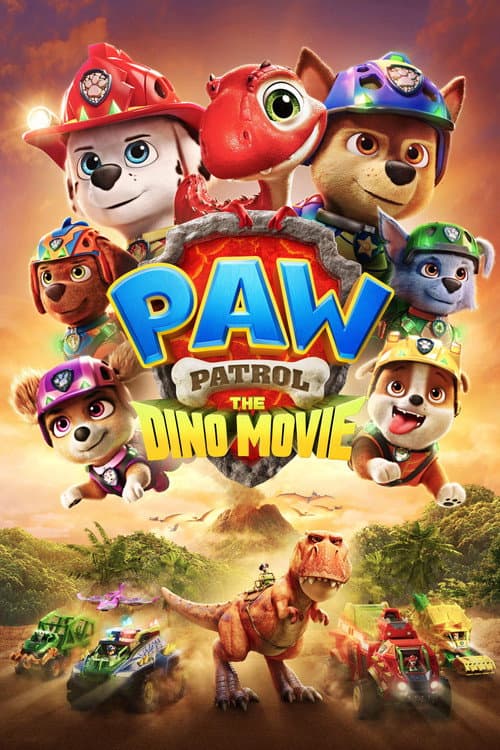
PAW Patrol: The Dino Movie
AnimationJul 23, 2026
PAW Patrol: The Dino Movie
Avatar Aang: The Last Airbender
AnimationJul 24, 2026
Avatar Aang: The Last Airbender 📈 Trending
Supergirl
ActionJun 24, 2026
SupergirlSign in to join the conversation.