 ⬆️ Rising
The Mongoose
ActionOct 29, 2026
The MongooseReleased
 Cool
Memórias Encontradas Numa Banheira
Details
Popularity · Search interest now
Based on TMDb activity
Not currently available for streaming or purchase.
Links may earn Incoming a commission at no extra cost to you.
Incoming Editorial TeamVerified
Memoirs Found in a Bathtub (original title: Memórias Encontradas Numa Banheira) is a Portuguese-language film releasing April 28, 2026. Inspired by Stanislaw Lem's novel of the same name, it depicts a future in which written history has been largely destroyed, with a narrated soundtrack reading from the last surviving pages of an unidentified bound document.
The film is scheduled for release on April 28, 2026.
Yes, it is based on Stanislaw Lem's novel of the same title, in which a paper-destroying blight erased most of Earth's written history.
The film is in Portuguese; its original title is Memórias Encontradas Numa Banheira.
Set in an unmarked future where written history has been largely destroyed, the film follows a narrated reading of the last surviving fragments of an unidentified bound document, which may be a reporter's notebook, a dream diary, or a manuscript.
A Portuguese-language film titled Memoirs Found in a Bathtub — or Memórias Encontradas Numa Banheira in its original language — is scheduled for release on May 1, 2026. The project takes its name and its central premise from the 1961 novel by the Polish science fiction writer Stanisław Lem, a work that has occupied a peculiar, somewhat cultish position in speculative fiction for decades without ever achieving the mainstream recognition of Lem's Solaris or The Cyberiad.
Lem's source novel is built around a conceit that is at once absurdist and genuinely unsettling: a bacterial or fungal blight — he called it the "papyralysis" — destroys virtually all paper-based records on Earth, erasing written history wholesale. What survives, the novel's framing suggests, is a single document, discovered much later, describing the experiences of a man wandering the labyrinthine corridors of a vast underground bureaucratic complex called the Building — a kind of Kafkaesque Pentagon whose internal logic has become entirely self-referential, cut off from any external reality it was meant to serve. The novel is set in the distant future, around the year 3140, when the document is supposedly recovered and annotated by scholars. Lem used the structure to satirize institutional paranoia, Cold War intelligence culture, and the tendency of bureaucratic systems to generate meaning from noise.
The film, according to its source description, does not map directly onto that temporal setting. Instead, it imagines a similar but unspecified future — one described as perhaps less distant than Lem's thirty-second century — in which some comparable catastrophe has again reduced the written record to fragments. The film's narrated soundtrack draws from the last surviving portions of an unidentified bound document: it might be a reporter's notebook, a dream diary, or a book manuscript. The ambiguity appears to be deliberate. Where Lem's novel eventually commits to its framing device with scholarly footnotes and an elaborate fictional apparatus of recovery and annotation, this film seems to leave the nature of its found text genuinely open, presenting rubble — literal or figurative — as the context in which these words are encountered.
That choice raises questions the available information does not answer. Lem's novel is deeply verbal; its comedy and its dread come almost entirely from language — from the way instructions contradict themselves, the way every encounter in the Building can be read as either meaningful or random, the way sincerity and irony become indistinguishable. Translating that into cinema has always seemed like a structural problem as much as an artistic one. The decision to make narration the primary carrier of the text — a "narrated soundtrack" reading from surviving pages — suggests the filmmakers are leaning into that verbality rather than trying to escape it through image-driven adaptation. Whether the visual world of the film serves as counterpoint to the narration, illustration of it, or something more dialectical is not yet clear.
The film is in Portuguese, which adds another layer of distance from Lem's Polish original and from the English translation through which most international readers know the novel. That linguistic displacement is not incidental — Lem's work has always traveled through translation, and the meanings that stick or get lost in each passage are part of its reception history. A Portuguese-language film adapting a Polish satirical novel about the destruction of written records carries with it the implicit suggestion that the text has already survived at least one act of translation, and that survival is always partial.
What the production looks like — who directed it, who is in it, what its budget or scale might be — is not established in the available information. The film carries no votes or ratings from any aggregator, which is consistent with its not yet having screened publicly in any documented capacity. It arrives, in other words, without the benefit of festival buzz or critical scaffolding that would normally frame a release of this kind. That absence is either a sign of a very quiet production or simply a function of how early this preview is being written relative to the May 2026 date.
There is also the question of what the film takes from Lem and what it sets aside. The novel's satirical target — the self-perpetuating logic of intelligence and security bureaucracies — had a specific Cold War texture that Lem was writing from inside, as a Polish citizen living under Soviet-aligned governance. Transposing that satire to a different linguistic and cultural context, and to a future that the film deliberately leaves undated and under-described, could either sharpen it into something more universal or diffuse it into mood. The "uncertain setting" described in the source material suggests the latter approach is at least partly in play: this seems to be a film interested in atmosphere and in the phenomenology of reading lost documents, not necessarily in restating Lem's specific political argument.
Viewers likely to seek this out fall into a few overlapping groups: readers of Lem's novel who are curious how its notoriously interior narrative might be rendered in sound and image; audiences drawn to speculative fiction that operates in a literary register rather than a genre one; and those interested in Portuguese-language cinema working at the edges of its own commercial mainstream. For all of them, the central question is whether a film built around the act of reading — around words found in rubble, spoken over images of an unspecified collapse — can make that act feel as vertiginous as Lem's original made it feel on the page.
⬆️ RisingThe Mongoose
ActionOct 29, 2026
The MongooseReleased ⬆️ Rising
The Runner
ThrillerSep 3, 2026
The Runner ⬆️ Rising
Star Wars: The Mandalorian and Grogu
ActionMay 20, 2026
Star Wars: The Mandalorian and Grogu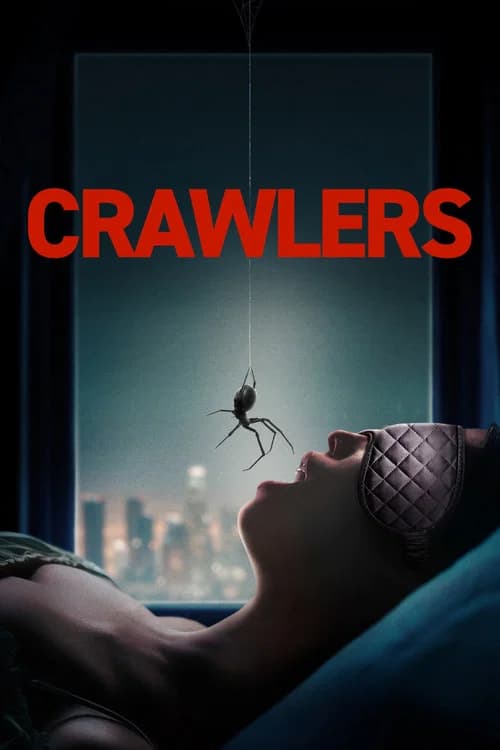 ⬆️ Rising
Crawlers
HorrorSep 24, 2026
Crawlers ⬆️ Rising
The Fix
ActionSep 10, 2026
The Fix
Spider-Man: Brand New Day
Science FictionJul 28, 2026
Spider-Man: Brand New DaySign in to join the conversation.