🔥 Hot
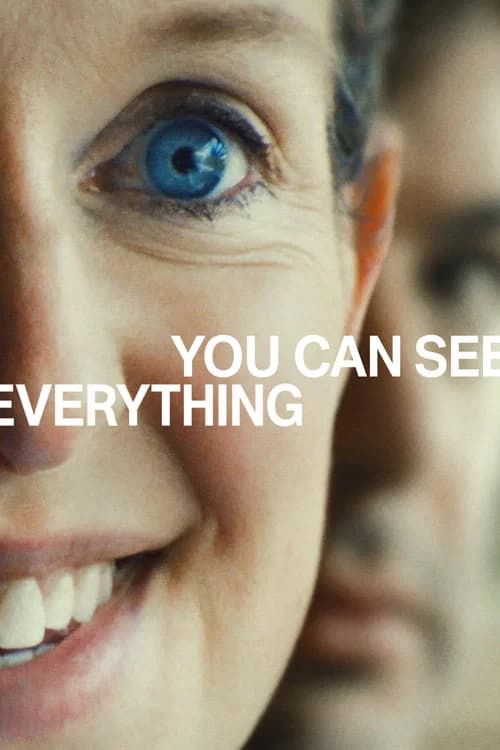
You Can See Everything
DocumentaryOct 16, 2026
You Can See EverythingReleased
Details
Popularity · Search interest now
Based on TMDb activity
Not currently available for streaming or purchase.
Links may earn Incoming a commission at no extra cost to you.
Incoming Editorial TeamVerified
In the marshes of New South Wales, Australia, the green and golden bell frog faces an invisible enemy: the Chytrid fungus. This deadly pathogen has wiped out over 90 amphibian species, and the frog's survival depends on an unlikely cure - a frog sauna. As the fungus attacks, weakening the frog's body, time is running out. While predators lurk in the sky and grasses, the true threat lies beneath the water. In a desperate search for safety, the frog finds refuge in a sauna that may hold the key to survival. But will this fragile hope be enough to save the frog? This family-friendly short film uses elements of horror and whimsy to tell the story in a new and captivating light.
A short documentary film called Escape is scheduled for release on April 25, 2026. The film centers on the green and golden bell frog, a species native to the marshes of New South Wales, Australia, and on the particular ecological crisis threatening its continued existence.
The subject is the Chytrid fungus, a pathogen that the film identifies as having wiped out more than 90 amphibian species. That figure alone positions the story within one of the more quietly catastrophic episodes in modern natural history — a fungal pandemic that has moved through frog populations across the globe with little of the public attention that mammalian disease crises tend to attract. For the green and golden bell frog, survival has come to depend on an intervention that the film frames as both scientifically pragmatic and somewhat surreal: a frog sauna, a controlled heat environment designed to help infected individuals fight off the fungus by raising their body temperature above the pathogen's viable range.
What distinguishes Escape from the standard format of wildlife documentary short — narrated footage, expert commentary, conservation call to action — is its stated intention to work across tonal registers. The filmmakers describe the project as using elements of horror and whimsy to tell the story, a combination that positions it somewhere between a natural-history film and a more formally adventurous piece of nonfiction cinema. The horror framing is not difficult to understand: the Chytrid fungus attacks an organism whose primary defense against environmental threat is the water it lives in, meaning the very element that sustains the frog also becomes the medium through which the disease spreads. There is a structural irony in that relationship that lends itself to something closer to a thriller's logic than to the observational register most wildlife films occupy.
The whimsy presumably attaches to the sauna itself — an object that reads, in almost any context other than the one in which it is deployed here, as a human domestic luxury. Placing a frog inside one as a medical intervention carries an inherent strangeness, and the film appears to be interested in that strangeness rather than eliding it in favor of straightforward earnestness. Whether the tonal combination holds together across the film's runtime is precisely the kind of question that can only be answered after the fact, but the structural choice at least suggests a production willing to take some formal risk with material that could easily have been presented in a more conventional register.
The film is described as family-friendly, which adds another layer to consider. Children's nature media has a long tradition of using animals in peril as a way of introducing ecological and moral complexity in manageable form, from the earliest Disney nature shorts through to more recent streaming-era productions aimed at younger audiences. Escape appears to operate within that tradition while also reaching past it — the horror framing is not typically a tool of family wildlife filmmaking, and its inclusion suggests the film is calibrated for a broader or more mixed-age audience than the "family-friendly" label alone might imply. How the filmmakers navigate the tension between accessibility and the genuinely grim stakes of the story — a fungus that has already eliminated more than 90 species is not a threat easily softened into reassurance — is one of the more interesting open questions surrounding the project.
The film is in English and set in Australia, though the metadata does not specify the production company, director, or broader production background. The international relevance of Chytrid fungus as a subject means the story has resonance well beyond New South Wales: documented frog population collapses tied to the pathogen have occurred across Central America, Europe, the Caribbean, and elsewhere, and the bell frog's predicament is in many respects a local instance of a global problem. Whether the film addresses that wider context or remains tightly focused on the single species and its sauna treatment is not clear from the available material.
The question of the sauna's efficacy is also left open. The film's synopsis asks whether "this fragile hope" will be enough to save the frog, framing the outcome as uncertain in a way that may reflect real ambiguity in the conservation science or may be a narrative device to sustain tension. Thermal treatment for Chytrid infection has been studied in amphibian conservation contexts, but the status of the specific program depicted in the film — whether it represents an established intervention or a more experimental one — is not addressed in the available information.
At roughly 800-plus words of surrounding material needed to contextualize a short, the film itself is likely brief by theatrical standards. Its natural audience is probably split between general viewers with an interest in wildlife or environmental cinema and those drawn specifically by the formal ambition suggested by the horror-and-whimsy framing. Families looking for nature content that does not entirely smooth over complexity, and documentary audiences willing to spend time with an insect-scale crisis that rarely commands headlines, are the most likely constituencies for what is, by design, a narrowly focused and somewhat formally unusual piece of work.
You Can See Everything
DocumentaryOct 16, 2026
You Can See EverythingReleased ⬆️ Rising
Star Wars: The Mandalorian and Grogu
ActionMay 20, 2026
Star Wars: The Mandalorian and Grogu ⬆️ Rising
Pinocchio: Unstrung
HorrorJul 22, 2026
Pinocchio: Unstrung ⬆️ Rising
The Mongoose
ActionOct 29, 2026
The MongooseReleased ⬆️ Rising
Crawlers
HorrorSep 24, 2026
Crawlers ⬆️ Rising
The Fix
ActionSep 10, 2026
The FixSign in to join the conversation.