 ⭐ Popular
Moana
FamilyJul 8, 2026
Moana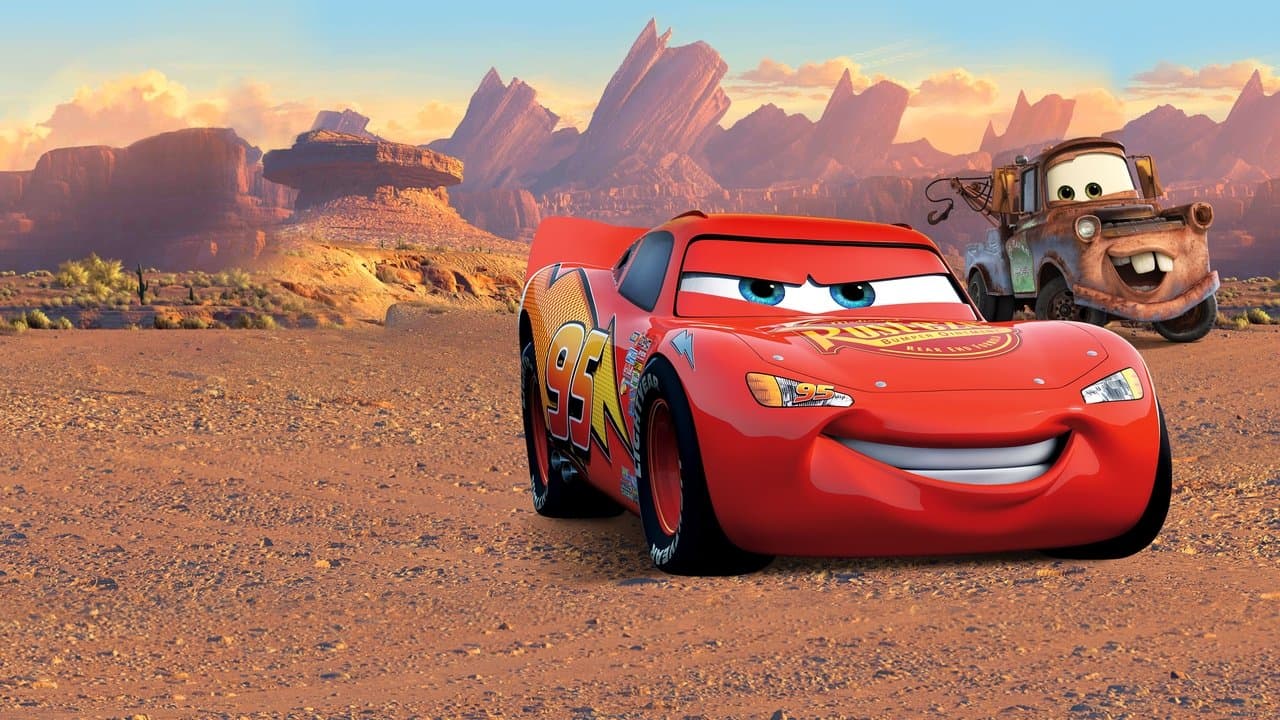
Details
Rating · Quality score from voters
Popularity · Search interest now
Based on TMDb activity

Owen Wilson
Lightning McQueen (voice)
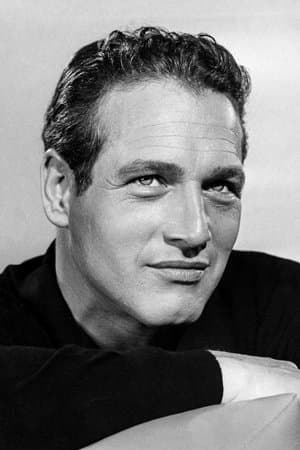
Paul Newman
Doc Hudson (voice)

Bonnie Hunt
Sally Carrera (voice)

Larry the Cable Guy
Mater (voice)

Cheech Marin
Ramone (voice)

Tony Shalhoub
Luigi (voice)

Guido Quaroni
Guido (voice)

Jenifer Lewis
Flo (voice)

Paul Dooley
Sarge (voice)

Michael Wallis
Sheriff (voice)
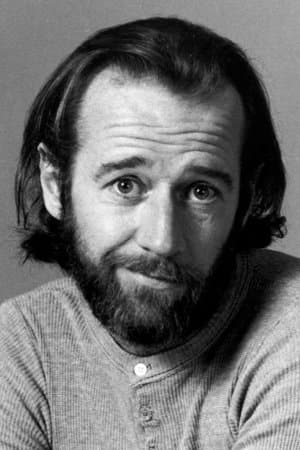
George Carlin
Fillmore (voice)

Katherine Helmond
Lizzie (voice)

John Ratzenberger
Mack / Hamm Truck / Abominable Snow Plow / P.T. Flea Car (voice)

Joe Ranft
Red / Peterbilt (voice)

Michael Keaton
Chick Hicks (voice)
Links may earn Incoming a commission at no extra cost to you. Streaming data via JustWatch — may not reflect today's catalog.
Incoming Editorial TeamVerified
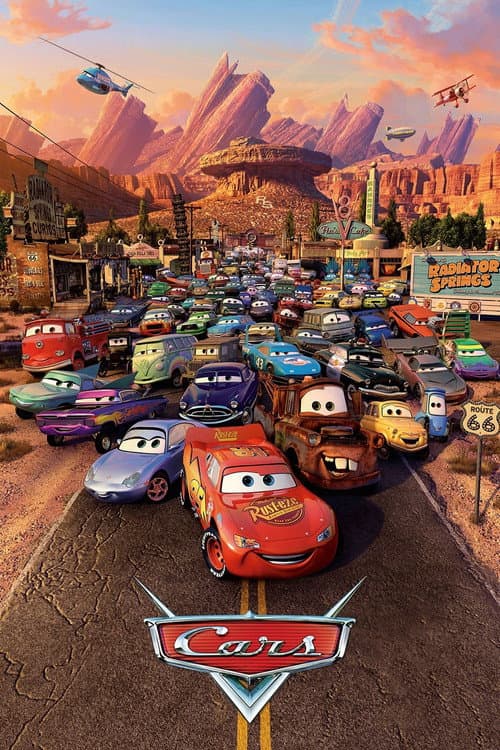
Cars is an animated adventure-comedy from Pixar, releasing June 8, 2006. The film follows Lightning McQueen, a rookie race car who becomes stranded in the small Route 66 town of Radiator Springs while traveling to a championship race in California.
Cars releases on June 8, 2006. It is a theatrical release from Pixar Animation Studios and is subsequently available to stream on Disney Plus.
Cars is available to stream on Disney Plus. It can also be rented digitally through Amazon Video, Apple TV Store, or Google Play Movies.
Yes, Cars is the first film in the Cars Collection franchise. The series follows characters from the world of anthropomorphic motor vehicles.
Cars is an animated adventure-comedy aimed at family audiences. The film combines race-sport competition with a road-trip narrative set along Route 66.
Cars was produced by Pixar Animation Studios. Pixar is known for its catalog of animated feature films and operates as a subsidiary of Disney.
Pixar's Cars opens in wide theatrical release on June 8, 2006, an animated feature from the studio behind Toy Story, Finding Nemo, and The Incredibles. It arrives as the seventh feature film from Pixar and the first to place automotive machinery — rather than toys, fish, or superheroes — at the center of an entirely anthropomorphized world.
The premise is deceptively straightforward. Lightning McQueen, described as a hotshot rookie race car driven by competitive ambition, is mid-journey across the country when he becomes stranded in Radiator Springs, a small, faded town along Route 66. His destination is California, where he is scheduled to compete in the Piston Cup Championship against two veteran opponents. Radiator Springs, however, operates on a different clock than the racing circuit, and the film's structural tension appears to rest on that contrast — the kinetics of professional motorsport against the slower rhythms of a community that time and the interstate highway system seem to have left behind.
That setting carries some weight worth noting. Route 66, the old highway running from Chicago to Santa Monica, occupies a particular place in American cultural memory — a road associated with mid-century mobility, the postwar expansion of automobile culture, and, later, a kind of nostalgic mourning for the towns that interstate bypasses rendered obsolete. For an animated film whose entire world is populated by sentient vehicles, the choice of that specific geography is not incidental. It suggests the film is interested in something beyond racing, namely what the acceleration of modern life costs the places and communities it leaves behind. Whether that thematic material is handled with subtlety or worn on its chassis is a question the release date will answer.
What is established from the described plot is that the film follows a reasonably familiar structural arc: a driven, success-oriented protagonist is forced by circumstance into proximity with people — here, cars — whose values run counter to his own, and the experience recalibrates him. The phrase "life is about the journey, not the finish line" appears in the source description itself, which signals that the film is not especially coy about its thesis. That kind of directness is not necessarily a liability in family animation, a genre that has historically operated with legible moral architecture. Pixar's own track record suggests the studio tends to layer emotional complexity beneath accessible surfaces, though the degree to which Cars achieves that layering remains to be seen.
The film is categorized as animation, adventure, comedy, and family — a broad tent that accurately describes Pixar's general output but leaves open the question of tonal balance. The Incredibles, released two years prior in 2004, leaned heavily into action and genre parody. Finding Nemo before it was structured around sustained parental anxiety. Where Cars falls on the spectrum between gentle comedy and more emotionally demanding storytelling is not fully clear from the available material. The "offbeat characters" McQueen encounters in Radiator Springs are mentioned but not described, which means the ensemble — likely a significant portion of the film's runtime — remains largely unknown to audiences who haven't followed the marketing closely.
There is also the practical question of how the film renders its world. Pixar has built its reputation in part on the specificity and internal consistency of its invented environments: the toy room's sightlines in Toy Story, the oceanic light physics in Finding Nemo. A world populated entirely by cars — where the vehicles are the characters, not the transportation — requires a particular visual and logical grammar. How doors function, how a car expresses emotion beyond headlight-eyes and grille-mouths, how the physical scale of that world is established and maintained: these are the kinds of production questions that will define how immersive the experience feels. Pixar's animation department has had roughly a decade of feature experience at this point, but an all-vehicle world presents different challenges than anything the studio has previously constructed.
The film belongs to what the metadata identifies as the Cars Collection, indicating that this release is understood from the outset — or at least in retrospect — as the beginning of a franchise rather than a standalone work. That framing is worth holding lightly before the first film has even screened widely; the franchise context tends to color how a film is received, sometimes unfairly, by audiences who arrive already assessing it as a brand rather than a story.
Upon release, Cars will be available theatrically in the standard wide-release model for a major studio animated feature. It will eventually reach Disney Plus for streaming, as well as digital rental and purchase platforms including Amazon Video, Apple TV Store, Google Play Movies, YouTube, and Fandango At Home — though those windows are downstream of the theatrical run.
The audience most likely to seek this out immediately is families with younger children, for whom Pixar features have become reliable theatrical events, and animation enthusiasts tracking the studio's output. The racing-world setting may also draw viewers with an interest in motorsport who don't typically prioritize animated features. For all of them, the central question is whether the Route 66 backdrop and its attendant themes give the film enough friction to make the journey — the one McQueen takes, and the one the audience takes alongside him — feel like it was worth the detour.
⭐ PopularMoana
FamilyJul 8, 2026
Moana 🔥 Hot
Toy Story 5
AnimationJun 17, 2026
Toy Story 5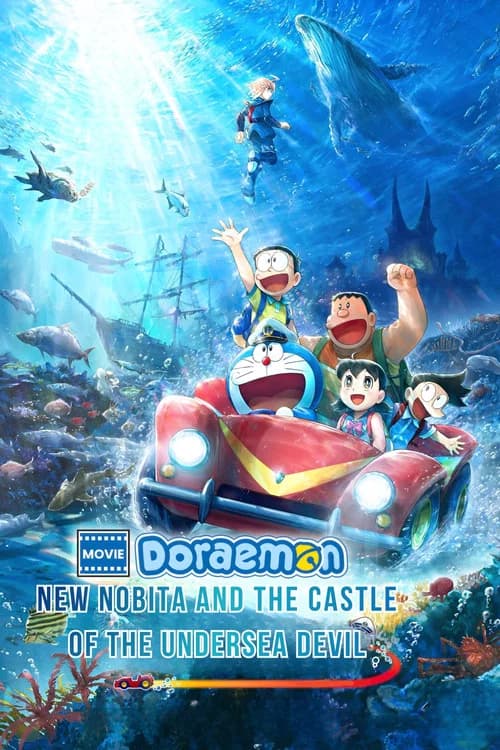
Doraemon the Movie: New Nobita and the Castle of the Undersea Devil
AnimationFeb 27, 2026
Doraemon the Movie: New Nobita and the Castle of the Undersea Devil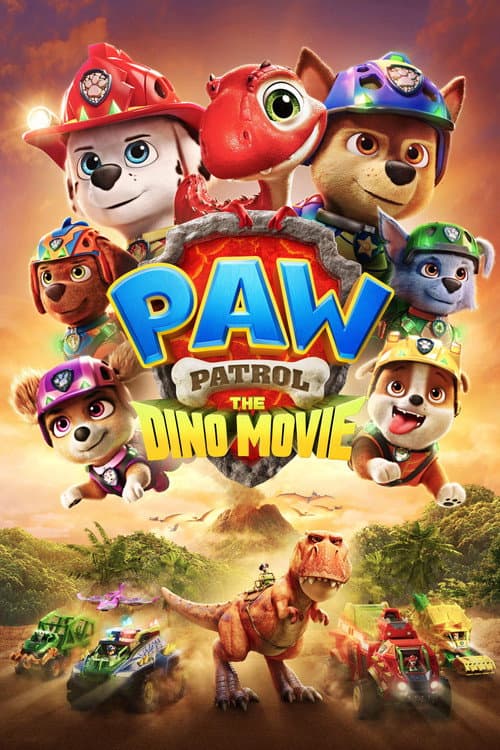
PAW Patrol: The Dino Movie
AnimationJul 23, 2026
PAW Patrol: The Dino Movie 🔥 Hot
The Super Mario Galaxy Movie
FamilyApr 1, 2026
The Super Mario Galaxy Movie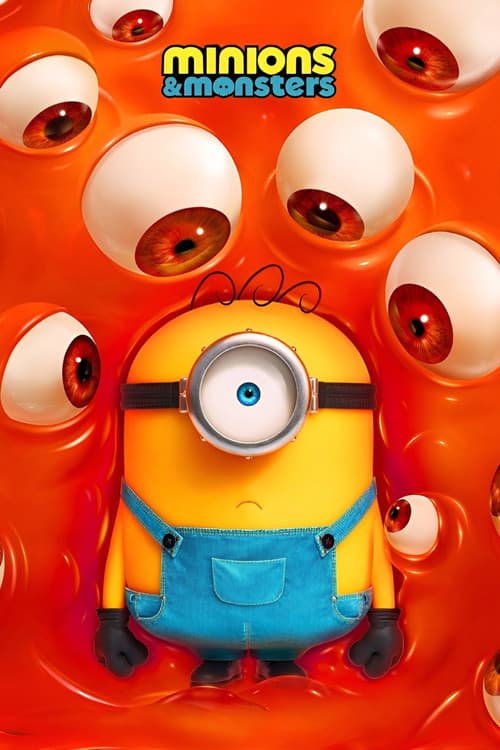 📈 Trending
Minions & Monsters
AdventureJun 24, 2026
Minions & MonstersSign in to join the conversation.