Details
- Language
- English
- Country
- US
- Studio
- Pascal Pictures
- Seasons
- 1 · 8 eps
- TMDb Rating
- 8.8 (313 votes)
- Mood
- darkmelancholy
- Theme
- redemption
- For
- adult
- Format
- limited series
Rating · Quality score from voters
TMDb
8.8/10
IMDb
7.6/10
Popularity · Search interest now
Hot
612.2
Based on TMDb activity
Hype score
leaderboard →69
/ 100↑ +3.5 in 24h
#102 globally#33 in tv
30-day trendWP 87 · YT 32
Spider-Noir ranks among the most-searched TV properties this week, reflecting strong viewer curiosity about the noir universe.
Starring






Where to watch
Links may earn Incoming a commission at no extra cost to you. Streaming data via JustWatch — may not reflect today's catalog.
Incoming Editorial TeamVerified
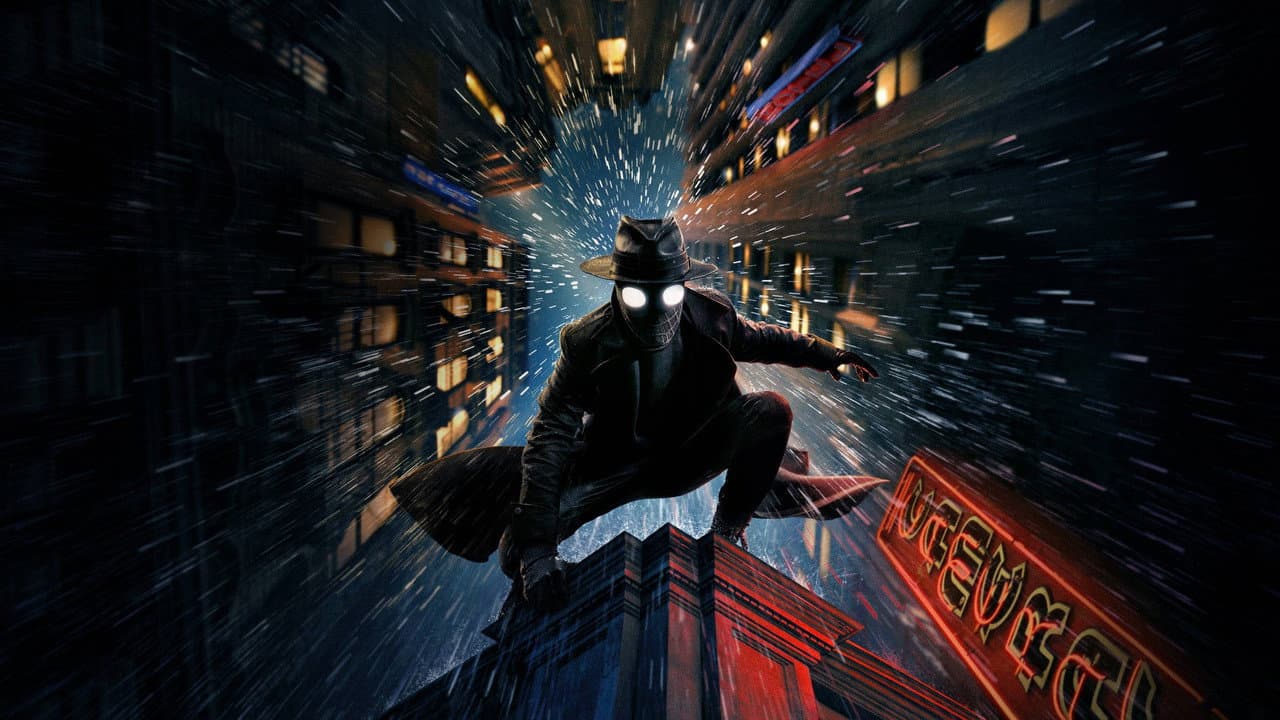
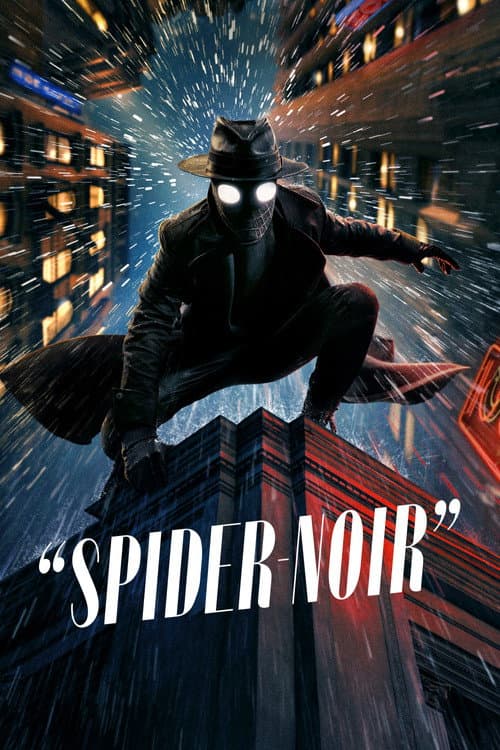
Ben Reilly, an aging and down on his luck private investigator in 1930s New York, is forced to grapple with his past life as the city's one and only superhero.
Trailer
Gallery (24)
Episodes
✓ Previously aired
About this release
Spider-Noir, an eight-episode live-action series produced by Pascal Pictures, Lord Miller, and Sony Pictures Television, is scheduled to arrive on May 25, 2026. Set in 1930s New York, it centers on Ben Reilly, an aging private investigator whose threadbare present is complicated by a past life as the city's only superhero. That premise — a costumed figure stripped of his costume, reduced to cigarettes and cold coffee and cases that don't pay — places the show squarely inside a tradition of noir fiction that has always been hospitable to men who used to matter more than they currently do.
The creative alliance behind the series is worth pausing on. Lord Miller, the production banner operated by Phil Lord and Christopher Miller, has spent the better part of the last decade working at the junction of superhero IP and formally self-aware storytelling. Pascal Pictures, run by Amy Pascal, has been among the central stewards of Sony's Spider-Man properties across multiple formats. Sony Pictures Television supplies the institutional infrastructure. That three-way arrangement suggests a production with significant resources and a reasonably clear sense of where Spider-Man adjacent material can go when it is allowed some distance from the mainline Marvel blockbuster machinery.
Ben Reilly is a character with a specific history in Marvel Comics, where he has appeared as a clone of Peter Parker, taken on the Scarlet Spider identity, and occupied the Spider-Man mantle himself at various points across decades of publication. The version the show is presenting is neither quite that figure nor the Spider-Noir who appeared in the comics as an alternate-universe Peter Parker operating in Depression-era Manhattan. The protagonist here borrows from both wells without being a direct adaptation of either — he is named Ben Reilly, he is in 1930s New York, he is a former superhero, and he is now a detective. What specific mythology the series imports from the comics and what it discards entirely is not yet clear from what has been publicly disclosed.
The genre framing is notable in its own right. Mystery, crime, and action-adventure are the three categories the show occupies, a combination that describes classic noir as accurately as it describes anything. The 1930s setting is not incidental. That decade is the historical cradle of American hard-boiled fiction — Hammett, Chandler, the pulp magazines that established the grammar of rain-slicked streets and moral ambiguity as the default condition of urban life. Placing a superhero in that environment is not a new idea at the level of comics publishing, but as live-action television it remains relatively unexplored territory. What the noir idiom tends to do to superhero material is flatten the triumphalism out of it. The figure who normally swings above the city, resolving crises by force of ability and virtue, is instead moving through it at ground level, compromised, looking for exits.
The eight-episode order is lean by prestige-drama standards and generous by the measure of a limited event series. It implies a story with a defined arc rather than an open-ended franchise run — though the presence of Sony's intellectual property apparatus means that any commercial success would likely generate pressure toward continuation or expansion. Whether Spider-Noir is conceived as a closed narrative or as the first chapter of something larger is one of the questions the available information does not answer.
Several others accumulate alongside it. The casting has not surfaced in the structured data available, which at this stage means either that announcements are being held for a later marketing push or that production details are being managed carefully around a lead performance. The identity of the writers' room and the director or directors attached to individual episodes similarly remains unconfirmed in what has been disclosed. For a show whose entire tonal argument depends on how convincingly it can render 1930s New York — the period detail, the voice, the quality of shadow — those are not trivial omissions. Noir lives or fails in its atmosphere, and atmosphere is almost entirely an execution question.
The down-on-his-luck detective who must reckon with a more heroic former self is, at its core, a story about obsolescence and identity — about what a person owes to a version of himself he can no longer be. That is well-worn dramatic territory, but it is well-worn because it tends to work. The superhero franchise context adds a specific wrinkle: the audience arrives already carrying some understanding of what it means to be a spider-themed hero, which gives the show's premise its compression. It does not have to explain the weight of a cape in order to establish what Reilly has put down.
What remains to be seen is whether the production deploys that compression with any rigor or whether it functions mainly as branding shorthand. The involvement of Lord Miller, whose animated Spider-Man work operated with a genuine awareness of the material's possibilities, suggests some appetite for the former. Pascal Pictures' long tenure inside the Sony Spider-Man ecosystem suggests familiarity with the property's limits as much as its opportunities.
Audiences likely to seek the series out will include viewers drawn to period crime drama who have some tolerance for genre hybridity, fans of the broader Spider-Man multiverse who are curious how the property translates into a live-action noir register, and those who followed Lord Miller's animated work and want to see how the same producers handle related material in a different format. The May 2026 premiere date gives the production roughly a year of additional runway before it meets any of them.
Our coverage
- Five Seasons. Zero Emmy Nominations for Acting. The Academy Still Can't Figure Out Antony Starr
The Boys ended its run as one of the most-watched shows in Prime Video history. It submitted 28 actors for Emmy consideration. The Television Academy nominated zero of them. Here's what that tells you about how the Emmys work.
- Spider-Noir Got 11 Emmy Nominations. Nicolas Cage Got Zero
Amazon's Spider-Noir earned 11 Emmy nominations for craft and technical achievement. The show's lead actor was not among them. Here's why that split tells the real story.
Comments
Sign in to join the conversation.
Loading…