





 📈 Trending
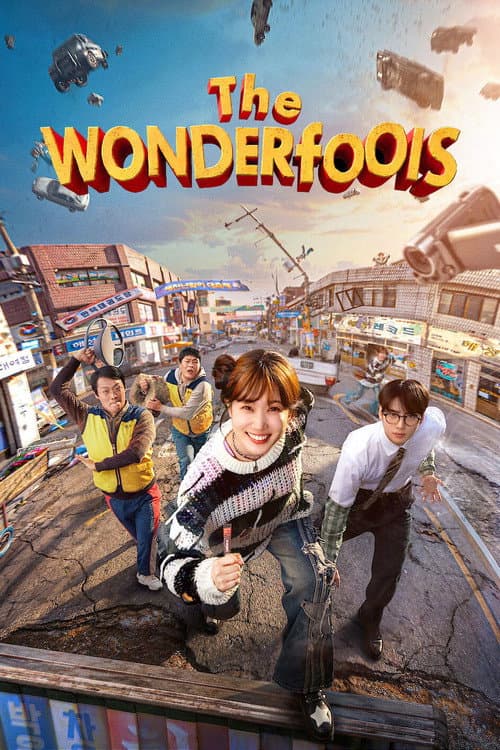
The WONDERfools
Action & AdventureKoreanMay 15, 2026
The WONDERfools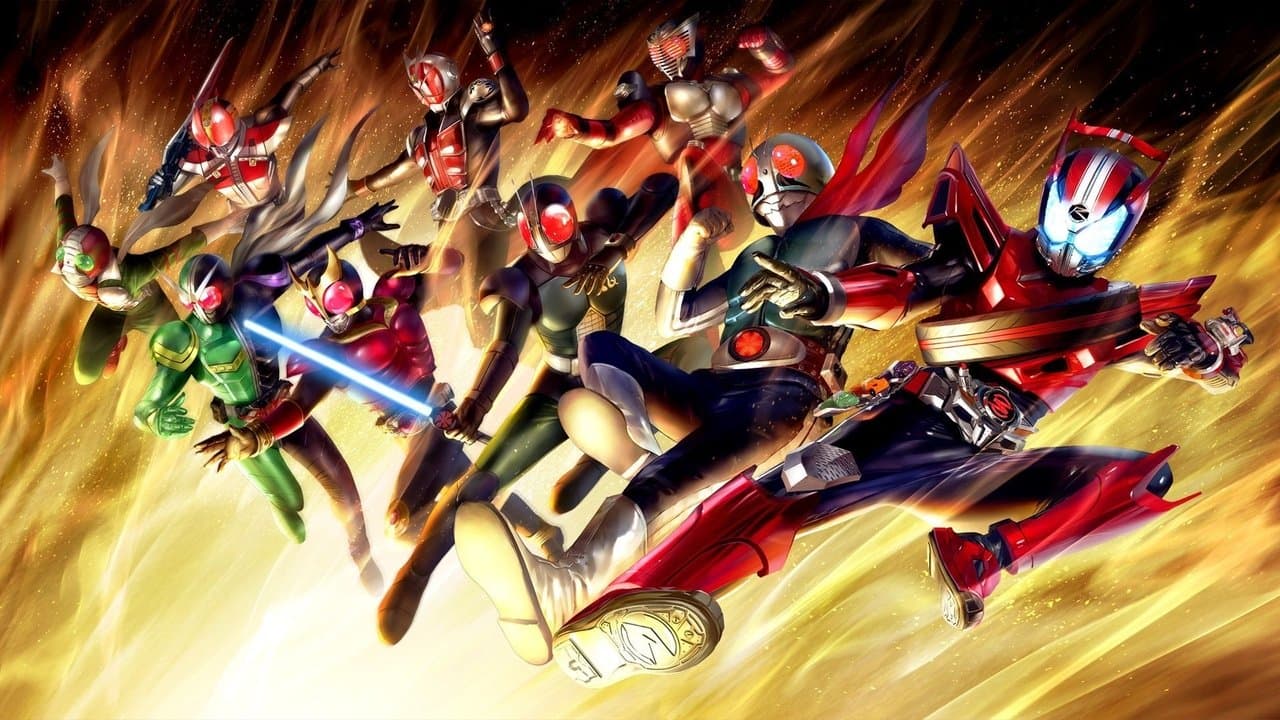
Details
Rating · Quality score from voters
Popularity · Search interest now
Based on TMDb activity
Links may earn Incoming a commission at no extra cost to you. Streaming data via JustWatch — may not reflect today's catalog.
Incoming Editorial TeamVerified
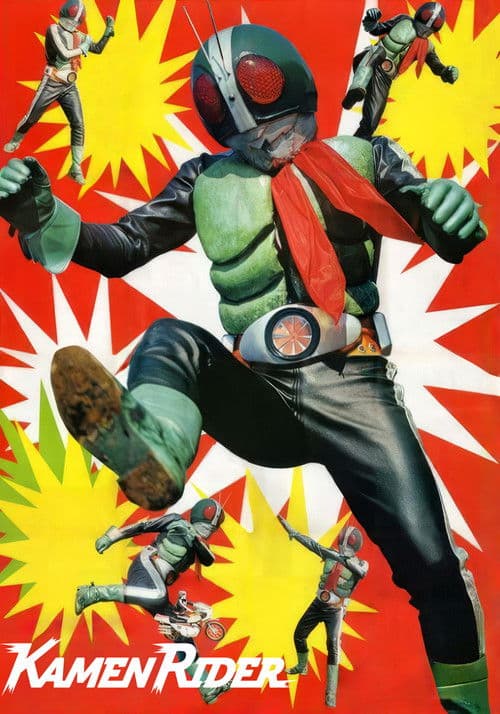
Kamen Rider (仮面ライダー) is a Japanese tokusatsu action-adventure and sci-fi series produced by TV Asahi, premiering on April 3, 1971. The franchise follows cyborg heroes battling the forces of the villainous organization Shocker and its successors across decades of television.
The original Kamen Rider series premiered on April 3, 1971 on TV Asahi in Japan. The franchise has continued across 37 seasons since that debut.
Kamen Rider is available to stream on Amazon Prime Video, Amazon Prime Video with Ads, Crunchyroll Amazon Channel, and the Shout! Factory Amazon Channel. Individual episodes and seasons can also be purchased through Amazon Video.
The Kamen Rider franchise spans 37 seasons and a total of 1,731 episodes across its run. Individual season episode counts vary throughout the franchise's history.
Kamen Rider has 37 seasons and 1,731 total episodes. The series began in 1971 on TV Asahi and has continued to produce new installments across subsequent decades.
Kamen Rider belongs to the action-adventure, sci-fi-fantasy, and drama genres. It is a tokusatsu production, a Japanese live-action format that typically combines costumed heroes, practical effects, and serialized storytelling.
Kamen Rider is produced by TV Asahi, the Japanese television network that has broadcast the franchise since its debut in 1971. The series is filmed and originally broadcast in Japanese.
The original Kamen Rider — titled 仮面ライダー in Japanese — premiered on TV Asahi on April 3, 1971, produced by Toei Company and ADK. It introduced a premise that would become one of the more durable templates in Japanese popular entertainment: a young motorcyclist named Takeshi Hongo is abducted by a clandestine organization called Shocker, which intends to use him as a surgically modified operative in its campaign for world domination. Hongo escapes before his conditioning is complete, and the series follows his subsequent war against the organization that remade him, fighting as Kamen Rider — a helmeted, insect-inspired cyborg who deploys Shocker's own technology against it.
The premise carries a tension that the genre would return to repeatedly across the following decades: the hero's power is inseparable from the violence done to him. Hongo is not a volunteer. He does not discover a weapon or inherit a legacy in any conventional sense. He was taken, altered against his will, and left with capabilities he did not choose. That the series frames this primarily as an action-adventure — with Hongo riding his motorcycle across rural and industrial Japan, dispatching Shocker's monster-of-the-week operatives — does not entirely dissolve the darker logic underneath. The show was aimed squarely at children, but its foundational scenario involves bodily violation and the question of what a person owes to the thing they have been turned into.
The production context is straightforward: this is a Toei live-action tokusatsu series, a category of Japanese television built around elaborate practical suits, stunt choreography, and weekly episodic storytelling. Toei had already worked in adjacent territory with Super Sentai and other productions, and the company's partnership with TV Asahi would prove long-lasting. Kamen Rider itself ran for what would eventually become 37 seasons and 1,731 episodes across its franchise lifespan — figures that situate it among the most expansive franchises in television history by sheer volume, comparable in longevity to Super Sentai and Ultraman within the tokusatsu tradition, and to long-running serial drama franchises globally.
What is notable about this original 1971 series, viewed from the present, is precisely its position as the point of origin for all of that subsequent material. Every later Kamen Rider series — the various Heisei-era entries that relaunched the franchise in 2000, the Reiwa-era series that continue today — traces its conceptual lineage back to this production. The masked rider, the transformation sequence, the motorcycle, the evil organization, the corrupted-body-as-weapon: these were not inherited conventions when the show launched. They were being established for the first time.
Some questions about the series are not answered by what is publicly available in the basic premise. The show ran for a substantial original episode count, and it is not immediately clear from the premise alone how the dynamic between Hongo and Shocker evolves over that run, whether the organization's internal hierarchy receives meaningful development, or how the introduction of a second rider — a development that occurred partway through the original broadcast — shifted the show's structure. Viewers coming to the series for the first time will find that the premise sets up a conflict but leaves the architecture of its resolution largely unexplored in any summary.
There is also the question of translation and accessibility. The series is currently available for streaming on Amazon Prime Video, with additional access through Crunchyroll's Amazon channel and Shout! Factory's Amazon channel, as well as for purchase on Amazon Video. The specifics of subtitling, dubbing, or the editorial condition of the available episodes — whether they are presented in original broadcast form or have been subject to any restoration or alteration — are not detailed in the available information. For a 1971 Japanese production, the technical quality of available versions is a practical concern for anyone approaching it as a viewing experience rather than as a cultural artifact to be read about.
The audience for this particular entry in the release calendar is likely distributed across a few distinct groups. There are viewers who have followed the franchise through its later, more recent incarnations and who approach the 1971 original with the curiosity of someone tracing a lineage backward — interested in seeing what the conventions looked like before they were conventions. There are also viewers drawn to tokusatsu as a genre category, for whom the original Kamen Rider occupies a position similar to the original Star Trek in American science fiction television: not necessarily the most polished or accessible entry point, but the one with the greatest historical weight. And there will be a smaller group interested in the series specifically as an artifact of early 1970s Japanese television production, curious about what the action-adventure genre looked like in that context before decades of refinement and genre self-awareness accumulated around it.
For all of these viewers, the practical reality is that the series is now available through streaming without additional cost beyond a Prime Video subscription, which lowers the barrier to entry considerably for what is, in its original form, a fifty-four-year-old foreign-language television production.
📈 TrendingThe WONDERfools
Action & AdventureKoreanMay 15, 2026
The WONDERfools ⭐ Popular
Outlander
DramaAmericanAug 9, 2014
Outlander 🔥 Hot
Regular Show: The Lost Tapes
AnimationAmericanMay 11, 2026
Regular Show: The Lost Tapes
The Exiled Heavy Knight Knows How to Game the System
AnimationJapaneseJul 3, 2026
The Exiled Heavy Knight Knows How to Game the System
One Piece
Action & AdventureJapaneseOct 20, 1999
One Piece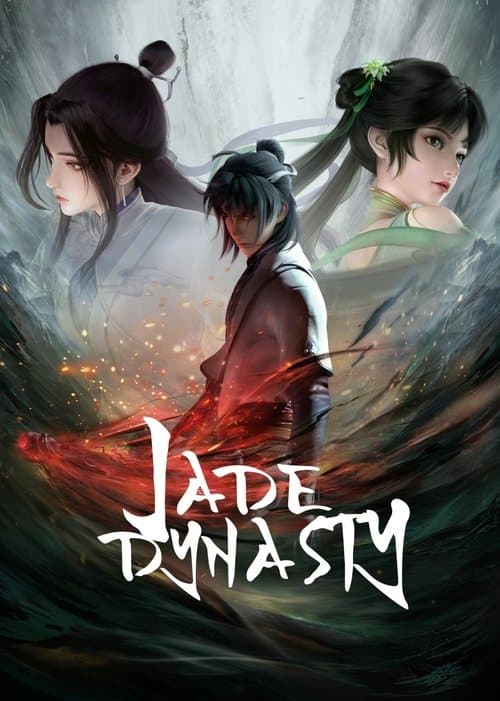
Jade Dynasty
AnimationChineseAug 2, 2022
Jade DynastySign in to join the conversation.