 📈 Trending
Peddi
ActionJun 3, 2026
Peddi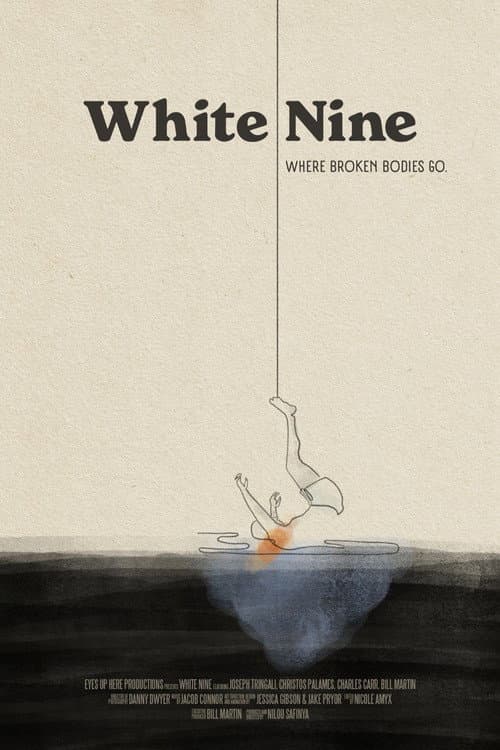 Hot
Details
Popularity · Search interest now
Based on TMDb activity
Hype score
leaderboard →White Nine's trailer ranks in the top 4% for YouTube movie views.
Not currently available for streaming or purchase.
Links may earn Incoming a commission at no extra cost to you.
Incoming Editorial TeamVerified
White Nine is both a historical account of the independent living movement in Massachusetts and a compelling story of resilience, the power of collective action, and the enduring quest for equality, independence, and freedom for all. Fifty years ago, Joe, Christos, and Charlie, formed a profound bond as teens when their lives were forever changed by paralyzing spinal cord injuries-essentially a death sentence at that time. Their intertwined stories form the backbone of a larger narrative: the arduous fight for independence and civil rights for people with disabilities. Today, with enforcement weakening and legal challenges mounting, the ADA's promise of equality faces serious threats. As a country, we must actively defend these vital civil rights now to ensure people with disabilities are not pushed back into the margins. White Nine serves as a reminder of the battles fought, the progress achieved, and the critical work that still lies ahead.
White Nine, a documentary film releasing on April 25, 2026, takes its subject from a specific and underexamined chapter of American civil rights history: the independent living movement in Massachusetts, told through the lives of three men whose paths converged decades ago under circumstances that would reshape the rest of their lives.
The film centers on Joe, Christos, and Charlie, who met as teenagers after each sustained paralyzing spinal cord injuries. The source material frames such injuries, at that time, as essentially a death sentence — not necessarily in the immediate physical sense, but in terms of what society offered, or more precisely refused to offer, to people who survived them. Institutionalization, dependency, and exclusion from public life were the practical realities facing young people with severe disabilities in that era. That the three formed a lasting bond under those conditions, and that their individual stories are described as forming the backbone of a larger collective narrative, suggests the film is structured around personal testimony as a way into the broader political and legal history of disability rights in the United States.
The independent living movement, as a historical phenomenon, was a push by people with disabilities to wrest control of their lives from medical and institutional frameworks that treated disabled individuals as patients to be managed rather than citizens with autonomous claims on public life. Massachusetts was one of its important centers of activity. White Nine appears to situate itself within that history specifically, using the experiences of Joe, Christos, and Charlie as ground-level witnesses to what that fight looked like before the Americans with Disabilities Act was passed in 1990 — and, significantly, what is at stake now.
That contemporary dimension is explicit in the film's framing. The source description notes that enforcement of the ADA has been weakening and that legal challenges are mounting, positioning White Nine not merely as a retrospective document but as an intervention in a present argument. Documentaries that operate this way — using historical testimony to address a live political question — carry a particular kind of structural challenge: the film must honor the weight of past experience without letting the urgency of current events flatten the individuals at its center into symbols. Whether White Nine manages that balance is something the available material cannot answer. What is known is that the framing is deliberate and that the filmmakers appear to have chosen the fifty-year mark of the characters' initial injuries as a meaningful temporal anchor, linking the personal timelines of Joe, Christos, and Charlie to a broader half-century arc of progress and present-tense erosion.
There is much that remains opaque about the production. No director is named in the available information, which makes it difficult to place the film within any particular documentary tradition or to anticipate what formal choices might shape the viewer's experience. Whether it relies primarily on talking-head interviews with the three central figures, archival footage from the movement's earlier decades, or some combination of those approaches with more stylized reconstruction is unknown. The title itself — White Nine — is not explained in the source material, leaving open the question of whether it refers to a place, an organizational name from the movement's history, or something more personal to the three men's shared story.
The description's language around "intertwined stories" suggests a structure that moves between the three men's individual experiences while weaving them into the collective history, but the degree to which the film foregrounds the policy and legal dimensions versus the intimate and biographical ones is unclear. Civil rights documentaries occupy a wide spectrum in that regard, from the dryly institutional to the emotionally immersive, and where White Nine falls on that spectrum will largely determine what kind of audience engagement it invites.
The timing of the release is worth noting in its own right. An April 2026 release places the film in the period leading into a major American election cycle's aftermath, at a moment the filmmakers clearly believe is one of heightened risk for the protections the ADA codified. That context is baked into the film's stated purpose — it is described not only as historical account but as a call to action, a reminder of what was fought for and a warning about what could be lost. That dual function, documentary as memory and documentary as advocacy, has a long tradition in American nonfiction filmmaking, and it carries both the strength of moral clarity and the risk of subordinating complexity to argument.
The audience most likely to seek out White Nine will include people directly connected to disability communities and independent living organizations, as well as viewers with a general interest in American civil rights history who may be less familiar with how disability rights fits into that larger story. Given the film's explicit advocacy framing, it will likely find a receptive audience in educational and community screening contexts, alongside whatever theatrical or streaming platform distribution it secures for the April 2026 date.
Sign in to join the conversation.