 🔥 Hot
Peddi
ActionJun 3, 2026
Peddi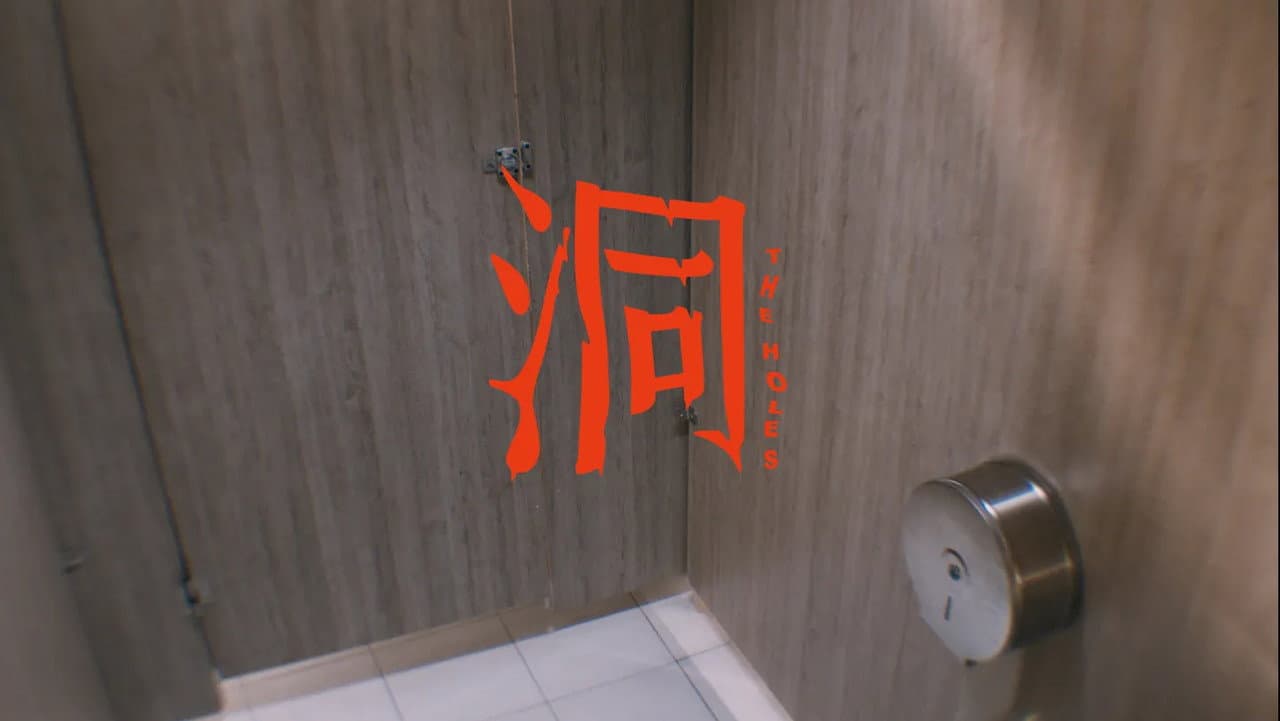
Details
Popularity · Search interest now
Based on TMDb activity
Not currently available for streaming or purchase.
Links may earn Incoming a commission at no extra cost to you.
Incoming Editorial TeamVerified
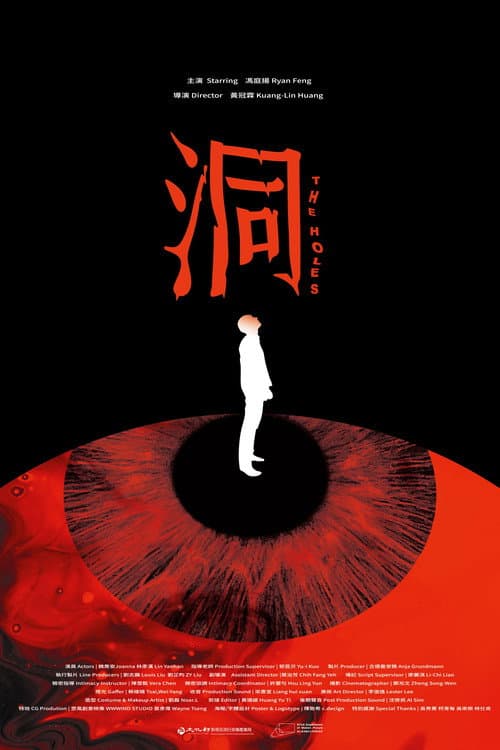
A man enters a restroom, expecting a moment of privacy. He relieves himself, watches a film, and masturbates, unaware that the space around him has already begun to shift. As the fourth wall dissolves, his eyes meet a chilling gaze peering from the depths of desire.
The Holes (洞), a Chinese-language drama film, is scheduled for release on April 25, 2026.
The film's premise is spare and, by the standards of contemporary dramatic cinema, deliberately constrained. A man enters a restroom expecting privacy. He relieves himself, watches a film, and masturbates — a sequence of solitary, bodily acts performed in the presumed safety of an enclosed space. What the film's synopsis foregrounds is not the acts themselves but the condition surrounding them: the man does not know that the space has already begun to change around him. When his eyes eventually meet a gaze coming from somewhere within that space — described as peering "from the depths of desire" — the sense of containment collapses. The fourth wall, the synopsis specifies, dissolves. What was private becomes observed. What was enclosed turns out to have been open all along.
That structural move — the dismantling of the boundary between the person who looks and the person who is looked at — has a long tradition in art-house and experimental cinema, particularly in work preoccupied with voyeurism, shame, and the architecture of private life. Films that make the bathroom or the toilet a primary setting carry a specific charge: these are the rooms that modern societies have constructed to be invisible, the spaces where bodily life is supposed to disappear from social view. Placing a camera there, and then making that camera's presence felt within the narrative, is a choice with implications that extend well beyond shock value. The title itself — rendered both in English as The Holes and in Chinese as 洞, meaning "cave," "hole," or "cavity" — is doing obvious thematic work. Holes are passages, apertures, points of vulnerability. They are also, in the context of restroom architecture and anonymous sexual encounter, a specific cultural artifact: the glory hole, a fixture of queer underground life that carries its own complicated history of desire, anonymity, and risk.
Whether the film engages directly with that history or treats the hole as a more diffuse metaphor is one of the more interesting open questions the available information does not answer. The synopsis describes a "chilling gaze" and invokes desire, but whether the film's register is erotic, horrific, absurdist, or some layered combination of those modes remains unclear. The phrase "the fourth wall dissolves" complicates things further: it suggests the film is aware of itself as a film, that the solitary man watching a film inside the restroom is in some sense watching — or being watched by — the audience of The Holes itself. That kind of formal recursion, if that is indeed what the film pursues, places it in conversation with a tradition of self-reflexive cinema that treats spectatorship itself as the subject. The man watching a film while being watched; the audience watching a film about watching; the hole through which one gaze travels to meet another — the geometry of it is intricate, and deliberately so.
The film's original language is Mandarin Chinese, which places it within an increasingly visible strand of Chinese-language independent and art-house cinema that has found international festival circulation over the past two decades. Beyond that linguistic and industrial context, the production background here is thin. No director is named in the available information, no cast is identified, and no production company or country of origin beyond the language designation is specified. That absence of attribution is itself notable. Films circulating without readily attached names tend to fall into one of a few categories: works by emerging filmmakers without established international profiles, projects that have not yet completed their press materials, or, occasionally, films whose authorship is intentionally obscured as a conceptual or protective gesture. None of those possibilities can be confirmed here, and it would be wrong to read significance into what may simply be a gap in the available data.
What can be said is that the film appears to be operating at the margins of mainstream exhibition, with a popularity metric that reflects very limited current visibility. This is not unusual for a foreign-language drama with an unconventional premise in the pre-release window, particularly one whose release date is still several months out. Festival screenings, if any have occurred or are planned, are not documented in the available information.
The question of audience is genuinely interesting in this case. The Holes is likely to attract viewers drawn to formally experimental cinema, to work that treats the body and its routines as legitimate dramatic subject matter, and to films willing to make spectatorship itself uncomfortable. Its Chinese-language origin may draw additional attention from audiences tracking contemporary developments in Chinese-language art cinema. Viewers who respond to work in the vein of transgressive or body-focused European art film — the kind that treats shame and desire as philosophical rather than merely provocative — may find the premise resonant. What the film actually does with that premise will not be known until it is seen.
🔥 HotPeddi
ActionJun 3, 2026
Peddi ⭐ Popular
Digger
ComedySep 28, 2026
Digger 🔥 Hot
The Social Reckoning
DramaOct 7, 2026
The Social Reckoning
LA BOLA NEGRA
DramaSep 25, 2026
LA BOLA NEGRA ⭐ Popular
Primetime
ThrillerSep 23, 2026
Primetime
The Shawshank Redemption
DramaSep 23, 1994
The Shawshank RedemptionSign in to join the conversation.