🔥 Hot
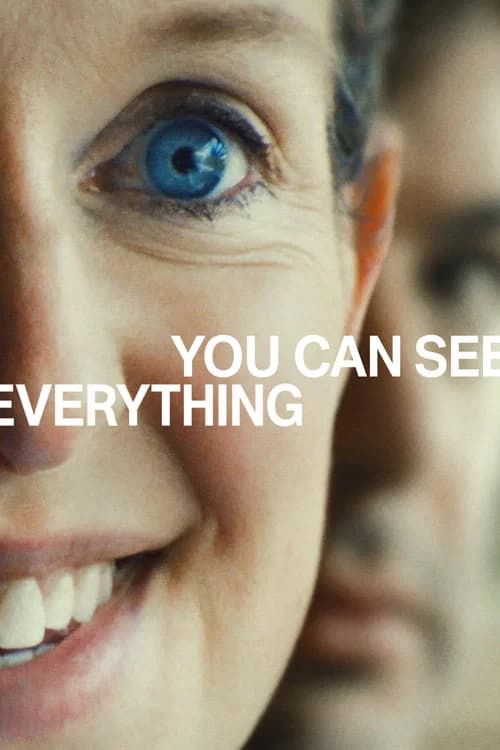
You Can See Everything
DocumentaryOct 16, 2026
You Can See EverythingReleased
Details
Popularity · Search interest now
Based on TMDb activity
Not currently available for streaming or purchase.
Links may earn Incoming a commission at no extra cost to you.
Incoming Editorial TeamVerified
The Detectorists is a coming-of-age story about Cariad, a young detection dog learning to use her powerful nose to help protect wildlife. Set on the riverbanks of rural Wales, Cariad teams up with her owner Lee and seasoned sniffer dog Neo on a mission to uncover signs of otters—an elusive, protected species. But learning to read the land isn’t easy, and Cariad has a lot to prove. With every scent trail and muddy pawprint, she edges closer to becoming a vital part of the conservation team. It’s a story of instinct, training, and finding your place—one sniff at a time.
There is a particular kind of documentary that earns its audience not through spectacle but through patience — the willingness to stay still long enough for something small and true to reveal itself. The Detectorists, releasing on April 24, 2026, appears to belong to that tradition. A documentary in English, the film follows Cariad, a young detection dog in the early stages of her working life, as she learns to apply her sense of smell to wildlife conservation along the riverbanks of rural Wales.
The premise is specific in a way that rewards attention. Cariad is paired with her owner, Lee, and an experienced sniffer dog named Neo, and the work they undertake together centers on locating evidence of otters — a protected species that, by nature, is rarely seen directly. Otters leave behind traces: spraints, prints in soft mud, the subtle disruption of bankside vegetation. For a conservation team, a trained dog's nose is not a novelty but a practical instrument, capable of detecting chemical signatures at concentrations no human surveyor could register. The film's central dramatic question is therefore not whether otters exist in these waterways but whether Cariad can learn to find them — and whether she can find her footing within a working team that already functions without her.
That framing — the newcomer learning a discipline alongside a veteran — gives the film a structural shape that sits somewhere between a coming-of-age narrative and a workplace documentary. Cariad is described explicitly as a coming-of-age subject, a young dog with something to prove, still developing the attentional discipline that separates a promising animal from a reliable one. Neo, the seasoned dog, provides an implicit standard. The tension between those two figures is not manufactured; it is the ordinary tension of any apprenticeship, transposed into a context most viewers will not have considered before.
The setting carries its own weight. Rural Wales, and specifically its river corridors, is a landscape shaped by water — by the Wye, the Teifi, the Usk, and dozens of smaller tributaries that drain the uplands into the Bristol Channel and the Irish Sea. These are places where agricultural pressure, water quality, and species recovery intersect in ways that make otter surveying a genuinely consequential activity. The otter's legal protection under UK wildlife law means that developers, farmers, and water authorities have practical obligations to account for otter presence before undertaking work near waterways. A detection dog that can confirm or rule out otter activity is not merely a charming subject for a documentary — it is a working part of an environmental compliance process.
None of which is to suggest that The Detectorists is positioning itself as a policy film. The language surrounding it is warmer than that, leaning into the emotional arc of Cariad's training and the relationship between dog, handler, and landscape. The title itself invites a kind of double reading: the detectorists are the dogs, whose noses do the detecting, but the word also carries connotations of careful, methodical searching — of moving slowly across ground, alert to what's hidden just beneath the surface. Whether the film develops that resonance deliberately or lets it sit in the background is one of the things the release hasn't clarified.
What also remains open is the film's formal approach. Documentary filmmaking about animals and conservation ranges across a wide spectrum — from the high-production, aerial-photography model associated with large natural history broadcasters, to the observational, low-intervention style of a filmmaker embedded with a small team over a long period. The material here — riverbanks, detection work, a single young dog's training — suggests something intimate and close to the ground rather than sweeping and panoramic. But without information about the production team or the filming methodology, that remains an inference rather than a fact. Similarly, the film's intended audience is not specified in the available material, and whether it is pitched at children, at wildlife enthusiasts, or at a general adult documentary audience would shape both its tone and its distribution reach considerably.
The subject matter also raises a question the film will need to answer implicitly, if not explicitly: how do you show a dog using its nose? Olfaction is invisible. The drama of detection dog work is largely interior to the animal — a shift in posture, a change in breathing, a sudden stillness that signals to a practiced handler that something has been found. Translating that into film requires either trust in the viewer to read animal behavior closely, or some form of supplementary explanation. The best wildlife documentaries manage this without condescension; they let behavior speak and provide context without overwhelming the image with narration. Whether The Detectorists achieves that balance is, at this point, an open question.
The film opens in a relatively quiet release window, and its low mainstream profile — a popularity score that places it well outside the crowded center of the spring 2026 release calendar — suggests it will find its audience through conservation communities, wildlife documentary enthusiasts, and viewers drawn to the particular atmosphere of the Welsh countryside rather than through wide theatrical exposure. People who have spent time near rivers, or who have followed the slow, contested recovery of the otter in Britain over the past half-century, are likely to bring a specific readiness to this material. For that audience, the small scale of the story — one dog, one river, one protected species — will be precisely the point.
You Can See Everything
DocumentaryOct 16, 2026
You Can See EverythingReleased ⬆️ Rising
The Mongoose
ActionOct 29, 2026
The MongooseReleased ⬆️ Rising
The Runner
ThrillerSep 3, 2026
The Runner ⬆️ Rising
Star Wars: The Mandalorian and Grogu
ActionMay 20, 2026
Star Wars: The Mandalorian and Grogu ⬆️ Rising
Crawlers
HorrorSep 24, 2026
Crawlers ⬆️ Rising
The Fix
ActionSep 10, 2026
The FixSign in to join the conversation.