
 🔥 Hot
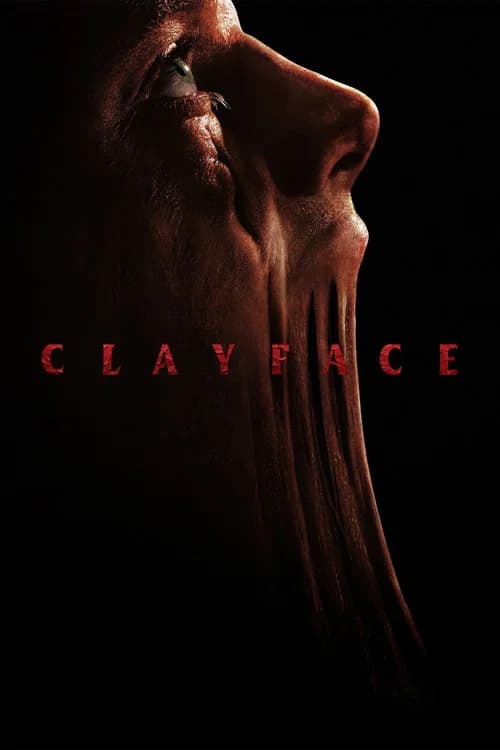
Clayface
HorrorOct 19, 2026
ClayfaceReleased
Details
Popularity · Search interest now
Based on TMDb activity
Not currently available for streaming or purchase.
Links may earn Incoming a commission at no extra cost to you.
Incoming Editorial TeamVerified
Over the course of a sleepless night, a film student wrestles with exhaustion, corrupted footage, and hallucinations of flickering lights while attempting to finish his newest horror piece. By morning, his imagined visions have somehow reshaped the film in ways he never intended.
The Wikipedia title in the metadata ("Wayne Static") does not correspond to this film, so that data point is excluded per the grounding rules.
---
Static Hours, a horror-thriller with science-fiction elements produced by Humber Polytechnic, is scheduled for release on Friday, April 24, 2026. The film follows a film student through a single sleepless night as he attempts to complete a horror project of his own making — a premise that collapses the distance between creator and creation in ways the story takes seriously rather than as mere backdrop.
The institutional credit is worth pausing on. Humber Polytechnic is a Canadian post-secondary institution, and a production bearing a school's name rather than a conventional studio or distributor occupies a particular place in the landscape of genre filmmaking. Student and polytechnic productions have a long, uneven history in horror specifically — the genre has always been hospitable to low-budget work, partly because darkness and dread are cheaper to manufacture than spectacle, and partly because horror audiences have demonstrated a consistent willingness to engage with films made outside the Hollywood apparatus, provided the craft justifies the attention. Whether Static Hours is a formal student production, a faculty-adjacent project, or something the institution backed through another arrangement is not clear from the available information, but the credit suggests a film made with limited resources and, possibly, a tighter creative circle than a commercially financed production would involve.
The premise itself is a recognizable type — the horror film about making a horror film — but the specific details here push it somewhere more specific than simple meta-commentary. The protagonist is not a professional director or a seasoned crew but a student, which means the power dynamics are different: there is no budget to protect, no distributor to satisfy, just the private pressure of an unfinished work and a deadline implied by the arrival of morning. The corrupted footage is the pivot. In most films of this kind, the supernatural intrudes from outside — a cursed tape, a haunted location, an entity that follows the crew home. Here, the corruption is already inside the material, already part of what the student is working with, and the hallucinations of flickering lights suggest that the boundary between the damaged footage and the filmmaker's perception has begun to dissolve. By morning, according to the film's own description, his imagined visions have reshaped the film in ways he never intended. That sentence is doing significant work. It implies that the film within the film has changed — not that the student merely perceives it differently, but that it has been physically or digitally altered by something he cannot account for.
That distinction — between subjective horror and objective change — is one the genre handles in very different ways depending on what it wants to argue. Films that leave the transformation ambiguous, that never confirm whether the protagonist is unreliable or whether something genuinely external has intervened, tend to sustain unease longer but can frustrate audiences looking for resolution. Films that commit to the objective reality of the supernatural event trade that sustained ambiguity for a cleaner, if often more conventional, arc. Where Static Hours lands on that question is one of the more interesting things the available description leaves open. The phrase "somehow reshaped" suggests the filmmakers themselves are not fully telegraphing the mechanism, which may be a deliberate preservation of the film's central tension or simply a reflection of how the film is being positioned ahead of release.
The science-fiction designation alongside horror and thriller is also not fully explained by the description. Corrupted footage and hallucinations could, in principle, fit entirely within a psychological horror framework. The addition of science fiction implies something more — perhaps a technological explanation for what happens to the footage, or a concept involving the relationship between recorded media and consciousness that goes beyond the supernatural. It is also possible the science-fiction tag reflects the film's interest in the mechanics of image-making and image-corruption as phenomena with their own logic, a kind of genre classification by sensibility rather than by plot element. That ambiguity will likely only resolve on viewing.
The single-night structure is a formal constraint that carries its own implications. Confining a film to one location and one time period is not inherently a budgetary decision — many well-resourced films have made the same choice — but it tends to concentrate pressure. The student cannot leave the situation, cannot sleep, cannot reset. The hallucinations accumulate rather than resolve. That kind of compression has been used effectively in horror to make the audience feel the same temporal distortion the protagonist does, a sense that the night is both too long and moving too fast. Whether Static Hours uses its structure that way or treats the single-night frame as a container rather than an active element is another question the description does not answer.
An English-language production from a Canadian polytechnic with a popularity metric that sits near zero in whatever tracking system generated this metadata is, by any conventional measure, a small film. It will reach viewers largely through festival circuits, specialty platforms, or whatever distribution arrangement Humber Polytechnic has in place — the kind of path that many genre films with institutional origins follow before finding their audience or disappearing quietly. The people most likely to seek out Static Hours are genre enthusiasts with a specific appetite for films that treat horror as an occasion for thinking about art-making, audiences drawn to the long tradition of self-referential horror, and those who follow new work coming out of Canadian film programs as a matter of habit or professional interest.
🔥 HotClayface
HorrorOct 19, 2026
ClayfaceReleased ⭐ Popular
The Awakening
HorrorOct 29, 2026
The AwakeningReleased ⭐ Popular
Backrooms
HorrorMay 27, 2026
Backrooms 📈 Trending
Resident Evil
HorrorSep 16, 2026
Resident Evil 🔥 Hot
The End of Oak Street
Science FictionAug 12, 2026
The End of Oak Street ⬆️ Rising
Crawlers
HorrorSep 24, 2026
CrawlersSign in to join the conversation.