🔥 Hot
You Can See Everything
DocumentaryOct 16, 2026
You Can See EverythingReleased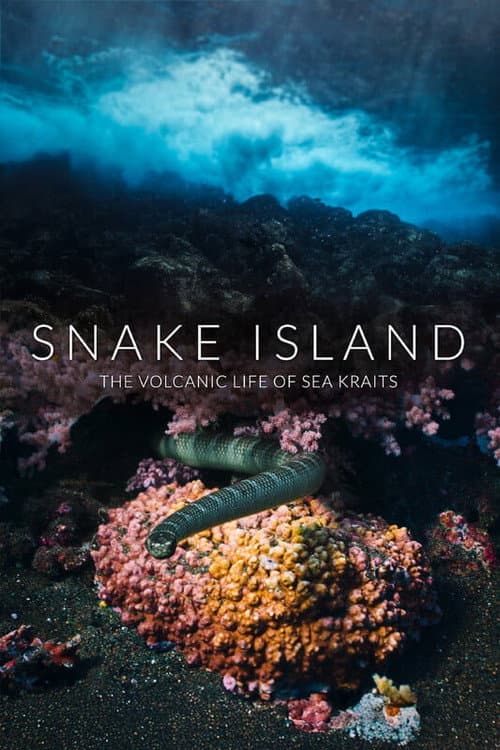 Warm
Details
Popularity · Search interest now
Based on TMDb activity
Not currently available for streaming or purchase.
Links may earn Incoming a commission at no extra cost to you.
Incoming Editorial TeamVerified
On the reefs of Pulau Manuk in Indonesia’s Banda Arc, sea kraits thrive among coral rooted in a volcanic island rising from deep ocean. As their daily rhythms unfold, a rare behaviour emerges. Sea kraits hunt in groups alongside schools of bluefin trevally, forming one of the ocean’s most elusive predator alliances.
A documentary titled Snake Island: The Volcanic Life of Sea Kraits is scheduled for release on April 24, 2026. The film is set on Pulau Manuk, a volcanic island within Indonesia's Banda Arc, and centers on the sea kraits — banded marine snakes — that populate the reefs surrounding this geologically active landmass. Beyond its subject matter, little has been formally disclosed about the production: no director, distributor, or broadcaster has been named in the available material, which leaves the film's precise origins somewhat opaque ahead of its release.
The setting alone gives the film a particular character before a single frame is shown. Pulau Manuk sits in the Banda Sea, one of the more remote stretches of the western Pacific, and the island itself is the exposed peak of a submarine volcano. That geological backdrop — coral reefs growing from rock that emerges out of deep ocean, warmed by volcanic activity — is not a neutral stage. It is an ecosystem shaped by forces that are still actively at work, and the film appears to lean into that tension between violent geological process and the delicate biological communities that have established themselves around it. Sea kraits, which divide their lives between the ocean and dry land (they hunt underwater but return to shore to rest, digest, and reproduce), are a fitting subject for a location defined by a similar kind of threshold — neither fully seafloor nor fully island, neither stable nor continuously erupting.
The genre places Snake Island within a long tradition of reef-focused natural history filmmaking, a form that stretches back decades and that has, in recent years, placed increasing emphasis on behavior that confounds simple predator-prey categories. The footage of complex inter-species cooperation in particular has become something of a point of competition among nature documentary productions, with sequences of unexpected alliances — fish coordinating hunts with octopuses, birds following army ants — now recognized as marquee material. Snake Island appears to be angling toward that territory directly. The central behavioral claim in the available description is that sea kraits on Pulau Manuk hunt cooperatively alongside schools of bluefin trevally, a large and fast pelagic fish, forming what is described as one of the ocean's most elusive predator alliances. That framing — not merely that the behavior occurs, but that it is rare and difficult to document — suggests the film has at least some intention of foregrounding the challenge of capturing what it shows, a device that has been used to significant effect in productions working with difficult-to-film animals in remote locations.
Whether the film succeeds in placing that behavior in a rigorous scientific context, or treats it primarily as spectacle, is not something the available information resolves. The cooperative hunting of sea kraits in association with trevally has received some scientific attention, with researchers noting that the snakes and fish appear to exploit one another's hunting techniques — the trevally driving fish toward reef structures where the kraits can pursue them into crevices the trevally cannot enter, and the kraits in turn flushing prey back into open water. How much of this explanatory framework the film incorporates, and how it balances scientific narration against visual storytelling, remains an open question. Natural history films of this kind can range from tightly argued observational essays to primarily aesthetic experiences in which behavior is shown without being significantly explained, and the sparse available material does not indicate which approach this production favors.
Similarly unresolved is the film's relationship to the volcanic environment as more than backdrop. The description establishes Pulau Manuk's geology as a defining feature of the location, and the title itself foregrounds it. But whether the film engages with the mechanics of that geology — how hydrothermal activity affects reef chemistry, water temperature, and species distribution — or uses the volcanic imagery primarily for visual drama is not apparent. Islands of this type in the Banda Arc are among the more dynamically unstable landmasses in the region, and the relationship between volcanic geology and the specific biodiversity of such reefs is a subject with genuine scientific interest that a documentary of this nature could either pursue or largely set aside.
The metadata associated with the film references the 2009 BBC television series Life, a major natural history production that covered animal behavior across a wide range of taxa and environments. The precise nature of that connection — whether Snake Island is affiliated with, derived from, or simply indexed alongside that series — is not spelled out in the available information, and it would be unwise to draw firm conclusions from it. What can be said is that Life represented a particular mode of prestige nature documentary, one that emphasized rare and difficult-to-capture behavior, deployed high production values, and organized individual episodes around specific animal groups. If Snake Island shares any lineage with that tradition, it would help explain why the cooperative hunting sequence between sea kraits and bluefin trevally is positioned so centrally in the film's description — that kind of behavioral revelation was precisely the currency Life traded in.
The audience most likely to seek this out is probably not difficult to characterize in broad terms, though the film's relative obscurity in advance of its release suggests it may not arrive with significant mainstream visibility. Viewers with an existing interest in herpetology, reef ecosystems, or Indonesian geography will find the subject inherently compelling. Those who follow natural history filmmaking closely enough to track individual productions — rather than waiting for a major broadcaster to surface something — will likely encounter it through niche channels. The Banda Sea setting, rarely the subject of extended documentary attention, may also draw in viewers with a regional or geographic interest in eastern Indonesia. Whether the film reaches beyond those audiences will depend on factors — distribution, platform, critical reception — that are not yet known.
You Can See Everything
DocumentaryOct 16, 2026
You Can See EverythingReleased ⭐ Popular
The Odyssey
AdventureJul 15, 2026
The Odyssey ⭐ Popular
Digger
ComedySep 28, 2026
Digger ⭐ Popular
Moana
FamilyJul 8, 2026
Moana ⭐ Popular
Buddy
HorrorAug 27, 2026
Buddy ⭐ Popular
Pinocchio: Unstrung
HorrorJul 22, 2026
Pinocchio: UnstrungSign in to join the conversation.