 ⭐ Popular
Digger
ComedySep 28, 2026
Digger
Details
Popularity · Search interest now
Based on TMDb activity
Not currently available for streaming or purchase.
Links may earn Incoming a commission at no extra cost to you.
Incoming Editorial TeamVerified
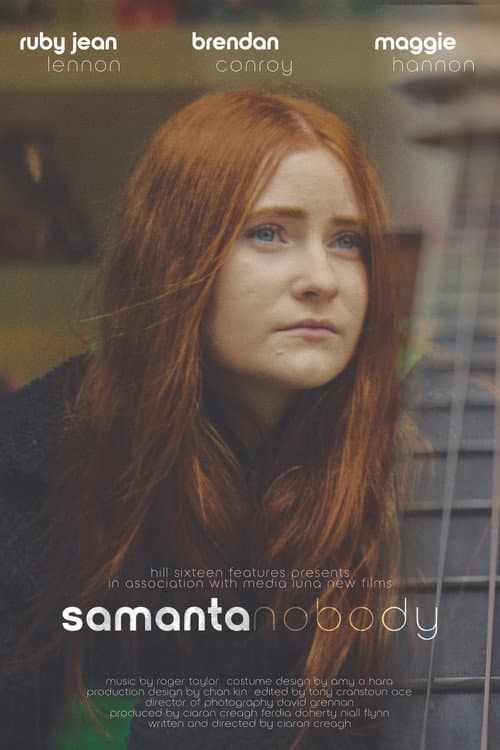
A 16-year-old homeless girl on the streets of Sligo town. For Samanta, reaching out for help has only ever ended in closed doors, but she has a hidden gift for songwriting and performance. When a music shop owner spots her talent, she has a chance to finally accept that music could be the open door she’s been waiting for.
There is a particular kind of Irish story that resists sentimentality even as it reaches toward hope — the kind set in towns rather than cities, among people who exist at the margins of whatever modest prosperity surrounds them. Samanta Nobody, a drama produced by Hill Sixteen Features and Media Luna New Films, arrives on April 25, 2026, and appears to be working in that tradition, though how faithfully or inventively remains to be seen.
The film centers on Samanta, a sixteen-year-old girl living without shelter on the streets of Sligo, a town on Ireland's northwestern coast. The premise is spare and precise in its setup: Samanta has found no traction in the systems meant to help her — every attempt to reach out has been met, as the synopsis puts it, with closed doors. Her circumstances are not romanticized even in summary form. She is not a plucky waif awaiting rescue. She is a teenager who has repeatedly been failed. Into this picture comes a music shop owner who recognizes something in her — a talent for songwriting and performance that Samanta has apparently been carrying quietly, as a private resource rather than a public one.
The structure of the story, as described, is familiar in its broad outline: a young person with hidden ability, an unexpected mentor figure, the possibility of transformation through art. What distinguishes this particular telling, at least on paper, is the specificity of its setting and the stated emphasis on Samanta's own agency in accepting or rejecting what music might offer. The phrase used — that music "could be the open door she's been waiting for" — is careful to frame the question as one Samanta herself must answer, rather than something visited upon her from outside. Whether the film maintains that emphasis in execution is, of course, the central unknown.
Sligo is an interesting choice of location. It is a real, unglamorous Irish town, not a symbolic rural landscape or a shorthand for Celtic atmosphere. Setting a film about homelessness and youth poverty there, rather than in Dublin or Cork, grounds the story in a geography that doesn't carry the same cultural weight in cinema — which is either a meaningful decision or simply a circumstantial one, and there is no production background available to clarify which.
Hill Sixteen Features and Media Luna New Films are the producing entities attached to the project. Beyond their names, the available information does not extend to directors, writers, or the cast playing Samanta or the music shop owner. That absence is notable. The story hinges on its central performance — a teenage girl who must convincingly hold a film's worth of emotional labor, and who is also expected to be credible as a songwriter and performer. Who has been cast in that role, and what their background is, would tell us a great deal about the film's ambitions and its likely register. Is this a debut performance from someone discovered specifically for the project? A young actor with existing stage or screen experience? The marketing has not yet answered that question, or at least the information has not reached the record here.
Similarly, the songwriting and performance elements raise practical questions about how much of the music will be original, whether Samanta's songs are written for the film, and what genre or style they occupy. A film about a homeless girl in Sligo whose gift is songwriting could mean almost anything musically — folk, pop, something rawer and more DIY. That choice will do significant work in shaping the film's tone and its relationship to Irish cultural identity. Again, nothing in the available material clarifies this.
The drama genre classification is broad enough to encompass a wide range of approaches, from the relatively naturalistic social realism associated with Irish and British independent cinema — Ken Loach's long shadow stretches over any film involving youth poverty in the British Isles — to something more stylized or emotionally heightened. The presence of a music element opens the film toward a kind of lyrical expressionism that straight social-realist work tends to avoid. The question of how the film balances documentary-style attention to Samanta's circumstances with the more heightened register that live musical performance tends to invite is one of the more interesting formal tensions the project will need to navigate.
There is also the question of the mentor figure and what the film does with that relationship. Stories of this shape can tip easily toward making the adult's recognition the animating event — the moment that confers value on the protagonist's previously invisible talent. The synopsis gestures away from that reading by emphasizing Samanta's own decision-making, but the music shop owner's role in the plot, how much screen time they occupy, and how the film weights their perspective against Samanta's are all open questions.
The film opens in late April 2026, a release window that in many markets is associated with awards-adjacent independent programming rather than wide commercial release — though the available data does not specify distribution plans or the scale of the release.
Audiences drawn to contemporary Irish independent cinema, to films about young women navigating institutions that fail them, or to stories in which music functions as both practical skill and emotional survival strategy are the natural constituency for Samanta Nobody. So too are viewers who follow the kind of quiet, regionally rooted drama that Hill Sixteen Features, by its name at least, suggests an orientation toward. Whether the film delivers something that justifies the specificity of its premise, or settles into the grooves worn by similar stories, will depend almost entirely on elements — performance, direction, the music itself — that remain unexamined until the film is actually seen.
⭐ PopularDigger
ComedySep 28, 2026
Digger ⭐ Popular
Primetime
ThrillerSep 23, 2026
Primetime 🔥 Hot
Peddi
ActionJun 3, 2026
Peddi 🔥 Hot
The Social Reckoning
DramaOct 7, 2026
The Social Reckoning
LA BOLA NEGRA
DramaSep 25, 2026
LA BOLA NEGRA
The Shawshank Redemption
DramaSep 23, 1994
The Shawshank RedemptionSign in to join the conversation.