
🔥 Hot
You Can See Everything
DocumentaryOct 16, 2026
You Can See EverythingReleased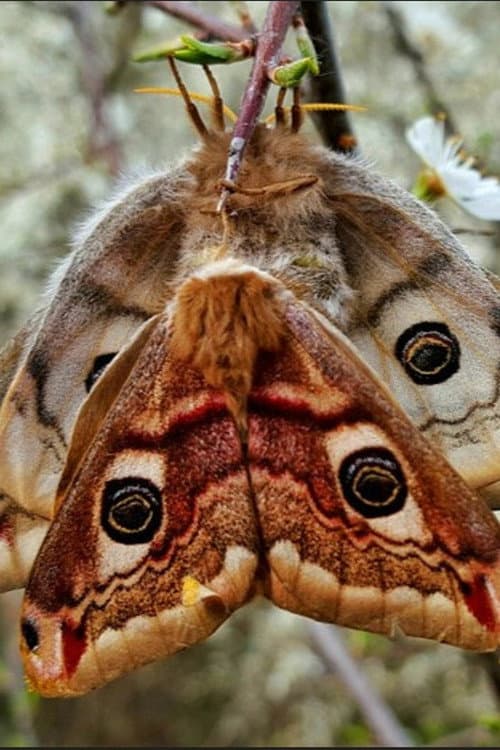
Details
Popularity · Search interest now
Based on TMDb activity
Not currently available for streaming or purchase.
Links may earn Incoming a commission at no extra cost to you.
Incoming Editorial TeamVerified
Butterflies and Music, The male purple emperor possesses the iridescence that gives it its name: the metallic purple shimmer is a structural colour created by light refraction through special scales. Its scientific name (apatura iris) also reflects this: Iris is the goddess of the rainbow. The butterfly is often seen feeding on faeces, carrion, or even human sweat, as it primarily obtains nutrients from minerals
"Purple Emperor" is a documentary film scheduled for release on Friday, April 24, 2026. Beyond its category and date, the production details available are spare — no director, distributor, or production company has been surfaced in the metadata — but the subject matter is specific enough to sketch what the film appears to be about, and specific enough to be genuinely interesting.
The purple emperor — Apatura iris — is one of the more visually striking insects in the British Isles and across temperate Europe and Asia, and one of the more behaviorally counterintuitive. The metallic purple sheen that gives the butterfly its common name belongs exclusively to the male, and it is not a pigment at all. It is a structural colour, produced by the physical refraction of light through specialized microscopic scales on the wings. Tilt the angle, and the shimmer disappears. The scientific name encodes this quality directly: Apatura iris, with Iris being the Greek goddess of the rainbow — a deity whose very function is to describe light bent through a medium and resolved into colour. That the species was named with this mythological precision gives some indication of how long the butterfly has captured human attention.
What makes Apatura iris a particularly pointed subject for a documentary, however, is the tension between its appearance and its habits. The purple emperor is famously indifferent to flowers. While other butterflies feed on nectar, the male purple emperor is drawn instead to faeces, carrion, and even human sweat — substances rich in the salts and minerals the insect requires. Observers who have spent time in the ancient woodland habitats where the species lives have long noted that the surest way to attract a male is not to carry a bouquet but to leave out something that smells considerably worse. The butterfly descends from the forest canopy, where it spends most of its time at heights that make it difficult to observe, and lands on whatever offers the minerals it needs. The gap between the creature's iridescent splendor and its dietary preferences is the kind of detail that a documentary can use to complicate any easy aestheticism — the beautiful thing is also, without apology, a scavenger.
The film's title, taken directly from the butterfly's common name, doesn't signal a metaphorical register on its own. Whether the production treats the purple emperor purely as a subject of natural history, uses it as a lens on broader ecological questions, or frames it within a specifically musical context — the source description gestures toward "Butterflies and Music" as a thematic pairing — is not clear from what's available. That phrase raises questions that the available information doesn't answer. Is there a compositional or sonic element to how the film is constructed? Is there a human figure — a musician, a naturalist, a composer — whose relationship to the butterfly structures the narrative? Or is "Butterflies and Music" simply the name of the broader project or series of which this film is one part? None of that can be answered from the materials at hand.
What can be noted is that nature documentaries with highly specific subjects — a single species rather than an ecosystem or a geographic region — occupy a particular niche within the genre. The form has a long tradition of this kind of zoomed-in attention, from films built around individual animals or insect species to those that follow a single creature through a full life cycle. A documentary devoted entirely to Apatura iris would be joining that tradition, one that rewards patience in both filmmakers and viewers. The purple emperor is, by most accounts, a difficult butterfly to observe at length. It spends significant portions of its life in the canopy of mature oak woodland, descending intermittently, and the males are territorial and fast. Getting sustained, close footage of the iridescent wing display under natural light — the phenomenon that gives the species its name and its scientific identity — is not a trivial undertaking.
The film's original language is English, which places it likely within a British or broadly Anglophone production context, though that alone doesn't narrow the geography much. The purple emperor's range extends through parts of Europe and into Asia, but it is in southern England, where the species has a devoted following among naturalists and lepidopterists, that it is most culturally freighted. English naturalists have written about the purple emperor for centuries, and there is a small but intensely committed community of observers who track the species through its summer emergence each year, largely in the ancient woodlands of counties like Wiltshire and Surrey. Whether the film engages with that human community of watchers, or keeps its focus on the insect itself, is among the things that the current materials don't clarify.
The audience for a documentary of this kind is likely self-selecting: people already interested in natural history filmmaking, entomology, or British wildlife, along with viewers drawn by the structural-colour angle — the optical physics of the wing — or simply by the photographic challenge the subject represents. For anyone who has tried to spot a purple emperor in the wild, or who has read about the butterfly's paradoxical combination of regal appearance and unglamorous feeding habits, the prospect of a feature-length treatment arriving in April 2026 is something to track.
You Can See Everything
DocumentaryOct 16, 2026
You Can See EverythingReleased ⬆️ Rising
The Mongoose
ActionOct 29, 2026
The MongooseReleased ⬆️ Rising
The Runner
ThrillerSep 3, 2026
The Runner ⬆️ Rising
The Awakening
HorrorOct 29, 2026
The AwakeningReleased ⬆️ Rising
Star Wars: The Mandalorian and Grogu
ActionMay 20, 2026
Star Wars: The Mandalorian and Grogu ⬆️ Rising
Crawlers
HorrorSep 24, 2026
CrawlersSign in to join the conversation.