Details
- Language
- English
- Studio
- Tea Shop Productions
- TMDb Rating
- 8.2 (6.4k votes)
- Directed by
- Curry Barker
- Written by
- Curry Barker
- Theme
- supernatural
- For
- adult
Rating · Quality score from voters
TMDb
8.2/10
IMDb
7.8/10
Rotten Tomatoes
93%
Metacritic
77/100
Popularity · Search interest now
Popular
108.5
Based on TMDb activity
Starring







Where to watch
Links may earn Incoming a commission at no extra cost to you. Streaming data via JustWatch — may not reflect today's catalog.
Incoming Editorial TeamVerified
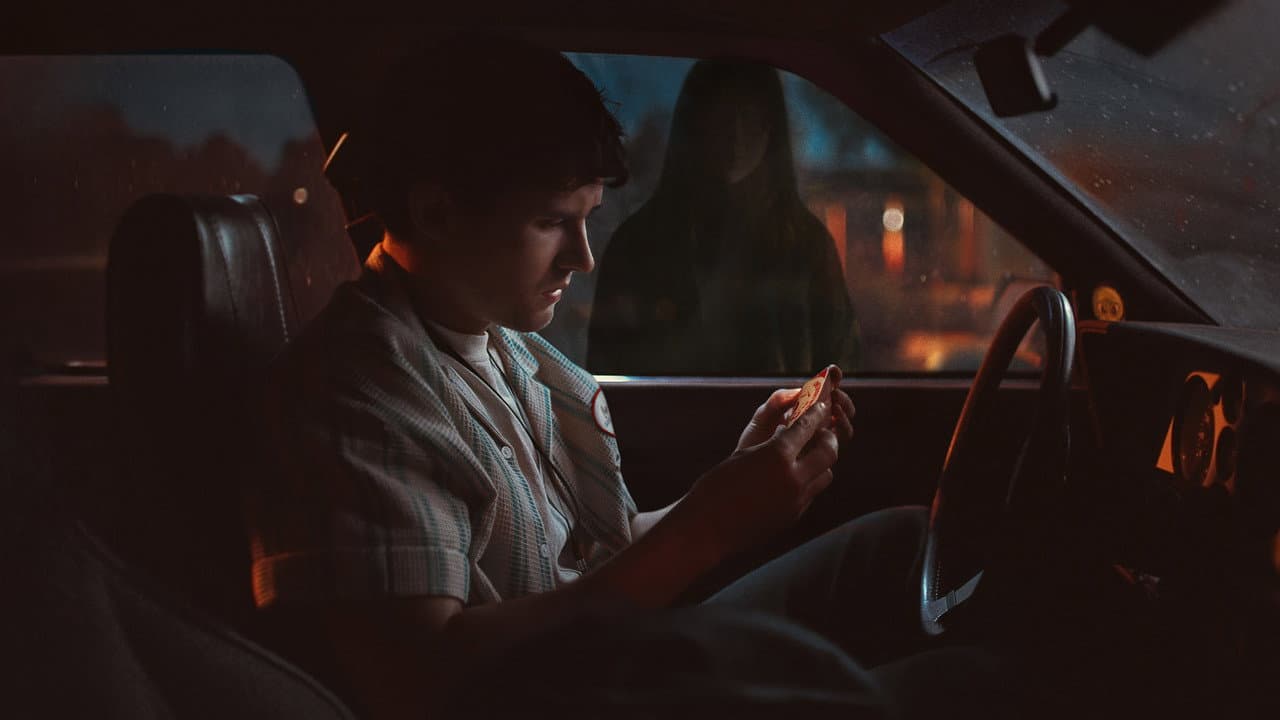
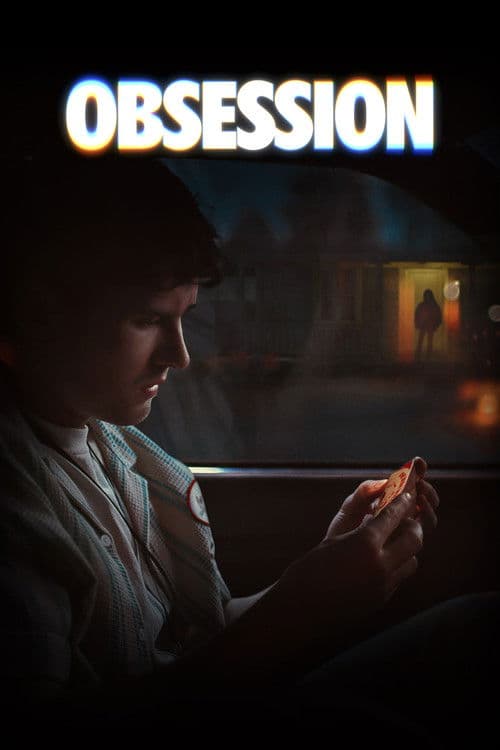
After breaking the mysterious "One Wish Willow" to win his crush's heart, a hopeless romantic finds himself getting exactly what he asked for but soon discovers that some desires come at a dark, sinister price.
Trailer
Gallery (19)
About this release
Obsession, a horror-thriller produced by Tea Shop Productions, Under the Shell, and Capstone Pictures, is scheduled for release on May 13, 2026. The film centers on a self-described hopeless romantic who breaks something called the "One Wish Willow" — a mysterious object apparently capable of granting desires — in order to win the heart of his crush. What follows, according to the premise, is a story in which he gets precisely what he wished for, only to find that the fulfillment of that wish carries consequences that are dark and sinister in nature.
The setup belongs to a well-worn tradition in horror: the corrupted wish. From monkey's paw folklore to countless variations across film and literature, the idea that desire, when granted too literally or too completely, becomes its own punishment has long served as a structuring irony for the genre. What makes the premise of Obsession somewhat specific is the object at its center — the "One Wish Willow" — which suggests something rooted in natural or perhaps folk-magic imagery rather than the demonic contracts or cursed artifacts that have populated many recent entries in this space. Whether the film uses that distinction to carve out its own tonal register, or whether it leans into the conventions that surround it, is not yet clear from what has been made public.
The three production companies behind the film — Tea Shop Productions, Under the Shell, and Capstone Pictures — represent a collaborative arrangement that is not unusual for mid-range genre productions seeking to distribute financial and creative risk. Multi-studio co-productions of this kind often indicate a project that has moved through development with some degree of deliberateness, assembling partners who each bring different distribution relationships or creative contributions. No directors, writers, or cast members have been named in the available materials, which is a notable gap for a film arriving in May 2026. Genre films with strong attachment packages — recognizable actors, a director with a horror track record — tend to publicize those names early as a signal of ambition. The absence here may reflect a production that is still finalizing its creative lineup, or it may simply reflect a promotional strategy that has not yet turned toward broader public disclosure.
The romance-to-horror pipeline that the logline describes is worth examining as a structural choice. Beginning with a character defined by longing — the hopeless romantic — and placing that longing at the origin of a supernatural catastrophe positions the film in territory that has generated significant critical and audience interest in recent years, as horror has increasingly used genre mechanics to externalize psychological and emotional states. Obsession, as a theme, is well-suited to this approach. The line between romantic devotion and something more destructive has been a subject for horror at least since the Gothic novel, and the contemporary version of that tradition tends to take the psychology seriously rather than treat it as mere motivation for scares. Whether Obsession is primarily interested in the emotional interiority of its protagonist or in the mechanics of whatever curse or consequence the Willow sets in motion is one of the more interesting unanswered questions the premise raises.
The title itself is doing a specific kind of work. "Obsession" is unambiguous in its framing — it tells the audience from the outset how to read the protagonist's romantic attachment. He is not simply in love; he is, the film's own title insists, obsessed. That framing can function as a critique of the character's desire, positioning him as someone whose wish should perhaps never have been granted, or it can function as a more sympathetic examination of how intense longing distorts perception and judgment. Both readings are available in the premise, and the tension between them may be where the film finds its most interesting material.
One question that the available materials leave entirely open is the nature of the price the protagonist pays. "Dark, sinister" consequences can describe a very wide range of outcomes in horror, from supernatural retribution affecting the wishing character directly to harm visited on the object of his desire, on people around him, or on the broader world. The moral architecture of how the wish is punished — and who suffers for it — will likely determine how the film is received by audiences who have grown attentive to the ethical dimensions of horror premises, particularly those involving a male protagonist's desire for a woman.
On the practical side, Obsession will be available to rent or purchase through Amazon Video, Apple TV Store, Google Play Movies, YouTube, and Fandango At Home, with no streaming platform listed at this time. That distribution profile suggests a release aimed at audiences who will seek it out actively rather than encounter it through a subscription library browse. The film carries a notably high audience score on TMDB based on a substantial number of votes, which implies it has already developed some degree of anticipation or visibility in genre-interested communities.
Those most likely to track this release are viewers drawn to horror with an emotional or psychological underpinning — people who follow the genre not only for its scare mechanics but for what it does with themes of longing, control, and consequence. The corrupted-wish premise is familiar enough to be legible on first encounter, but the specificity of the Willow imagery and the romantic framing give it enough distinguishing features to hold genuine curiosity about how the film intends to use them.
Our coverage
- Clayface Fell 57% in Its Second Weekend, a Smaller Drop Than Resident Evil, Verity or Other Mommy
Clayface earned $10.4 million in its second weekend, down 57%, for $44 million domestic and $83 million worldwide. How the drop compares with Wildwood, Resident Evil, Verity, Other Mommy and Scream 7, and what the A− predicted.
- What CinemaScore Actually Measures, and What Eight 2026 Grades Told Us About Box Office Staying Power
CinemaScore polls opening-night audiences and publishes a letter grade. How it works, what it can and cannot tell you, and how eight 2026 films' grades lined up with their second weekends.
- Five Horror Films, Two Patterns: Budget Sets the Return, and the Audience Grade Seems to Set the Run
Four horror films are in the 2026 domestic top 15, led by Obsession. Comparing five of them, the budget sets the return and the audience grade appears to say more about how long a film runs than the critics' score.
Comments
Sign in to join the conversation.
Loading…