🔥 Hot
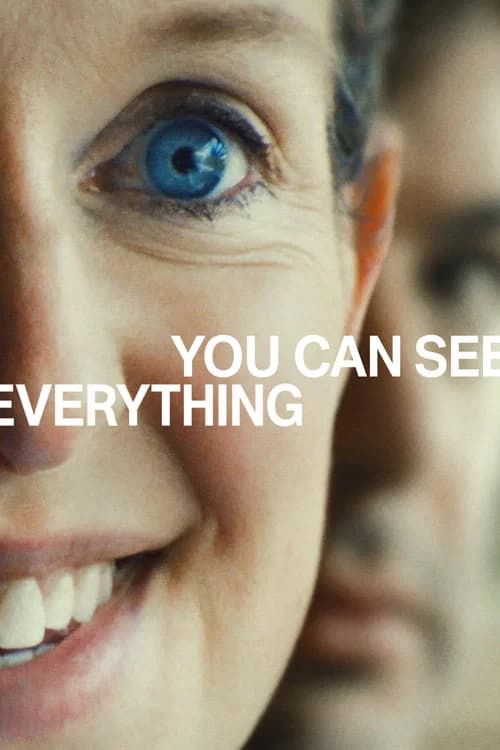
You Can See Everything
DocumentaryOct 16, 2026
You Can See EverythingReleased
Details
Popularity · Search interest now
Based on TMDb activity
Not currently available for streaming or purchase.
Links may earn Incoming a commission at no extra cost to you.
Incoming Editorial TeamVerified
Over coffee at La Biela, an Argentine filmmaker evokes her relationship with cinema: the now-vanished theaters that marked her youth, the adaptation of an Adolfo Bioy Casares short story, and the epistolary relationship she maintained with François Truffaut.
Nueva correspondencia francesa is a Spanish-language documentary film scheduled for release on May 7, 2026. Beyond those bare facts, the film presents itself as an intimate portrait of an Argentine filmmaker — unnamed in the available materials — recounting her life in and around cinema, filmed, it seems, in a single sustained conversation over coffee at La Biela, the storied Buenos Aires café in the Recoleta neighborhood.
The documentary's structure, as described, is essentially an extended monologue or interview. An unnamed Argentine director sits at La Biela and speaks about three interlocking subjects: the movie theaters of her youth that no longer exist, her adaptation of a short story by Adolfo Bioy Casares, and an epistolary exchange she sustained with the French New Wave director François Truffaut. The convergence of those three threads gives the film its shape — or at least suggests one. The theaters are memory and loss; the Bioy Casares adaptation is craft and literary inheritance; the Truffaut correspondence is the film's most openly provocative element, a claim of transatlantic dialogue between Argentine and French cinema cultures across what one imagines was a considerable geographic and professional distance.
Bioy Casares, the Argentine writer best known internationally for The Invention of Morel (1940) and for his decades-long collaboration with Jorge Luis Borges, wrote fiction that frequently concerned itself with illusion, memory, and the mechanics of reproduction — themes that carry an obvious relevance to cinema. Which of his short stories this filmmaker chose to adapt, and when, and in what form that adaptation took, is not specified in the available information. That gap is significant. The Bioy Casares literary estate and the question of how Argentine fiction of his generation has been translated to the screen is a subject with its own critical history, and knowing where this particular adaptation sits within that history would considerably clarify the film's stakes.
The Truffaut correspondence is even more tantalizing and even less documented here. Truffaut, who died in 1984, was a prolific letter writer — his collected correspondence runs to hundreds of pages and spans correspondents across Europe and the Americas — so it is not implausible that he maintained exchanges with filmmakers from Argentina. But the nature of what passed between him and this director, the period during which they wrote, and what either of them said, remains entirely opaque from the outside. The film's title, Nueva correspondencia francesa — "New French Correspondence" — gestures toward that relationship while also raising the question of what "nueva" means in this context. New relative to what prior correspondence? New to the public record? The title may be deliberately open-ended, or it may point toward something specific that the available descriptions simply do not clarify.
La Biela as a setting carries its own weight. The café, on Avenida Quintana in Buenos Aires, has long been associated with Argentine intellectual and literary life — it sits near the Recoleta Cemetery and has historically attracted writers, artists, and filmmakers. Choosing it as the sole or primary location for a documentary about memory and cinema is a decision with cultural texture in Argentine terms, signaling a particular milieu and a particular generation's sense of where serious conversation happens. Whether the film is confined to that single location or uses the conversation as a framing device around archival footage, clips from the adaptation, or other visual material is unknown.
The filmmaker herself is the most conspicuous absence in the available description. She is identified only by gender and nationality — an Argentine woman who made films, who knew Bioy Casares's work well enough to adapt it, and who exchanged letters with Truffaut. That combination of facts, even without a name, suggests someone of at least some standing in Argentine cinema from the mid-to-late twentieth century, a figure who would have been professionally active during the period when Truffaut was alive. Whether she is well known within Argentine film culture or is precisely the kind of figure this documentary is meant to rescue from relative obscurity is a central question the film presumably answers and the available materials do not.
The genre here is documentary, and the approach — a single subject speaking at length about her life and influences — aligns with a recognizable tradition of filmmaker-interview films, from the long conversations that critics and directors have conducted on camera for decades. The intimacy of the café setting and the specificity of the three subjects (lost theaters, a literary adaptation, a French correspondence) suggest a film more interested in texture and personal testimony than in comprehensive biography or archival argument. It is, from what can be determined, a film about how one person experienced cinema: as physical space, as literary translation, as conversation across distance.
The audience most likely to seek this out will be people with existing interests in Argentine cinema, in the French New Wave and Truffaut's extended influence, or in the literary world of Bioy Casares. It may also attract viewers drawn to documentary portraits of artists in conversation — films where the pleasure is in the quality of recollection rather than in narrative resolution. For that audience, the film's release in May 2026 marks something to watch for, even if almost everything specific about it remains, for now, to be seen.
You Can See Everything
DocumentaryOct 16, 2026
You Can See EverythingReleased ⬆️ Rising
The Mongoose
ActionOct 29, 2026
The MongooseReleased ⬆️ Rising
The Runner
ThrillerSep 3, 2026
The Runner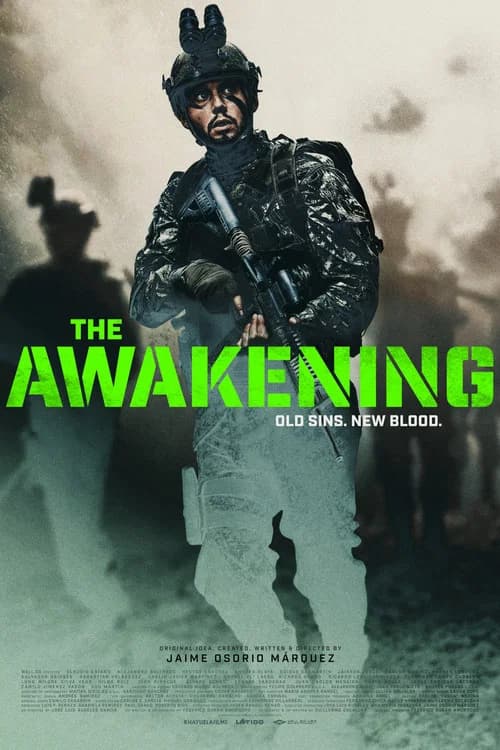 ⬆️ Rising
The Awakening
HorrorOct 29, 2026
The AwakeningReleased ⬆️ Rising
Star Wars: The Mandalorian and Grogu
ActionMay 20, 2026
Star Wars: The Mandalorian and Grogu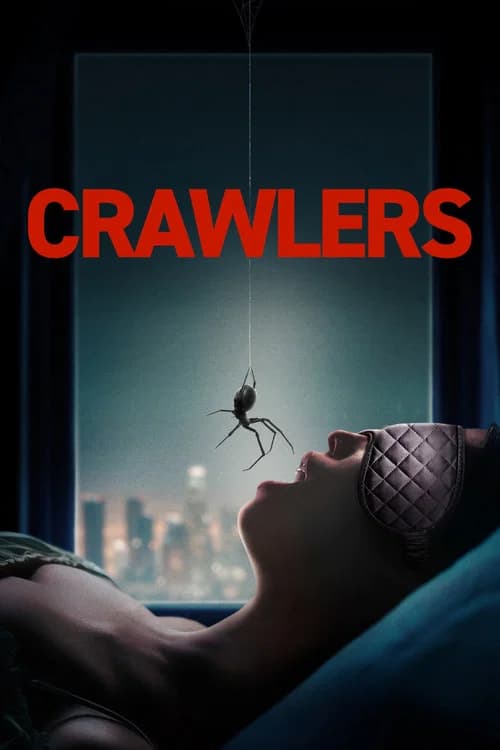 ⬆️ Rising
Crawlers
HorrorSep 24, 2026
CrawlersSign in to join the conversation.