
 🔥 Hot
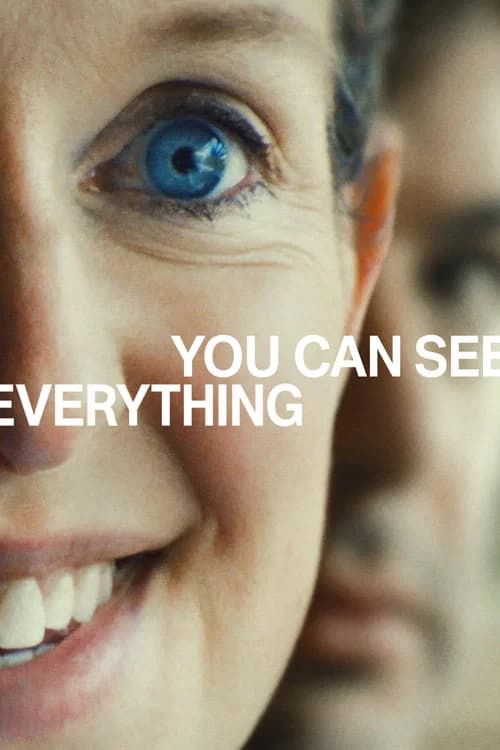
You Can See Everything
DocumentaryOct 16, 2026
You Can See EverythingReleased
Details
Popularity · Search interest now
Based on TMDb activity
Hype score
leaderboard →Myspace drives strong Wikipedia attention in film.
Incoming Editorial TeamVerified
Myspace is a documentary film releasing April 27, 2026, that examines the legacy of the Myspace social networking platform and its influence on digital culture, online fame, and the rise of social media.
Myspace is scheduled for release on April 27, 2026.
The film examines the legacy of the Myspace social networking platform and its role in shaping digital culture, online fame, and the evolution of social media.
Myspace is a documentary film.
A documentary simply titled Myspace is scheduled for release on April 27, 2026. The film is an English-language production that takes the once-dominant social networking platform as its subject, examining what the site was, what it became, and what traces of its influence persist in the digital infrastructure that followed.
For anyone who came of age online in the early-to-mid 2000s, Myspace needs little introduction in the abstract — it was the place where a generation first learned to curate a public self, arrange a "Top 8" of friends, and embed an autoplay song that announced something about who they were or who they wanted to be. At its peak it was the most visited website in the United States, briefly surpassing Google in 2006. Then came Facebook's expansion beyond college campuses, and Myspace's decline was swift enough to become a kind of cautionary parable that the technology industry has been citing ever since. The platform did not disappear entirely — it has existed in various diminished forms over the intervening years — but its cultural moment passed with a speed that itself became part of the story.
What makes Myspace a legitimate documentary subject in 2026, as opposed to a Reddit thread or a nostalgic listicle, is the question of legacy at scale. The source material for this film frames that question directly: how did this particular platform shape the conditions for online fame, and what role did it play in producing the social media saturation that now feels inescapable? Those are not small questions. Myspace was arguably the first environment in which ordinary people — not just journalists or celebrities — could build audiences, and the mechanics it pioneered, profile customization, follower counts, public comments, the performance of taste through music selection, became templates that later platforms refined rather than invented from scratch. A documentary willing to press on that history has genuine material to work with.
The film's described approach places it within a tradition of tech-retrospective documentary filmmaking that has grown considerably since the mid-2010s, when films examining the human costs and cultural consequences of Silicon Valley's early platforms began attracting serious critical attention. That genre has developed certain conventions: founder interviews, user testimonials, cultural critics contextualizing the moment, and archival footage doing the atmospheric heavy lifting. Whether Myspace follows that template or departs from it in some way is not yet clear from available information. No director, production company, or distributor has been publicly attached to the project in any detail that has surfaced in the structured data available here, which is itself notable for a film now roughly a year from release. The absence of credited filmmakers in the public record at this stage raises practical questions about where the project stands in post-production, and who is positioned to bring it to audiences.
The film's framing, as described, addresses two audiences simultaneously: millennials who used the platform and carry some affective relationship to it, and what the source material calls "curious newcomers," meaning viewers young enough that Myspace is history rather than memory. That dual address is a delicate thing to manage. For the former group, the risk is that a film leans too heavily on nostalgia's warm distortions, treating the platform primarily as an object of fond recall rather than scrutinizing its actual mechanics and effects. For the latter, the challenge is establishing stakes — why should someone who has only ever known Instagram or TikTok care about a platform they never used? The strongest version of this documentary would answer that question by demonstrating that the social behaviors and psychological patterns Myspace helped normalize are precisely what those younger viewers are now living with, in updated form, on the platforms they use daily. Whether the film makes that connective argument with rigor or settles for the easier warmth of collective memory is a central unknown.
The phrase "social media overload" in the film's description is worth pausing on. It gestures toward something more critical than a celebration of a beloved cultural artifact — a suggestion that the documentary is at least partly interested in the costs of what Myspace helped set in motion, the compulsive self-presentation, the anxiety of public metrics, the way attention itself became a currency. That critical dimension, if pursued seriously, would distinguish this film from straightforward nostalgia pieces. But the same phrase could also function as a vague gesture toward contemporary relevance without substantive follow-through. Audiences who came to the subject looking for a genuine reckoning would notice the difference.
There is also the question of music. Myspace was foundational for independent musicians in ways that are historically significant — the platform served as a discovery and distribution channel for artists who would later become mainstream figures, and its collapse disrupted ecosystems that had built up around it. Whether the documentary devotes meaningful attention to that dimension of the platform's legacy, or treats it as incidental color, would substantially change what kind of film this turns out to be.
Myspace will most naturally find its first audience among viewers who were online between roughly 2003 and 2010 and who retain some curiosity about how that period's digital culture actually worked — not just as nostalgia but as a historical phenomenon with measurable consequences. Beyond that cohort, the film may attract anyone who has followed the broader conversation about social media's effects on public life and wants a specific, early case study to think with.
🔥 HotYou Can See Everything
DocumentaryOct 16, 2026
You Can See EverythingReleased 📈 Trending
Wildwood
AnimationOct 19, 2026
WildwoodReleased 📈 Trending
Hope
Science FictionJul 15, 2026
Hope 📈 Trending
Supergirl
ActionJun 24, 2026
Supergirl 📈 Trending
Masters of the Universe
ActionJun 3, 2026
Masters of the Universe 📈 Trending
Verity
MysterySep 30, 2026
VeritySign in to join the conversation.