




 🔥 Hot
Peddi
ActionJun 3, 2026
Peddi
Details
Rating · Quality score from voters
Popularity · Search interest now
Based on TMDb activity
Incoming Editorial TeamVerified
Kung Fu Soccer (功夫女足) is a Chinese-language sports comedy film releasing on July 11, 2026. The story follows a women's soccer team that relies on kung fu skills to compete in a high-stakes tournament called the Supreme Invincible Cup.
Kung Fu Soccer is scheduled to release on July 11, 2026.
The film follows a women's soccer team competing in a tournament called the Supreme Invincible Cup, using kung fu skills to overcome skilled opponents and on-field schemes.
The film is in Chinese (Mandarin), with the original title 功夫女足.
A Chinese-language film titled Kung Fu Soccer — rendered in its subtitle as 功夫女足, meaning roughly "Kung Fu Women's Football" — is scheduled for release on July 11, 2026. The picture is a co-production among Shanghai Maoyan Film, China Film Group Corporation, and Shenzhen Film Studio, three institutions with significant footprints in mainland Chinese commercial cinema. It is classified as a drama, comedy, and action hybrid, a combination that, in the Chinese market, has proven commercially durable across multiple decades of genre filmmaking.
The premise follows a women's soccer team competing in something called the "Supreme Invincible Cup," a tournament framed from the outset as stacked against them. According to the film's synopsis, their bracket is described as "hellish" from the very first round — opponents are formidable, off-field pressure accumulates, and tactical scheming is treated as a recurring obstacle rather than a single dramatic turn. The central conceit, as the title openly advertises, is that this team's answer to these compounding disadvantages is kung fu: martial arts ability applied somehow to the context of a competitive soccer match on a regulation pitch. That is the engine of the film's comedy and its action set pieces both, and the tension between the sport's formal rules and the implied physical extremity of kung fu is presumably where most of the film's humor lives.
The lineage this film most obviously inhabits is the wuxia-sports crossover, a subgenre that enjoyed a particularly prominent international moment with Stephen Chow's Shaolin Soccer in 2001. That film — also a Chinese-language comedy about a team using martial arts abilities to win an improbable football tournament — became something of a template for the genre's comedic grammar: exaggerated physical feats rendered through then-novel digital effects, underdogs arranged against a series of increasingly absurd villains, and a tone that kept earnest emotional beats running alongside broad slapstick. Whether Kung Fu Soccer is positioned as a spiritual successor to that tradition, a deliberate riff on it, or simply an independent property that happens to occupy the same conceptual territory is not made clear by the available materials. The promotional description does not reference Shaolin Soccer or claim any direct lineage, and the distinction matters. One version of this film is an affectionate genre exercise; another is trying to clear its own space in a crowded market of sports comedies.
What is notable from the production side is the institutional weight behind the film. China Film Group Corporation functions as the country's dominant state-affiliated film enterprise, and its co-production credit alongside Shanghai Maoyan Film — the film arm of a major ticketing and data platform — suggests the project has meaningful commercial backing and distribution infrastructure in place. Shenzhen Film Studio rounds out the trio. That three distinct production entities are attached to what appears to be a broad genre comedy indicates either a project with ambitions above the typical mid-budget comedy, a distribution-driven arrangement, or some combination of both. None of this answers questions about budget, scale of production, or the degree of visual ambition brought to the action sequences — which, given the premise, will determine a great deal about how the film lands.
The cast is not identified in the available materials, nor is the director. For a film releasing in the summer of 2026 with a co-production structure of this size, the absence of director attribution at this stage is somewhat notable. In Chinese commercial cinema, director identity often functions as a primary marketing signal — particularly for action and comedy hybrids, where a filmmaker's relationship to physical choreography and comedic timing tends to be the thing audiences use to calibrate expectations. Without knowing who is behind the camera, it is difficult to assess whether the film's kung fu sequences are likely to be rooted in traditional wushu performance, wire-assisted theatrical combat, or something more stylized and digitally augmented. The answer to that question shapes the entire viewing experience.
Similarly, the specific nature of the women's team at the center of the story remains opaque. The synopsis emphasizes adversity — hellish brackets, mounting pressure, on-field schemes — but does not characterize the team members themselves in any particular way. Are these trained martial artists who happen to play soccer, or soccer players who discover latent kung fu ability? Is the kung fu element treated as a secret weapon, a known quantity, or a source of internal conflict within the team? Sports comedies of this type typically rest their emotional architecture on character differentiation within the ensemble, and the degree to which Kung Fu Soccer has built a genuine ensemble rather than a backdrop for set pieces will be one of the more consequential unknowns going into its release.
The July 11 release date places the film squarely in the heart of the Chinese summer theatrical window, one of the year's most competitive corridors for domestic releases. Summer 2026 will pit this film against whatever else the major studios schedule for that corridor, and positioning a sports comedy with action elements in that window is a conventional move — the season has historically rewarded broad, effects-driven entertainments.
Audiences likely to seek the film out are those already comfortable in the wuxia-sports comedy tradition, viewers interested in women's sports narratives within a comedic frame, and general Chinese-market audiences looking for summer entertainment that does not demand close reading. For international viewers, the subtitle's explicit framing of the women's football angle may generate interest in markets where women's soccer has particular cultural traction, though no international distribution has been announced in the available information.
🔥 HotPeddi
ActionJun 3, 2026
Peddi
Avatar Aang: The Last Airbender
AnimationJul 24, 2026
Avatar Aang: The Last Airbender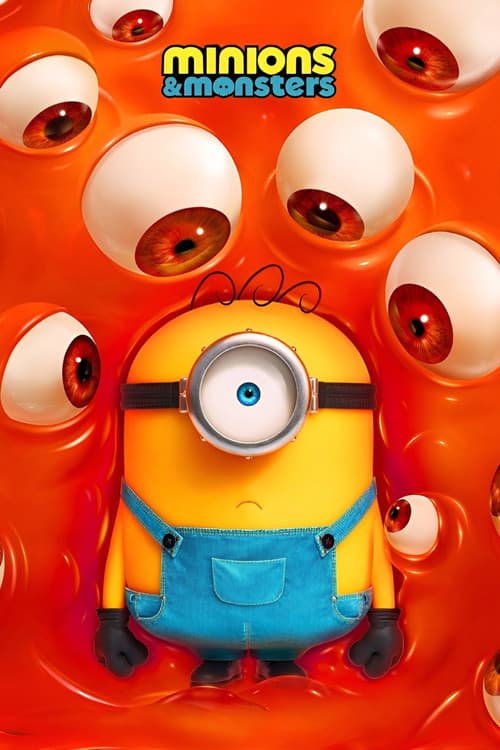 🔥 Hot
Minions & Monsters
AdventureJun 24, 2026
Minions & Monsters 📈 Trending
Masters of the Universe
ActionJun 3, 2026
Masters of the Universe ⭐ Popular
Moana
FamilyJul 8, 2026
Moana 🔥 Hot
The Mandalorian and Grogu
ActionMay 20, 2026
The Mandalorian and GroguSign in to join the conversation.