 📈 Trending
Peddi
ActionJun 3, 2026
Peddi
Details
Popularity · Search interest now
Based on TMDb activity
Incoming Editorial TeamVerified
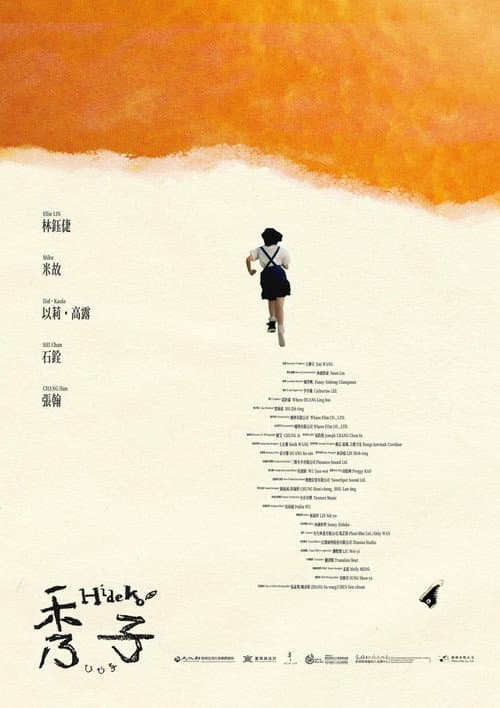
Hideko (秀子) is an upcoming film set in 1970s Taiwan, following a young Indigenous girl whose self-identification with the folkloric hero Momotaro shapes her confrontation with tattooed demons and her struggle to secure her family's future. The film releases on April 26, 2026.
Hideko is scheduled for release on April 26, 2026.
The film follows a young Indigenous girl in 1970s Taiwan who identifies with the folkloric figure Momotaro and confronts tattooed demons to secure her family's future, set against an era of suppression of Indigenous languages and identities.
The original title is 秀子, romanized as Hideko.
The film is in Chinese (Mandarin/zh).
A film titled Hideko — subtitled in Japanese characters as 秀子 — is scheduled for release on April 26, 2026. It is a drama, originally in Chinese, and arrives carrying a premise that draws on Indigenous Taiwanese history, Japanese folklore, and the suppression of minority cultures during a specific and turbulent political period.
The story is set in 1970s Taiwan, a decade shaped by authoritarian governance under the Kuomintang, a period during which Indigenous languages and cultural identities were actively discouraged — in many cases, officially prohibited — in favor of Mandarin and a homogenized national identity. Against that backdrop, the film centers on a young Indigenous girl who understands herself through the lens of Momotaro, the Japanese folkloric hero of the "Peach Boy" tradition, a character who ventures out to defeat demons and return home victorious. In Hideko, that mythological framework is applied to a child navigating a world that is doing its best to erase her.
The tension embedded in that premise is worth sitting with for a moment. Momotaro is a Japanese figure, and Taiwan spent fifty years under Japanese colonial rule before 1945. The choice to have an Indigenous Taiwanese child identify with a Japanese folk hero — rather than a Han Chinese or an Indigenous Taiwanese mythological figure — suggests the film is interested in the layered, sometimes contradictory inheritances that colonialism leaves behind. A child raised in the wake of Japanese rule, then living through a different kind of cultural suppression under the Republic of China government, might plausibly carry fragments of multiple imposed and absorbed identities simultaneously. The name Hideko (秀子) is itself Japanese in origin, common among Taiwanese who were given Japanese names during the colonial era and sometimes kept them afterward. The film's title, then, may already be doing significant interpretive work before a single frame is seen.
The Momotaro myth has the hero confronting "tattooed demons" — in Hideko, that imagery is apparently retained and given a role in the girl's journey to secure her family's future. The phrase "tattooed demons" holds a particular resonance in this context: facial tattooing is a traditional practice among several Indigenous Taiwanese peoples, including the Atayal, and was suppressed under both Japanese and later Republic of China governance. Whether the film is playing with that historical irony — casting figures associated with tattooing as demons in a child's mythological imagination, only to have her reckon with what those figures actually represent — is one of the more interesting open questions the available description raises. It is a detail that could signal a sophisticated, self-aware narrative about how colonial culture shapes the fears and fantasies of those it colonizes.
What is known thematically is that the film presents itself as being, at its core, about human connection as something that persists even when language is stripped away. The suppression of Indigenous languages in 1970s Taiwan is not a minor historical footnote; it was a lived, daily reality for people who found themselves legally and socially penalized for speaking their mother tongues. A film set in that environment and concerned with how connection survives the absence of shared or permitted language is engaging with something genuinely difficult — the way meaning-making continues through gesture, relationship, and story when the institutional channels for it are closed.
What remains largely opaque from the available information is the production itself: who directed Hideko, who wrote it, who is producing it, and where it was made. The original language is listed as Chinese, which in the Taiwanese context could encompass Mandarin, Hokkien (Taiwanese), or Indigenous languages — or some combination, which would itself be a meaningful artistic choice given the subject matter. The cast is unknown from the available data, as is the production company. The film has no voting record on major tracking databases as of now, which suggests it has not yet had a significant festival run with public-facing reviews, or that such exposure has been limited. Taiwan has a strong tradition of films that engage with its complex ethnic and political history — directors like Hou Hsiao-hsien and Wei Te-sheng have made work that grapples with Japanese colonial memory and Indigenous experience, respectively — but whether Hideko is positioned within or adjacent to that lineage is not something the current information can establish.
The April 2026 release date places the film at a point in the calendar when international arthouse distributors often roll out festival acquisitions, though again, nothing in the available data confirms a specific distribution arrangement or a festival origin.
The audience most likely to seek Hideko out is one already attuned to films that use personal and mythological storytelling to address collective historical trauma — viewers drawn to the work coming out of Taiwanese and broader East Asian cinema that takes seriously the question of what survives cultural erasure, and who find the intersection of children's folklore and political history a productive rather than incongruous combination. The film's premise alone marks it as something with a specific, considered point of view rather than a broadly accessible family drama, and those who respond to that kind of deliberate framing will probably find April 26, 2026, worth marking.
📈 TrendingPeddi
ActionJun 3, 2026
Peddi ⭐ Popular
Digger
ComedySep 28, 2026
Digger 🔥 Hot
The Social Reckoning
DramaOct 7, 2026
The Social Reckoning
LA BOLA NEGRA
DramaSep 25, 2026
LA BOLA NEGRA ⭐ Popular
Primetime
ThrillerSep 23, 2026
Primetime
The Shawshank Redemption
DramaSep 23, 1994
The Shawshank RedemptionSign in to join the conversation.