🔥 Hot
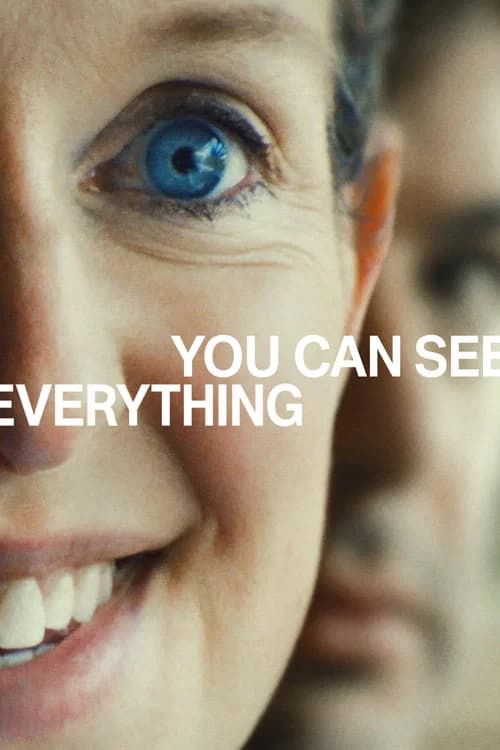
You Can See Everything
DocumentaryOct 16, 2026
You Can See EverythingReleased
Details
Popularity · Search interest now
Based on TMDb activity
Incoming Editorial TeamVerified
Film; about Palinopsia (original title: 夕日記) is an upcoming Chinese-language film scheduled for release on April 26, 2026. The film follows a personal journey to Green Island documented through video letters, set against approaching graduation and an encroaching typhoon.
Film; about Palinopsia is scheduled for release on April 26, 2026.
The original Chinese title is 夕日記.
The film follows a narrator who travels to Green Island near graduation to record video letters, but equipment failures and a typhoon disrupt the journey.
The film is in Chinese (Mandarin).
A documentary in Chinese called Film; about Palinopsia — subtitled 夕日記, which translates roughly as "sunset diary" or "evening journal" — is set for release on April 26, 2026. The film's Wikipedia association is listed as "Persistence of vision," a linkage that, combined with its title's reference to palinopsia, a neurological condition in which visual images persist or recur after the stimulus has been removed, suggests a preoccupation with memory, repetition, and the limits of what the eye — or the lens — can faithfully retain.
The premise, as described, is straightforward in its setup and quietly unraveling in its execution. A filmmaker, approaching graduation and the end of a particular chapter of life, travels to Green Island — a small island off the southeastern coast of Taiwan, known in equal measure for its natural scenery and its history as a site of political imprisonment — and attempts to record a series of video letters, day by day. The project is conceived as a document of transition, a way of marking time before it slips. Then things stop cooperating. The camera becomes unruly. Backup batteries go missing. A typhoon arrives. The video letters cease.
What is described here is not the collapse of a grand ambition but something quieter and perhaps more honest: the failure of a private ritual. The filmmaker has set out to produce a controlled record of an emotionally charged moment, and the physical world — weather, equipment, the basic entropy of travel — refuses to hold still for it. The film apparently arrives at a closing image of the filmmaker sitting with a non-responsive camera facing the sea under the sun, having taken a Dramamine, before boating back to the mainland. It is a deliberately unresolved ending, the kind that resists the tidy arc of conventional documentary closure.
The genre tradition this sits within is small but recognizable. Essayistic, first-person documentary filmmaking — sometimes called the "diary film" or "film journal" mode — has a long history, particularly in Asian independent cinema. The form is less interested in argument or exposition than in texture, duration, and the filmmaker's own presence as a kind of unreliable instrument. The subtitle 夕日記 leans into this explicitly: a diary of evenings, or of fading light. The title's pairing of that subtitle with a meditation on palinopsia — the lingering of images that should have already gone — sets up a tension between the diary's impulse to record and fix experience and the mind's tendency to return to images that have already passed, altered by the act of remembering.
There is something worth noting in the way the source description handles the material. The account is written in the first person, in a voice that is precise about concrete details — the missing batteries, the Dramamine, the boat ride home — but relatively quiet about what any of it means. This is not the register of someone explaining a thesis; it is closer to someone reading back their own notes. Whether the film itself maintains that restraint, or whether it contextualizes these fragments with voiceover, text, or structural framing, is not yet clear.
The connection to Green Island is one of the more interesting open questions surrounding the film. Green Island (綠島) carries significant historical weight in Taiwan's collective memory — it was the location of the Oasis Villa prison, where political dissidents were held during the martial law era, and it remains a site of complicated national reckoning. Whether Film; about Palinopsia engages with that history, or treats Green Island primarily as a landscape of personal significance, is not something the available material resolves. The description focuses entirely on the personal — graduation, video letters, bad weather — and does not gesture toward any broader historical or political register. It is possible the island functions here only as setting, or it is possible that its charged associations are woven into a film that does not advertise them. Viewers familiar with the island's history may bring that context with them regardless.
The graduation that frames the film is similarly left unspecified. Whose graduation, from what institution, under what circumstances — none of this is given. This is almost certainly intentional, the kind of deliberate withholding that characterizes diary-mode filmmaking, where specificity of personal experience coexists with a studied vagueness about biographical context. The effect is to position the film as something that aspires to be recognizable beyond its particulars: a document of ending, rather than this ending.
What is perhaps most interesting about the project as described is its apparent formal subject. A film about trying and failing to make a film — about cameras that stop working, footage that cannot be captured, the dissolution of the plan to record — is also, by definition, a film that exists. Whatever was lost when the batteries disappeared and the typhoon came is now the subject of the thing that survived. Film; about Palinopsia appears to be interested in that gap: between what was intended to be recorded and what actually was, between the persistence of an image in the mind and the absence of that image on tape.
The audience for this kind of work tends to be small and self-selecting: viewers drawn to personal documentary, to essay films, to the quieter registers of festival-circuit Chinese-language cinema. It is not a film that announces its ambitions loudly, and it will likely find its viewers through the same word-of-mouth and curatorial attention that circulates most work in this mode. Those who do seek it out will probably be less interested in what happens — the trip, the typhoon, the boat ride home — than in how the film handles the question of what it means to try to record something that keeps escaping the frame.
You Can See Everything
DocumentaryOct 16, 2026
You Can See EverythingReleased ⬆️ Rising
The Mongoose
ActionOct 29, 2026
The MongooseReleased ⬆️ Rising
The Runner
ThrillerSep 3, 2026
The Runner ⬆️ Rising
Star Wars: The Mandalorian and Grogu
ActionMay 20, 2026
Star Wars: The Mandalorian and Grogu ⬆️ Rising
Crawlers
HorrorSep 24, 2026
Crawlers ⬆️ Rising
The Fix
ActionSep 10, 2026
The FixSign in to join the conversation.