Details
- Language
- Korean
- Studio
- Wow Point
- TMDb Rating
- 8.2 (1.5k votes)
- Directed by
- Yeon Sang-ho
- Written by
- Yeon Sang-ho, Choi Gyu-seok
- Theme
- survival
Rating · Quality score from voters
TMDb
8.2/10
IMDb
6.5/10
Rotten Tomatoes
82%
Metacritic
57/100
Popularity · Search interest now
Popular
52.0
Based on TMDb activity
Starring


Where to watch
Links may earn Incoming a commission at no extra cost to you.
Incoming Editorial TeamVerified
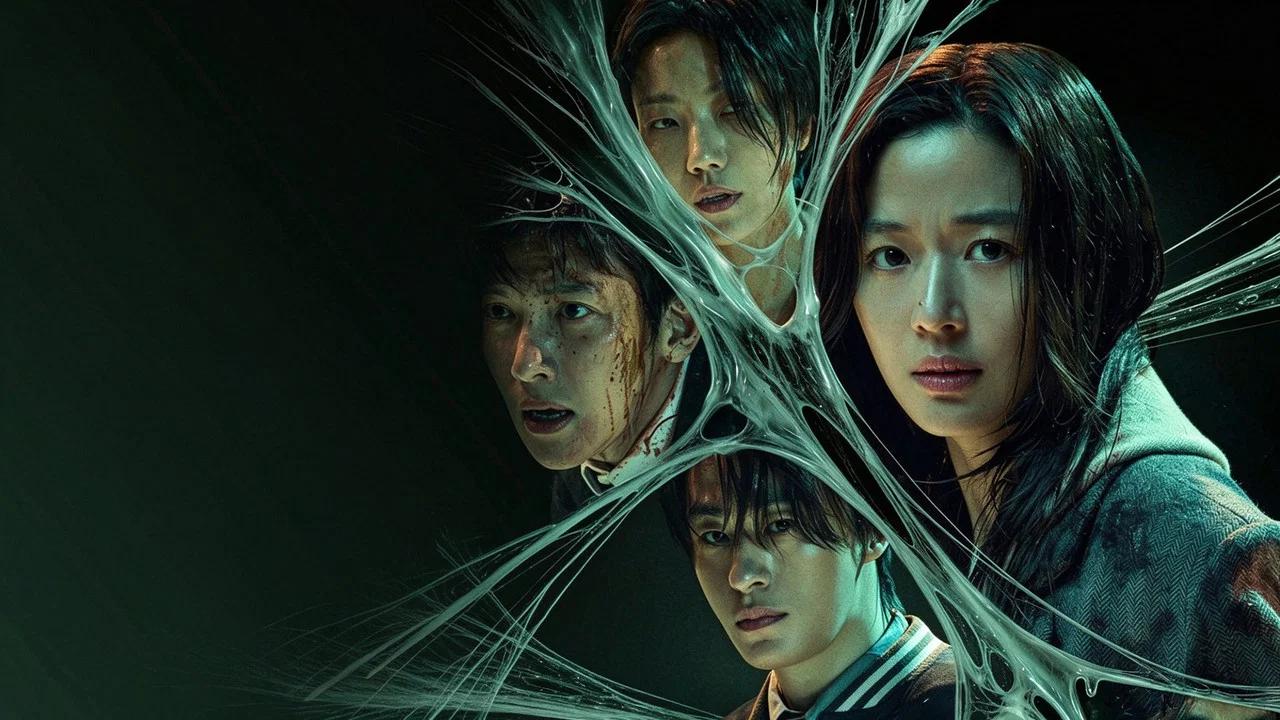
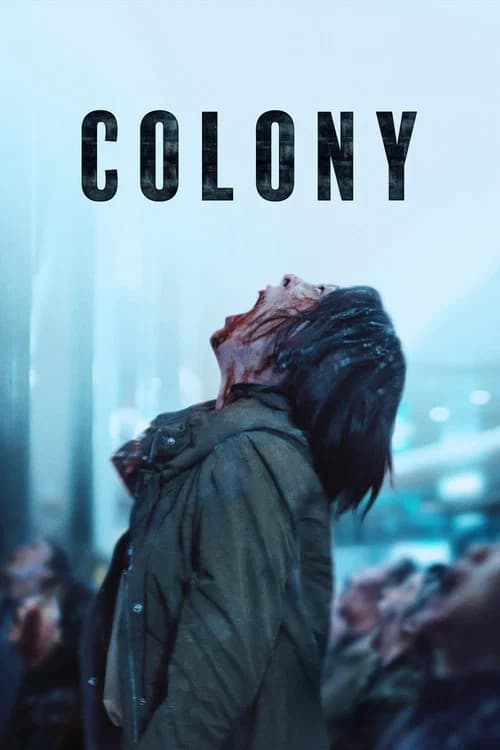
Colony (군체) is a Korean-language horror film releasing on May 21, 2026. The story centers on a biotech conference turned containment zone after a rapidly mutating virus is released, trapping survivors alongside increasingly transformed infected.
Trailer
Gallery (19)
Key features
- ·Korean-language horror film
- ·Viral outbreak contained-location premise
- ·Releases May 21, 2026
- ·Features body-horror transformation elements
- ·Ensemble survival narrative
FAQ
When does Colony release?
Colony is scheduled for release on May 21, 2026.
What is Colony about?
The film follows a professor named Se-jeong and a group of survivors trapped inside a sealed biotech facility after a rapidly mutating virus is released, while those infected undergo horrific physical transformations.
What language is Colony in?
Colony is a Korean-language film. Its original Korean title is 군체.
What genre is Colony?
Colony is a horror film built around a viral outbreak and a contained-location survival scenario.
About this release
A South Korean horror-thriller titled Colony (군체) is scheduled for release on May 21, 2026, produced by Wow Point, Smilegate Entertainment, and Midnight Studio. The film follows Professor Se-jeong, who becomes trapped inside a sealed biotech conference facility after a rapidly mutating virus is accidentally released, forcing her and a small group of survivors to contend with the infected as they undergo increasingly horrific physical transformations.
The premise sits squarely within a subgenre that Korean cinema has spent the better part of two decades refining: the contained-space survival horror, in which a recognizable institution — a train, a building, a city block — is suddenly rendered lethal, and ordinary people are forced to improvise survival strategies against an enemy that does not slow down. The biotech conference setting is a notable variation on that tradition. Rather than a residential neighborhood or transit corridor, Colony positions its outbreak at the intersection of scientific ambition and institutional authority, a place defined by expertise, credentialed trust, and controlled environments — all of which collapse the moment the virus escapes containment. That framing carries its own implicit tension before a single frame of action appears.
The production involves three companies: Wow Point, Smilegate Entertainment, and Midnight Studio. Smilegate is perhaps the most recognizable of the three to audiences outside Korea, being the entertainment arm of a company known primarily in gaming circles, though its involvement in film production signals continued expansion into other media verticals. The presence of multiple production partners on a genre project of this kind is not unusual in the contemporary Korean industry, where co-productions allow studios to distribute both financial risk and logistical load across genre features that require substantial practical and visual effects work — which an outbreak film centered on "horrific transformations" presumably demands.
The description of the infected undergoing visible, physical transformation is worth pausing on. It distinguishes Colony from the stripped-down "fast zombie" model that dominated Korean outbreak cinema in the mid-2010s and suggests something more overtly body-horror-adjacent, where the spectacle of mutation is itself part of the film's intended effect. Whether those transformations are handled practically, digitally, or through some combination is unknown, but the creative choice to foreground them in the premise summary indicates they are central to the film's identity rather than incidental atmosphere.
What remains genuinely open is the question of tone and scale. The confined-setting outbreak film can go in markedly different directions depending on emphasis: some prioritize the procedural logic of survival, others lean into interpersonal collapse under pressure, and others still treat the infected not as antagonists but as a kind of grotesque mirror of the survivors' own desperation. Colony has not, from available information, indicated which of these registers it occupies — or whether it attempts to hold several of them simultaneously. Professor Se-jeong as the protagonist is an interesting structural choice; an academic placed in extremis is a figure who brings institutional knowledge and analytical habit to a situation that punishes deliberation. Whether the film uses that contradiction as psychological material or treats Se-jeong's expertise as purely functional — a way to move exposition — is an open question.
The "small group of survivors" structure implies the familiar ensemble dynamics of genre filmmaking, where character type and social position are tested under duress. Who those survivors are, how they relate to Se-jeong, and whether Colony does anything unexpected with those relationships is not apparent from the materials available. Korean genre films in this space have demonstrated considerable range in how they handle ensemble casts — from the economical and transactional to the densely relational — so the framing alone doesn't foreclose possibilities.
It is also worth noting the "biotech conference" setting as a potential site of social commentary, given how legibly it maps onto contemporary anxieties about accelerated biotechnological development, corporate scientific culture, and the gap between institutional assurances of safety and actual containment capacity. Whether Colony is interested in pressing on those anxieties thematically or uses the setting purely as a pressurized container for action and horror is, again, not signaled by the available description. The film's Korean-language title, 군체, translates loosely to "colony" in the biological sense — a mass of organisms functioning as a collective unit — which may carry implications about the nature of the infected or about the survivors themselves, though any reading of that choice remains provisional without more detail about the film's narrative arc.
Audiences who follow Korean genre cinema closely, particularly those drawn to the tradition of outbreak narratives that runs through the country's recent horror and thriller output, are the most natural constituency for Colony. Beyond that core, the film is likely to find interest among viewers generally drawn to contained-space horror with a high practical stakes — the sealed building, the dwindling group, the clock-like structure of survival — regardless of national origin. The action classification alongside horror and thriller in the film's genre tags suggests the film intends physical momentum as well as dread, which broadens its potential reach among audiences who want genre films to move at pace, not merely unsettle.
Our coverage
- Train to Busan's Zombies Were Mindless. Colony's Remember Every Mistake You Make
Yeon Sang-ho defined modern zombie horror with Train to Busan. His new Cannes breakout Colony changes the rules: these infected don't just attack, they learn.
Comments
Sign in to join the conversation.
Loading…