 📈 Trending
Peddi
ActionJun 3, 2026
Peddi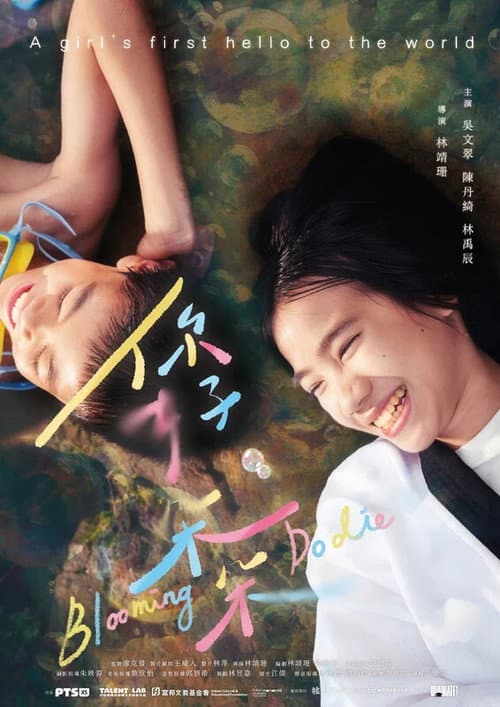
Details
Popularity · Search interest now
Based on TMDb activity
Not currently available for streaming or purchase.
Links may earn Incoming a commission at no extra cost to you.
Incoming Editorial TeamVerified
On a winter hot-spring trip, twelve-year-old Dodie refuses to enter the water in the girly swimsuit her father bought. Feeling misunderstood, she hides by the poolside, watching the girls in the bath—none of whom look like someone she wants to become. Then, the calm, androgynous presence of Fujiko, a 69-year-old bathhouse worker, catches her attention. Dodie quietly steps closer…
A Chinese-language drama titled Blooming Dodie — subtitled in Chinese as 你好,朵朵, or roughly "Hello, Dodie" — is scheduled for release on April 25, 2026. The film centers on a twelve-year-old girl named Dodie and an encounter that takes shape during a winter hot-spring trip, unfolding in the unhurried register of a coming-of-age drama concerned less with event than with perception.
The setup is deliberately narrow in scope. Dodie's father has bought her a swimsuit she experiences as an imposition — something too girlish, too legible as a statement about who she is supposed to be. She refuses to wear it into the water, and instead retreats to the poolside, where she watches the other girls bathing. The film establishes this observation as a specific kind of alienation: Dodie looks at these girls not with envy or camaraderie but with a flat recognition that none of them represent a self she is interested in becoming. The hot-spring setting, with its associations in East Asian culture around communal bathing, ritual, and a certain exposure of the body as social fact, gives the film a ready-made framework for thinking about gender, belonging, and visibility without the story needing to announce those themes outright.
The hinge of the narrative is the appearance of Fujiko, a sixty-nine-year-old bathhouse worker described as calm and androgynous. Dodie gravitates toward her — or toward something Fujiko represents — and begins moving closer. That is the gesture the film appears to be built around: a child edging toward a figure who doesn't fit the available categories, in a setting where the body and its social meanings are unusually present. The age gap between the two characters — twelve and sixty-nine — is striking enough to carry structural weight on its own. Whatever exchange or influence passes between them will have to reckon with the distance of decades, with what can be transmitted across that gap and what remains untranslatable.
The film's Wikipedia association with Autumn Crocus is an oblique but interesting one. Autumn Crocus is a 1931 play by Dodie Smith — the British playwright and novelist later known for The Hundred and One Dalmatians — which concerns an English woman on holiday in the Tyrol who falls into an infatuation with her innkeeper. The connection between that work and this film, if intentional, seems to operate at a thematic rather than narrative level: the idea of a traveler in a transient setting, a chance encounter with someone working in a place of hospitality, an emotional opening that might not have been possible at home. Whether the film explicitly draws on Smith's work or the association is merely a metadata artifact is not entirely clear from the available information, though the shared name "Dodie" between the film's protagonist and the play's author suggests the connection is at minimum conscious.
The film's original language is Mandarin Chinese, and Fujiko's name — Japanese in origin and spelling — raises a quiet question about setting and cultural geography that the available information doesn't fully resolve. Hot-spring tourism, or onsen culture, is particularly associated with Japan, though the practice is hardly exclusive to it, and China has its own substantial tradition of thermal bathing. Whether the film is set in China, Japan, or somewhere more deliberately unspecified is the kind of detail that will matter to how the story situates its two main characters relative to each other. If Fujiko is Japanese and Dodie is Chinese, the encounter gains a layer of cross-cultural displacement; if both are located within the same national context, the androgyny and age become the primary axes of difference. The film's marketing materials, at least in their current form, leave this open.
The genre categorization as drama, with no qualifying subgenres listed, positions the film toward the quieter end of the spectrum — character study over plot mechanics. Coming-of-age films in this mode, whether in Chinese cinema or globally, tend to resist resolution; they record a shift in consciousness rather than a transformation of circumstances. Dodie will not, one imagines, emerge from the hot-spring trip a different person in any legible sense. She will have seen something, moved toward something, and the film will have tracked the movement. That structural restraint is both the genre's strength and the source of its variable reception — audiences expecting narrative momentum in the conventional sense sometimes find this kind of film withholding.
What the film has not disclosed, at this stage, is who wrote and directed it, which is an unusual gap for a feature with a release date. The performances — particularly whoever plays Fujiko — will carry significant weight given how much of the film's emotional architecture rests on what that character communicates through presence rather than dialogue. An older actress who can project the particular quality described as "calm and androgynous" without the role tipping into archetype will determine whether Dodie's gravitational pull toward her feels like genuine recognition or symbolic convenience.
The audience most likely to seek out Blooming Dodie will overlap considerably with viewers who respond to work in the tradition of quiet, closely observed films about childhood interiority — films interested in the gap between how adults imagine children understand the world and how children actually experience it. The film's specific attention to gender nonconformity in a twelve-year-old and its pairing of that child with an elderly androgynous figure suggests it is also angling at viewers for whom those questions have personal stakes. Whether it reaches beyond that audience will depend on the execution of what is, structurally, a very small story told in a very particular key.
📈 TrendingPeddi
ActionJun 3, 2026
Peddi ⭐ Popular
Digger
ComedySep 28, 2026
Digger 🔥 Hot
The Social Reckoning
DramaOct 7, 2026
The Social Reckoning
LA BOLA NEGRA
DramaSep 25, 2026
LA BOLA NEGRA ⭐ Popular
Primetime
ThrillerSep 23, 2026
Primetime
The Shawshank Redemption
DramaSep 23, 1994
The Shawshank RedemptionSign in to join the conversation.