


Welcome to the Jungle
ActionJun 25, 2026
Welcome to the Jungle
Details
Rating · Quality score from voters
Popularity · Search interest now
Based on TMDb activity
Incoming Editorial TeamVerified
A man inherits a palace in rural Mangalpur and plans his sister's wedding there, but strange supernatural events and panicked locals force him to investigate the property's mysterious past.
Bhooth Bangla, a Hindi-language horror-comedy produced by Balaji Motion Pictures and Cape of Good Films, is scheduled for release on April 16, 2026. The film centers on a man who inherits a palace in the rural settlement of Mangalpur and, rather than letting the property sit idle, decides to use it as the venue for his sister's wedding. The plan unravels quickly: locals are gripped by a fear of the place, and a series of strange supernatural occurrences pushes the protagonist into an investigation of whatever history the palace has been hiding.
The horror-comedy is a genre combination with a long and distinct tradition in Indian cinema. Films that pair domestic or family situations — a wedding, a reunion, an inheritance — with haunted settings have appeared across multiple decades and languages, from the broad slapstick of older Bollywood productions to more recent entries that attempt a tonal balance between genuine dread and comic deflation. The haunted-mansion premise in particular has a kind of structural reliability: an unfamiliar property, reluctant locals who know more than they say, and a protagonist who arrives as an outsider to a secret that has been kept for some time. Bhooth Bangla works directly within that template, and the question the film will have to answer for itself is where it sits on the spectrum between fright and farce.
Balaji Motion Pictures, one of the two producing studios attached to the project, is a recognizable name in Hindi-language entertainment with a history across film and television. Cape of Good Films is the second production house listed. Beyond the studio credits and the broad shape of the premise, the available information about the production's creative team — its director, its cast, its screenwriting credits — has not been made public in the materials available at this stage. That absence is itself notable for a film with a release date roughly a year out. Whether the project is still in early development, in active production without public announcements, or simply being kept close ahead of a formal launch campaign is not clear from what has been released.
What the premise does establish is a fairly specific tonal and logistical setup. The wedding backdrop gives the film a built-in ensemble logic: a sister's wedding implies a family group, which implies multiple characters who can each respond differently to whatever the palace turns out to contain. It also creates a deadline pressure within the story — the wedding must happen, or preparations must be abandoned — that horror-comedies often use to good effect. The comedy in these films frequently derives not from the supernatural elements themselves but from the collision between ordinary social obligations and extraordinary circumstances. A man trying to manage caterers and seating arrangements while also confronting a haunted palace is a situation with obvious comic potential that doesn't require the film to undercut its horror, at least in theory.
The rural Mangalpur setting suggests a degree of remove from urban modernity that is common to the genre: the palace is presumably old, the locals are wary, and the protagonist arrives from outside with no local knowledge. That physical and cultural distance between the protagonist and the property is a standard engine for these narratives. It allows the film to dole out the history of the palace gradually, through reluctant townspeople and physical discovery, rather than having characters who already know the answers simply explain them. Whether the film's screenplay uses that geography carefully — making Mangalpur feel specific and lived-in rather than generic — is the kind of question that won't be answerable until the film exists.
The supernatural events described in the premise are left entirely undefined at this stage. That vagueness is not unusual for early promotional materials on a horror project, but it does mean that the nature of the film's scares — whether it commits to an actual ghost story, keeps its apparitions ambiguous, or gradually reveals a more earthbound explanation for the palace's reputation — is entirely open. Horror-comedies handle that question in notably different ways. Some use comedy to diffuse tension after it has been genuinely built; others use horror imagery as the setup for jokes rather than for frights. A third approach tries to sustain both registers simultaneously, which is considerably harder to execute and more rewarding when it works. Where Bhooth Bangla lands in that range will define the kind of film it is far more than its premise does.
The April 2026 release date places it in a period that has historically been receptive to mid-budget Hindi-language commercial releases — past Eid and pre-summer, a window that avoids some of the most competitive crowding on the Bollywood calendar. A horror-comedy with a wedding plot and a rural haunted-mansion setting would most naturally find its audience among Hindi-language filmgoers who have affection for the genre's conventions and are willing to accept that the film is working within an established template rather than against it.
Welcome to the Jungle
ActionJun 25, 2026
Welcome to the Jungle 🔥 Hot
Insidious: Out of the Further
HorrorAug 19, 2026
Insidious: Out of the Further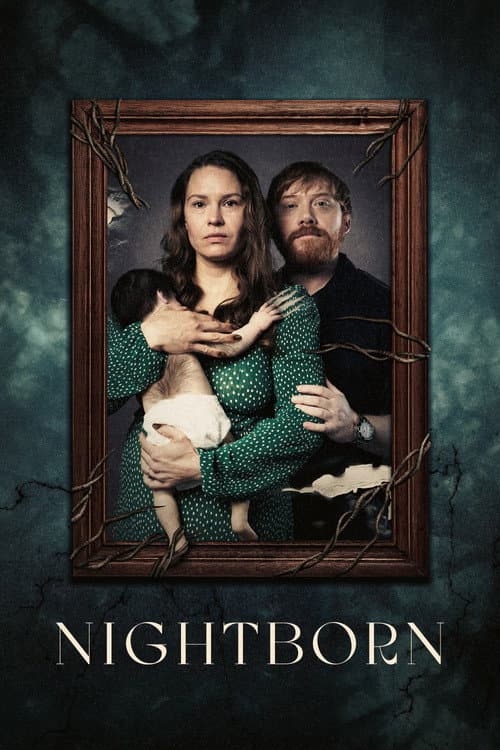
Nightborn
HorrorJul 1, 2026
Nightborn ⭐ Popular
Backrooms
HorrorMay 27, 2026
Backrooms
Scream 7
HorrorFeb 25, 2026
Scream 7
Ice Cream Man
HorrorAug 3, 2026
Ice Cream ManSign in to join the conversation.