 📈 Trending
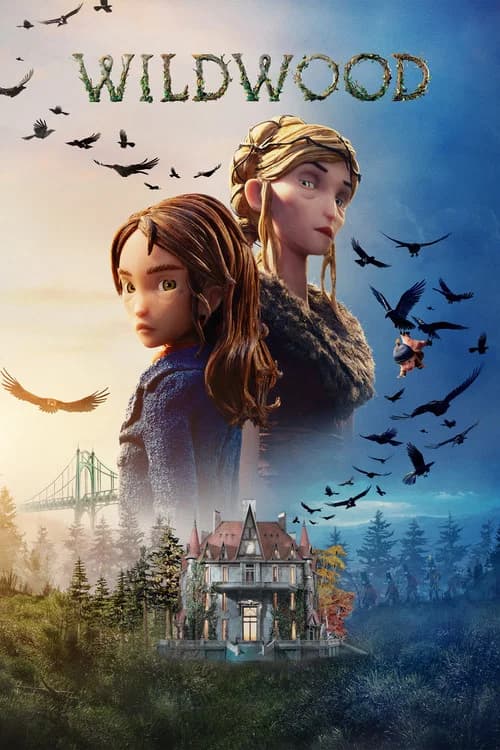
Wildwood
AnimationOct 19, 2026
WildwoodReleasedDetails
Popularity · Search interest now
Based on TMDb activity
Hype score
leaderboard →Angels Pull Your Hair ranks in the top 15% of movies by Wikipedia traffic this week.
Not currently available for streaming or purchase.
Links may earn Incoming a commission at no extra cost to you.
Incoming Editorial TeamVerified
Angels Pull Your Hair is a narrative short film following Danielle, a young Black woman confronting the psychological legacy of being raised by a mother with untreated mental illness. The film releases on August 6, 2026.
Angels Pull Your Hair is scheduled for release on August 6, 2026. No theatrical or streaming platform details have been announced at this time.
No streaming platform has been confirmed for Angels Pull Your Hair as of now. Distribution details are expected to be announced closer to its August 6, 2026 release date.
The film follows Danielle, a young Black woman grappling with the psychological impact of being raised by a mother with untreated mental illness. Her fear of having inherited her mother's condition takes physical form as a faceless sleep paralysis demon.
Angels Pull Your Hair is a psychological drama with horror elements. It uses the imagery of a sleep paralysis demon to explore themes of intergenerational mental illness and inherited trauma.
Angels Pull Your Hair is a short film, though its precise runtime has not been disclosed in available information.
A narrative short film titled Angels Pull Your Hair is scheduled for release on August 6, 2026. The film centers on Danielle, a young Black woman confronting the psychological inheritance of a childhood spent with a mother whose mental illness went untreated. As Danielle works to understand the shape her past has left on her, the fear that she may have inherited her mother's condition manifests as something concrete and embodied: a faceless sleep paralysis demon that haunts her.
The premise sits at a particular intersection of psychological drama and horror-adjacent imagery that has gained sustained attention in independent short filmmaking over the past decade. Sleep paralysis as a narrative device carries its own cultural weight — the experience has been documented across folklore traditions worldwide, and its visual grammar (the frozen body, the intruding presence, the threshold between waking and dreaming) translates naturally to film. What distinguishes the approach here is that the demon is explicitly framed not as an external supernatural force but as a projection of Danielle's internal dread — the fear of becoming, against her will, the person who hurt her. That conflation of inherited trauma with the imagery of haunting is the conceptual engine the film appears to be running on.
The short format imposes its own discipline. Where a feature might distribute that central tension across subplots, supporting characters, and extended flashback sequences, a short has to compress. The single named character we know of — Danielle — suggests a film that is largely interior, possibly solitary in its staging, and dependent on performance and visual design to carry the weight that dialogue and narrative event might otherwise shoulder. The faceless demon is a significant formal choice: removing a face from a threatening figure removes the possibility of reading intent or emotion from it, leaving only presence and pressure. That's a different kind of fear than a recognizable antagonist would produce.
The specificity of Danielle's situation — a young Black woman, a mother with untreated mental illness, the fear of repetition across generations — gives the film a social dimension that the horror register doesn't cancel out but instead amplifies. The experience of watching a parent struggle with a mental health condition that goes unaddressed is not rare, and the anxiety about whether psychological vulnerability moves through families is widespread. But those experiences are not uniformly represented in film, particularly in the short format, and the choice to anchor them in this character's specific context suggests the film is working with material that is both personal in origin and broadly resonant in implication.
What remains unknown, because the available information doesn't address it, is who made the film. The absence of credited writer, director, or production company in the provided materials means there is no way to situate Angels Pull Your Hair within a filmmaker's body of work or to assess what aesthetic sensibility is shaping it. That uncertainty matters in the short film context more than it might in a studio feature, where the apparatus of production tends to leave more visible traces. Short films frequently emerge from singular creative visions — a writer-director working with a small crew — and knowing whose vision this is would help locate what the film is likely to look like and feel like. The description itself is precise and considered enough to suggest someone who knows exactly what they're making, but that's inference rather than information.
Similarly, the film's path to audiences is not clear from what's available. Short films distribute differently than features — festivals first, then streaming platforms, sometimes educational or nonprofit channels depending on subject matter. A film engaging with mental health, intergenerational trauma, and Black women's experience has a recognizable circuit of festivals and platforms where it might find its initial audience, but whether Angels Pull Your Hair is on that circuit, and in what form its August 2026 date represents a public release as opposed to a festival premiere, isn't established by the available data.
The title itself is worth sitting with. "Angels pull your hair" is the kind of phrase that lives at the edge of folk saying and childhood superstition — an explanation offered to a child for something that has no good explanation, which maps directly onto the film's subject matter. A child raised by a parent with untreated mental illness is often offered explanations for frightening things that are themselves frightening in their inadequacy. The title suggests the film is interested in how those early interpretive frameworks — the stories told to make sense of chaos — persist into adulthood and shape the way Danielle reads her own experience. The sleep paralysis demon is, in that reading, another angel pulling hair: something that feels external and inexplicable, that the mind reaches for supernatural language to describe, but that is in fact intimate and generated from within.
Viewers likely to seek this out will include audiences with an existing interest in short-form psychological filmmaking, particularly work that uses horror or surreal imagery to externalize internal states. The subject matter — inherited trauma, mental illness, the experience of being parented by someone who was unwell — will also draw viewers who come to the film through that lens rather than through genre. Those two audiences tend to overlap more than genre categories suggest.
📈 TrendingWildwood
AnimationOct 19, 2026
WildwoodReleased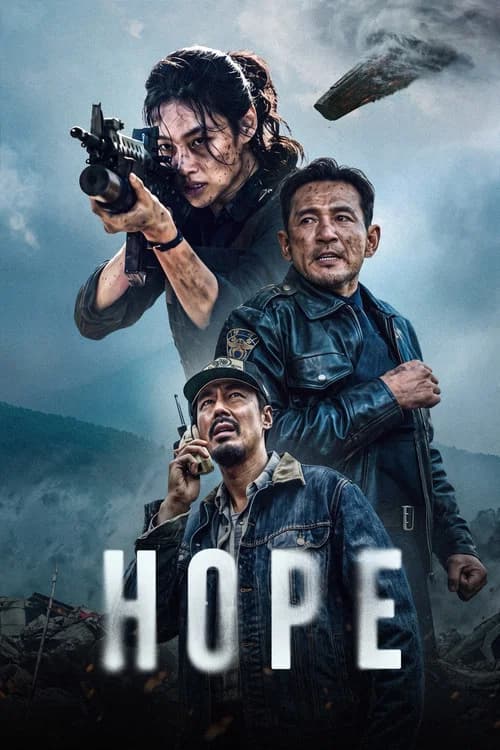 📈 Trending
Hope
Science FictionJul 15, 2026
Hope 📈 Trending
Supergirl
ActionJun 24, 2026
Supergirl 📈 Trending
Masters of the Universe
ActionJun 3, 2026
Masters of the Universe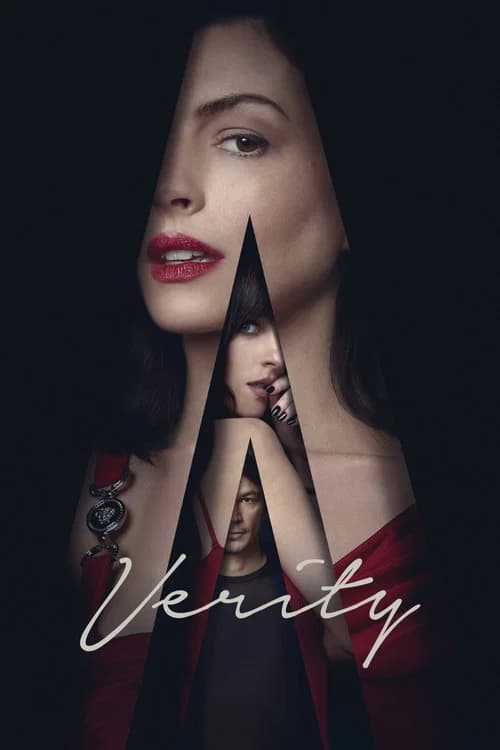 📈 Trending
Verity
MysterySep 30, 2026
Verity 📈 Trending
Mortal Kombat II
ActionMay 6, 2026
Mortal Kombat IISign in to join the conversation.