Details
- Language
- English
- Country
- GB, US
- Studio
- A+E Factual Studios
- Seasons
- 1 · 1 eps
- For
- adult
Popularity · Search interest now
Low
2.2
Based on TMDb activity
Hype score
leaderboard →91
/ 100
#20 globally#5 in tv
30-day trendWP 99
World War II with Tom Hanks attracts significant documentary and history viewer interest.
Starring

Where to watch
Not currently available for streaming or purchase.
Links may earn Incoming a commission at no extra cost to you.
Incoming Editorial TeamVerified
Explores WWII from Germany's invasion of Poland through the atomic age, examining pivotal battles, wartime leaders like Churchill and Roosevelt, and the human cost of total war.
Gallery (4)
Episodes
✓ Previously aired
About this release
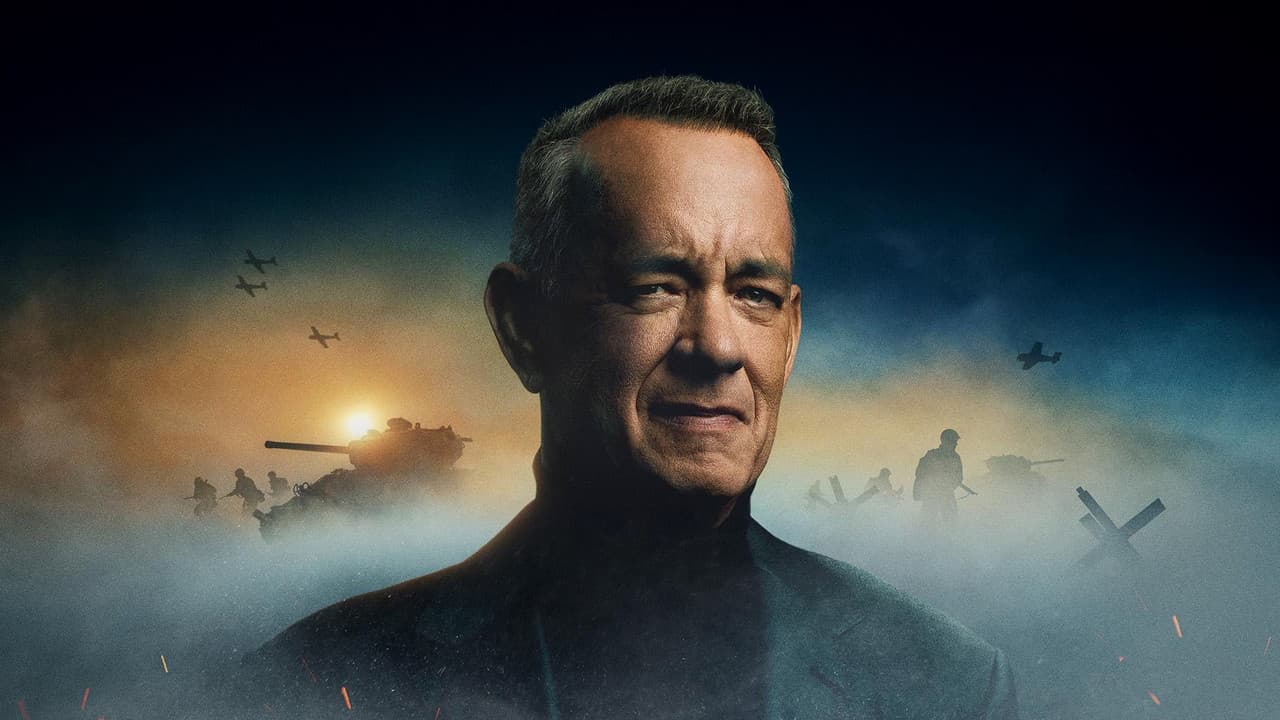
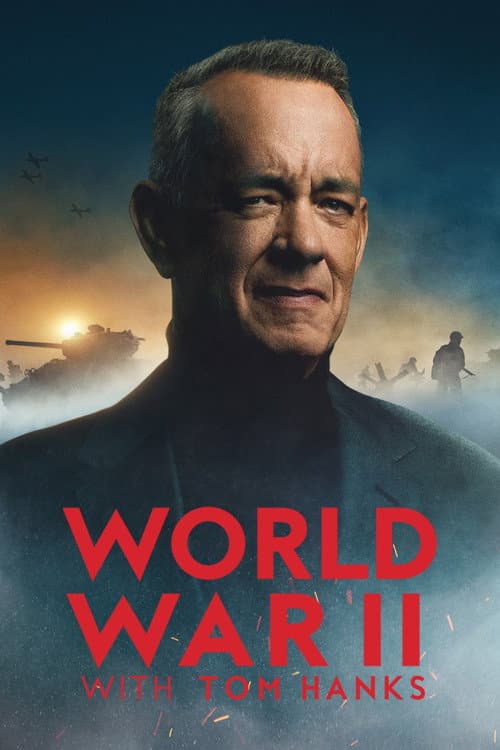
A documentary series titled World War II with Tom Hanks is scheduled to release on May 25, 2026, a date that carries its own quiet symbolism — Memorial Day in the United States. The production is a joint effort among A+E Factual Studios, Motion Entertainment, and Nutopia, with origins in both the United Kingdom and the United States. The subject, as the title plainly announces, is the Second World War, traced from Germany's invasion of Poland through the dawn of the atomic age, with attention to pivotal battles, the wartime leadership of figures including Winston Churchill and Franklin D. Roosevelt, and the human cost that the conflict imposed on soldiers and civilians alike.
Tom Hanks is, of course, not a stranger to this territory. His involvement in productions examining the Second World War stretches back decades, encompassing both dramatic and documentary work that has made him one of the more recognizable cultural figures associated with American memory of the conflict. That association lends the project a particular kind of weight before a single frame has been seen publicly — Hanks functions here not merely as a narrator or presenter but as a kind of institutional presence, someone whose name on a project of this nature signals a certain seriousness of intent, or at least a certain audience expectation of it.
Nutopia, one of the three production companies involved, has a track record in large-scale documentary series, often structured around sweeping historical or scientific narratives aimed at general audiences rather than specialists. A+E Factual Studios brings the infrastructure of a network with long experience in military history programming, a genre that has sustained cable television audiences for well over two decades. Motion Entertainment rounds out the production partnership. The combination of these three entities suggests a production designed for broad reach, with the production values and narrative ambition that come from pooling resources across a transatlantic co-production.
What the available information does not yet clarify is the precise format of the series. The metadata lists it as a single season with a single episode, which is unusual for a subject of this scope — the Second World War, spanning the invasion of Poland to the atomic bombings of Hiroshima and Nagasaki, represents one of the most documented and narratively complex events in modern history. Whether that single-episode designation reflects incomplete metadata, a feature-length documentary structured as one continuous work, or something else entirely remains an open question. Productions about this war have historically ranged from the twenty-six-episode architecture of a Ken Burns series to compact theatrical documentaries, and where this project falls on that spectrum will substantially shape the experience it offers.
It is also worth noting what the subject description emphasizes and what it does not. The framing — pivotal battles, wartime leaders, the human cost of total war — is broad enough to encompass almost any approach to the conflict, from a conventional military history organized around campaigns and commanders to something more focused on the experiences of ordinary people caught inside a catastrophe they did not choose. The mention of "the human cost" suggests some intention to move beyond pure operational history, but the degree to which the series engages with civilian populations, the Holocaust, the experiences of non-Western theaters, or the postwar consequences of the atomic age is not specified in anything currently available. These are not small editorial choices. A documentary about the Second World War that centers primarily on the European theater and its Anglo-American leadership tells a meaningfully different story than one that gives substantial attention to the Pacific, to the Eastern Front, or to the experiences of people living under occupation.
Churchill and Roosevelt are named specifically, which positions the series within a fairly familiar frame of wartime leadership — one that has been explored extensively in British and American documentary filmmaking. Whether the series engages with Stalin, with Japanese military and civilian leadership, or with the political figures of occupied Europe is not indicated. These absences or inclusions will define the interpretive angle of the whole project, and they remain, for now, undefined.
The May 25 release date places the series in a crowded field of Memorial Day programming, when American audiences are traditionally receptive to historical content about military conflict. That positioning is clearly intentional, and it aligns the series with a long tradition of American commemoration that tends to organize the Second World War around sacrifice, heroism, and the arc of Allied victory. Whether the series works within that tradition or complicates it is the most interesting question the current information leaves open.
The audience most likely to seek this out is the one that has followed Hanks into this subject matter before — viewers with a standing interest in military history who are accustomed to the prestige-documentary format and who regard the Second World War as a subject that continues to warrant serious revisitation. Given the co-production's British and American origins, the series may also attract audiences in the United Kingdom, where Churchill's role and the particular character of British wartime experience remain subjects of sustained public interest. Whether the series offers those audiences something they haven't encountered before, or whether it serves primarily as a well-produced synthesis of established historical understanding, is something only the finished work can answer.
Comments
Sign in to join the conversation.
Loading…