 Hot
Travis Japan Summer Vacation!! in the USA
Travis Japan Summer Vacation!! ―7人のアメリカ旅―
Released May 1, 2026
7 episodes↑ 2.924h
Details
- Language
- Japanese
- Country
- JP
- Seasons
- 1 · 7 eps
- For
- family
Popularity · Search interest now
Low
3.7
Based on TMDb activity
Hype score
leaderboard →77
/ 100↑ +2.9 in 24h
#61 globally#19 in tv
30-day trendWP 92 · YT 55
Travis Japan Summer Vacation!! in the USA attracts notable travel and entertainment research.
Starring







Where to watch
Not currently available for streaming or purchase.
Links may earn Incoming a commission at no extra cost to you.
Incoming Editorial TeamVerified
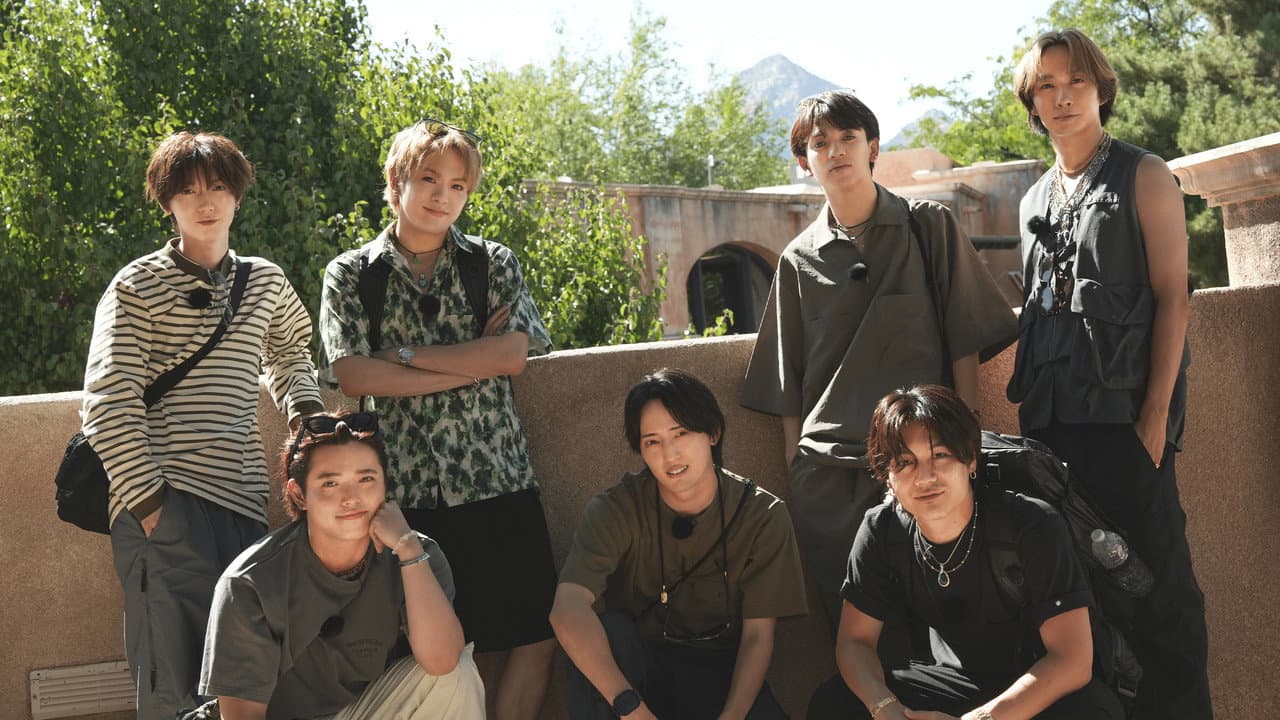
Travis Japan Summer Vacation!! in the USA is a Japanese-language travel television program following the group Travis Japan on a road trip through the Rocky Mountains in North America. It is scheduled to release on May 1, 2026.
Gallery (8)
Episodes
✓ Previously aired
Key features
- ·Japanese-language travel program
- ·Set in the Rocky Mountains, North America
- ·Features seven-member group Travis Japan
- ·Split-team RV and cultural immersion format
- ·Releasing May 1, 2026
FAQ
When does Travis Japan Summer Vacation!! in the USA release?
The program is scheduled to release on May 1, 2026.
What is Travis Japan Summer Vacation!! in the USA about?
The program follows the seven members of Travis Japan on a road trip through the Rocky Mountains in North America, with the group divided into teams — one traveling by RV and the other exploring local culture.
Who is in Travis Japan Summer Vacation!! in the USA?
The program features all seven members of the Japanese group Travis Japan.
What language is Travis Japan Summer Vacation!! in the USA in?
The program is in Japanese.
About this release
Travis Japan Summer Vacation!! in the USA — subtitled in Japanese as Travis Japan Summer Vacation!! ―7人のアメリカ旅―, meaning roughly "A Journey Through America for Seven People" — is a seven-episode documentary and reality series originating from Japan, scheduled to release on May 1, 2026. Produced in Japanese and rooted in Japanese entertainment culture, it follows the seven members of Travis Japan, a Japanese group, as they travel through the Rocky Mountains region of North America on what is framed as a summer road trip.
The premise is straightforward in structure: the seven members are divided into teams, with one group navigating the journey by RV and the other engaging more directly with local culture along the way. The divide is an old reality-television device — splitting a cast creates natural friction, comparison, and divergent storytelling threads that can later be woven back together — and here it maps onto the physical and experiential contrast between the mobility of an RV road trip and the slower, more immersive work of connecting with people and places. Whether those two modes of travel converge at a single destination or remain parallel throughout the run is not yet known.
Travis Japan itself is a group with a following built substantially in Japan, and productions of this kind — where an entertainment group documents a journey through an unfamiliar country, reacting to new environments and to each other — occupy a well-established niche in Japanese variety and documentary television. The format has a long history in that context: groups of performers, often idol acts or comedy duos, are placed in logistically demanding or culturally disorienting situations, and the camera records both the friction and the warmth that result. The seven-episode length suggests a degree of editorial structure beyond a simple travelogue; each episode likely corresponds to a distinct leg or theme within the broader Rocky Mountain itinerary, though the specifics of that shape are not confirmed.
What is notable about the setting is its particularity. The Rocky Mountains, as a region, carry a distinct visual and cultural weight — dramatic elevation, open highway, a landscape that tends to dwarf whatever human drama is placed against it. For a Japanese production traveling to that part of North America, the geography itself becomes a kind of character: unfamiliar to the cast, visually spectacular by almost any standard, and far enough from urban American environments to pose genuine logistical and cultural challenges. The road trip by RV specifically implies a kind of sustained proximity among the group members traveling that way — confined space, shared decisions, limited privacy — which tends to surface personality dynamics that more structured entertainment formats can obscure.
The phrase "heartfelt connections" in the available description signals that the series is positioning itself not purely as spectacle or adventure but as something more interpersonal: exchanges with people they meet, perhaps, or moments of reflection among the members themselves. That framing is common in the genre but worth noting because it sets an expectation about tone. This is not, apparently, intended as a competition format or a challenge-driven series. The emphasis seems to fall on experience and relationship rather than on outcome.
Several questions remain genuinely open. The series carries no vote data and minimal public profile outside of its scheduled release, which means there is little sense yet of how it has been received in advance screenings or whether it has aired in any form in Japan prior to the May 2026 date. The release date itself — a Friday in May, after which the full seven episodes presumably become available — suggests a streaming model, though no platform is specified in the available data. The audience for the series internationally will depend heavily on where it can be accessed, and that information is not yet public.
It is also not clear how the team division is structured. Are the two groups fixed throughout all seven episodes, or do members rotate? Is there any competitive element to the split, or is it simply a narrative organizational choice? The balance between the RV travelers and those engaged with local culture could produce very different viewing experiences depending on how much screen time each thread receives and how the editing weights spontaneous moments against more produced sequences.
The series comes from a country — Japan — with a sophisticated and long-running tradition of exactly this kind of celebrity travel documentary, which means the production likely carries certain genre conventions that regular viewers of Japanese variety content will recognize immediately while viewers less familiar with that tradition may find the approach somewhat unexpected. Japanese variety television tends toward a high degree of group dynamic observation, with cameras attentive to interpersonal cues, minor comedic friction, and emotional sincerity in ways that differ from Western reality formats, which often amplify conflict more aggressively. If this series follows that model, the tone will likely be warmer and more observational than competitive, more interested in the texture of shared experience than in manufactured drama.
Those who seek this out will almost certainly be existing fans of Travis Japan, for whom a seven-episode window into how the group's members interact outside a controlled performance context holds obvious appeal. But the Rocky Mountain setting and the road-trip structure give the series a secondary audience: viewers of Japanese travel documentary content generally, and anyone drawn to the specific strangeness of watching a group navigate a landscape as geographically and culturally remote from their home as the American interior tends to be from urban Japan.
Comments
Sign in to join the conversation.
Loading…