Details
- Language
- English
- Country
- US
- Studio
- Propagate Content
- Seasons
- 1 · 3 eps
- Theme
- heisttrue crime
- For
- adult
Popularity · Search interest now
Low
0.8
Based on TMDb activity
Starring


Where to watch
Not currently available for streaming or purchase.
Links may earn Incoming a commission at no extra cost to you.
Incoming Editorial TeamVerified
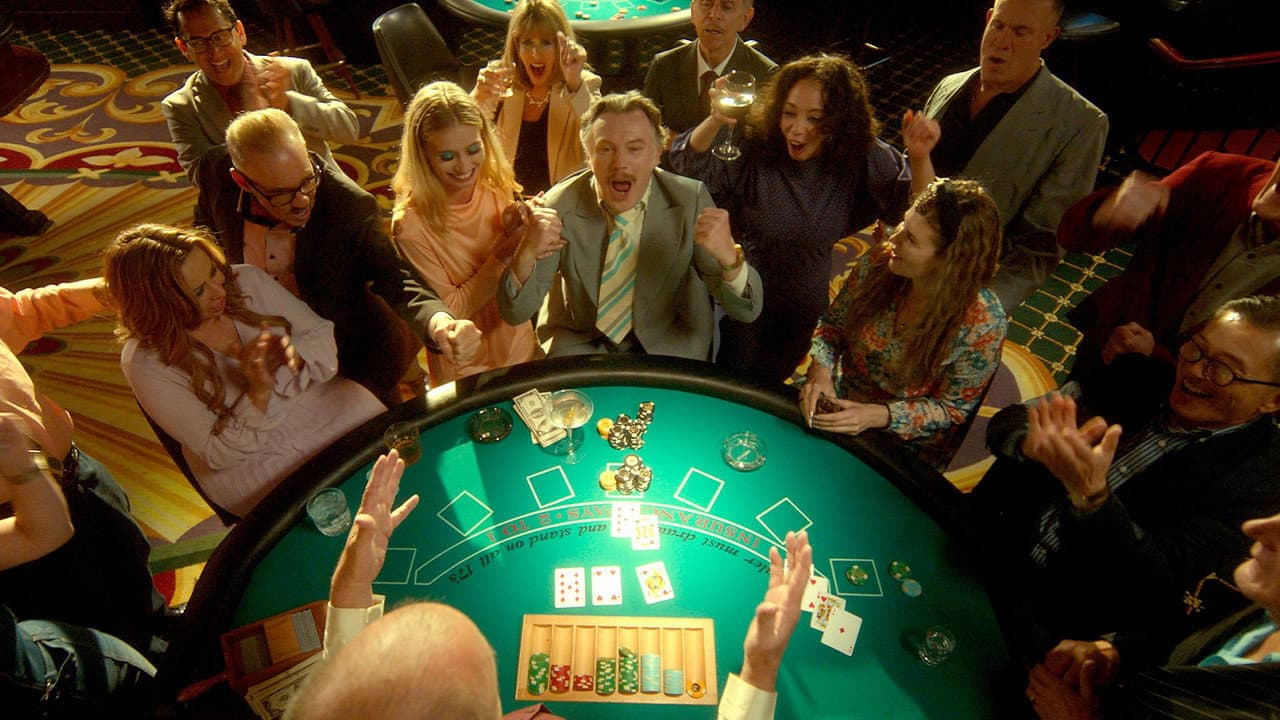
This Is a Bomb: The Nevada Casino Heist is an upcoming television series documenting the 1980 Nevada casino bombing incident, in which a booby-trapped device and a $3 million ransom demand were used to extort a casino. It releases on May 5, 2026.
Gallery (5)
Key features
- ·True-crime television documentary series
- ·Set around 1980 Nevada casino bombing
- ·Centers on FBI investigation and $3 million ransom
- ·English language production
- ·Premieres May 5, 2026
FAQ
When does This Is a Bomb: The Nevada Casino Heist release?
The series is scheduled to release on May 5, 2026.
What is This Is a Bomb: The Nevada Casino Heist about?
It covers the 1980 incident in which a booby-trapped bomb and a $3 million ransom note targeted a Nevada casino, and the subsequent FBI investigation that uncovered the motives behind the scheme.
Is This Is a Bomb: The Nevada Casino Heist based on a true story?
Yes, the series is based on an actual 1980 event involving a bomb threat and ransom demand at a Nevada casino.
About this release
A three-part limited series about a booby-trapped bomb, a $3 million ransom demand, and a Nevada casino under siege arrives on May 5, 2026. Produced by Propagate Content and Sidestilt Films, This Is a Bomb: The Nevada Casino Heist reconstructs a 1980 incident in which an explosive device accompanied by a ransom note threw a Las Vegas-area casino into crisis and drew in the FBI. The series carries a drama classification, though the event it depicts belongs to a category of true-crime television that has grown considerably crowded over the past decade.
The Wikipedia reference embedded in the production metadata points toward the Stardust Resort and Casino, one of the more storied properties on the Las Vegas Strip during that era. The Stardust had a particular place in the mythology of mid-century Las Vegas — its long history included associations with organized crime, federal investigations, and the kind of institutional opacity that made it a recurring subject of journalism and later of dramatization. Whether this series concerns the Stardust directly or draws on that property's documented history as background context is not made explicit in what has been released so far, but the pairing of that reference with a 1980 Nevada casino setting is unlikely to be incidental.
The year 1980 is itself significant as a setting. Las Vegas at that moment was in transition — the corporate consolidation of casino ownership was underway, the old mob-affiliated management structures were under sustained federal pressure, and the Nevada Gaming Control Board was tightening its regulatory posture. A $3 million ransom demand placed against a casino in that environment would have landed inside a web of competing interests: law enforcement agencies working against each other's jurisdictions, casino operators with their own incentives for discretion, and a regulatory apparatus that preferred to keep criminal incidents quiet. The series description's reference to "dark secrets and unexpected motives" uncovered as the FBI investigation proceeds suggests that the production intends to explore some of that layered institutional context rather than treating the bomb itself as simply the work of a lone eccentric.
Propagate Content is an American production company with a track record in non-fiction and documentary-adjacent television. Sidestilt Films appears as co-producer. The series runs to three episodes, which positions it at the shorter end of the limited-series format — long enough to develop a narrative with some structural complexity, short enough that it cannot linger on tangential detail. That compression tends to impose discipline on true-crime storytelling, which in longer formats can sprawl into the procedural weeds without sustaining a coherent argument about why the events matter. Whether the production uses those three hours to build toward a specific historical or social thesis, or whether it remains primarily at the level of narrative reconstruction, is not yet clear.
What remains genuinely open, given the information available before broadcast, is the question of form. True-crime television of this type generally falls somewhere on a spectrum between straight documentary — archival footage, interview testimony, contemporaneous records — and dramatized reconstruction, with many series combining both modes. The genre classification here is simply "drama," which could indicate anything from a fully scripted performance-based retelling to a hybrid format that uses dramatic reenactment alongside documentary framing. The distinction matters not just aesthetically but in terms of what kinds of claims the production will be positioned to make. A scripted drama can inhabit uncertainty and interiority in ways a documentary cannot; a documentary can anchor its assertions in verifiable record in ways a scripted retelling cannot. The audience going in will want to know which they are watching.
The "unexpected motives" language in the series description raises a related question. Casino bombings and extortion attempts of this period have occasionally turned out on investigation to be inside jobs, or to involve perpetrators with connections to casino management, organized crime, or law enforcement itself. The framing implies that the FBI's investigation produced surprises — that the apparent simplicity of an extortion scheme concealed something more complicated. Whether that complication points toward institutional corruption, personal grievance, or something else is held back, as it should be at this stage. The series presumably builds toward those revelations episodically.
It is also worth noting that the production comes with no user voting data yet available, which is consistent with a title that has not yet aired and has not been subject to wide advance press coverage. The popularity figure in the metadata is modest, suggesting the series has not yet accumulated significant tracking interest. That may change if the Stardust connection — or whatever the specific casino turns out to be — anchors the story to a property that viewers already associate with the documented history of Las Vegas corruption.
The audience likely to seek this out is the same one that has sustained interest in limited true-crime series about institutional failures and historical crimes — viewers who followed The Vow, various Netflix heist documentaries, and the wave of Las Vegas-set crime narratives that have appeared in both fiction and non-fiction formats over the past several years. The 1980 setting gives the series a period remove that tends to make the ethical questions feel more tractable, the records more accessible, and the institutions easier to examine without the complications of ongoing litigation. Three episodes beginning May 5, 2026.
Comments
Sign in to join the conversation.
Loading…