
Details
- Language
- Japanese
- Country
- JP
- Studio
- OLM
- Seasons
- 1 · 2 eps
- TMDb Rating
- 7.5 (2 votes)
- Theme
- found family
- Format
- episodic
Popularity · Search interest now
Rising
20.9
Based on TMDb activity
Starring

Where to watch
Links may earn Incoming a commission at no extra cost to you. Streaming data via JustWatch — may not reflect today's catalog.
Incoming Editorial TeamVerified
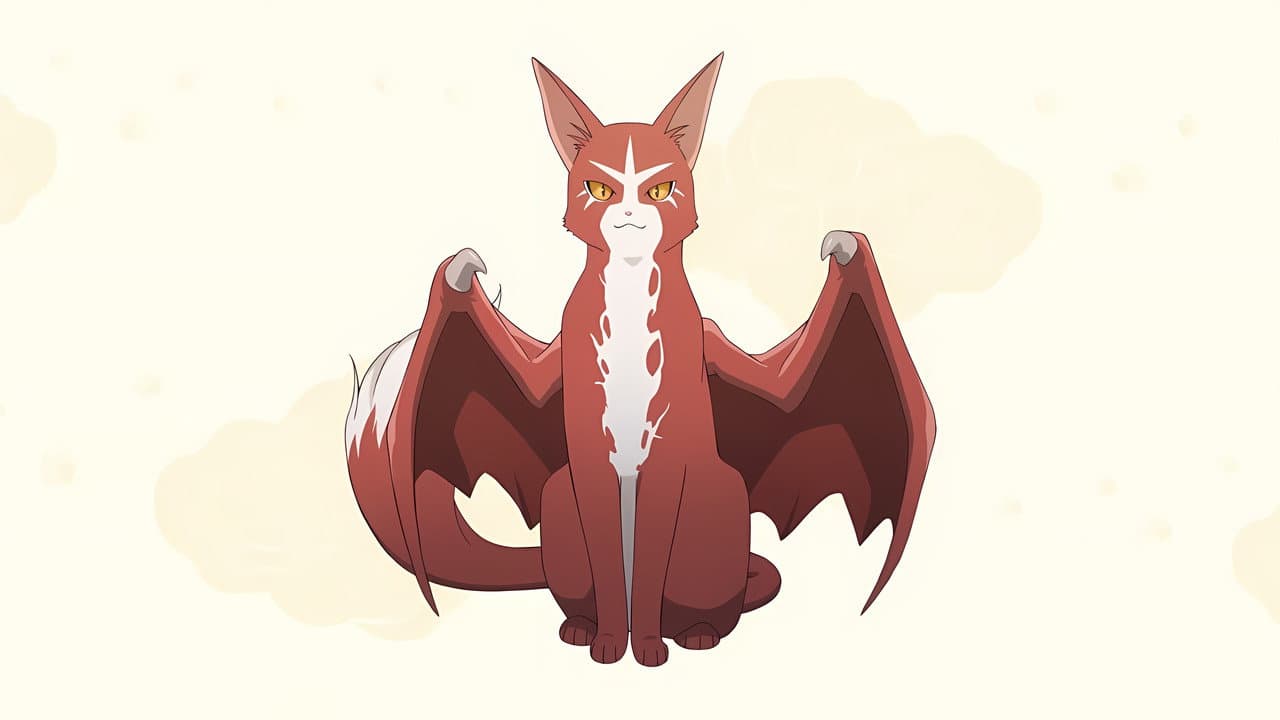
The Cat and the Dragon (猫と竜) is an upcoming Japanese animated television series following a dragon raised by a family of magic-wielding cats. It is scheduled to release on July 4, 2026.
Gallery (1)
Episodes
✓ Previously aired
Key features
- ·Japanese-language animated series
- ·Premieres July 4, 2026
- ·Fantasy genre featuring dragons and magic
- ·Narrative centers on found family dynamics
- ·Bittersweet tone per source material description
FAQ
When does The Cat and the Dragon release?
The Cat and the Dragon is scheduled to release on July 4, 2026.
What is The Cat and the Dragon about?
The series follows a dragon named "Uncle Wings" who is orphaned at birth and raised by a family of magic-wielding cats, eventually becoming their protector while gradually warming to humans.
What is the original Japanese title of The Cat and the Dragon?
The original Japanese title is 猫と竜.
What language is The Cat and the Dragon in?
The series is produced in Japanese.
About this release
The Cat and the Dragon (猫と竜), a two-episode animated series produced by OLM and originating in Japan, is scheduled to release on July 4, 2026. The series falls under animation and sci-fi/fantasy classifications, and its original language is Japanese.
The premise is deceptively simple on its surface: a dragon, orphaned from the moment he hatched, is taken in by a family of cats who practice magic and raised among them as though he were one of their own. He is called Uncle Wings — a name that carries a certain domestic warmth, the kind of nickname a family gives something large and strange that has nonetheless become ordinary to them. As Uncle Wings matures, his primary instinct is protective. He positions himself as a guardian between the cat family and humanity, operating from a wariness toward humans that the story appears to treat as understandable rather than villainous. The complicating force is observation: he watches the cats use their magic to form genuine connections with the humans he distrusts, and that watching gradually softens him. The source description frames this as "heartfelt" and "bittersweet," language that suggests the series is less interested in conflict as spectacle than in the quieter emotional texture of someone being proven wrong about the world by people they love.
OLM is a Tokyo-based animation studio with a long production history in Japanese animation, perhaps most broadly recognized internationally for its work on the Pokémon anime franchise. That association gives a rough sense of the studio's capabilities in character-driven, family-accessible animation, though it would be a mistake to assume The Cat and the Dragon shares that franchise's tone or register simply by association. The studio has handled a range of productions, and a two-episode format suggests something closer to a standalone special or a limited release than an ongoing serialized series — a structure that implies the story is conceived as complete rather than as a pilot for something larger.
The format itself is worth dwelling on. Two episodes is an unusual unit for animated storytelling. It is long enough to establish character and emotional arc, short enough to demand economy. Whether those two episodes represent a self-contained narrative or a condensed beginning of something that may or may not continue is not made clear by the available information. The story as described has a clear internal shape — orphan finds family, family challenges orphan's worldview, orphan changes — and that arc could close neatly within two episodes, or it could be left deliberately open. Audiences going in without knowing which situation applies will encounter either a resolution or an invitation, and at this stage there is no public clarity on which to expect.
The relationship dynamics embedded in the premise carry some structural interest. Uncle Wings is, physically, the most powerful creature in this domestic arrangement, and the series appears to position his protectiveness as both genuine and slightly misguided — he is shielding the cats from something the cats themselves do not seem to need shielding from. There is a mild irony in that configuration: the protector holding back the protected from something that is, at least in part, good for them. Whether the series explores that tension with nuance or keeps it at the level of gentle fable is genuinely unknown. The description offers a tone but not a method.
The cats' use of magic as a bridge to human connection is also an element the description gestures toward without elaborating. Magic in Japanese animated storytelling can mean a great many things — it might be literal and spectacular, or it might function more as a metaphor for emotional attunement, for the kind of perceptiveness or warmth that allows one creature to reach another across difference. How the series renders the cats' magic, and specifically how it depicts those inter-species connections, is one of the more open questions surrounding the production. The answer would substantially shape how the series reads: as a fantasy-adventure, as a quiet domestic drama with fantastical elements, or as something more allegorical.
The subtitle's use of both Japanese (猫と竜) and the English title reflects the bilingual framing common in Japanese animation releases intended to reach audiences beyond Japan, though the specifics of distribution — streaming platform, regional availability, whether a dubbed version is planned — are not part of the available data. That absence is practical information for audiences trying to determine how and where they will be able to watch it.
The audience most likely to seek this out spans several overlapping groups: viewers with an existing interest in Japanese animation who are drawn to smaller, character-centered productions rather than high-volume seasonal television; those who respond to found-family narratives, which have a consistent and devoted following across animation at large; and viewers who appreciate fantasy premises built around emotional rather than action-driven stakes. The bittersweet register the premise promises may also attract an older animation audience that tends to look for tonal complexity rather than pure resolution. For all of them, two episodes is a low-stakes commitment — enough to see whether the warmth implied by the premise is one the production actually delivers.
Comments
Sign in to join the conversation.
Loading…