 Hot
tvReleased
STRIKE!
Released May 13, 2026
↑ 0.524h
Details
- Language
- Dutch
- Country
- BE
- Studio
- A Team Productions
- Seasons
- 1 · 7 eps
Popularity · Search interest now
Low
0.7
Based on TMDb activity
Hype score
leaderboard →74
/ 100↑ +0.5 in 24h
#81 globally#29 in tv
30-day trendWP 87
STRIKE!'s trailer ranks in the top 10% for TV YouTube views.
Starring






Where to watch
Not currently available for streaming or purchase.
Links may earn Incoming a commission at no extra cost to you.
Incoming Editorial TeamVerified
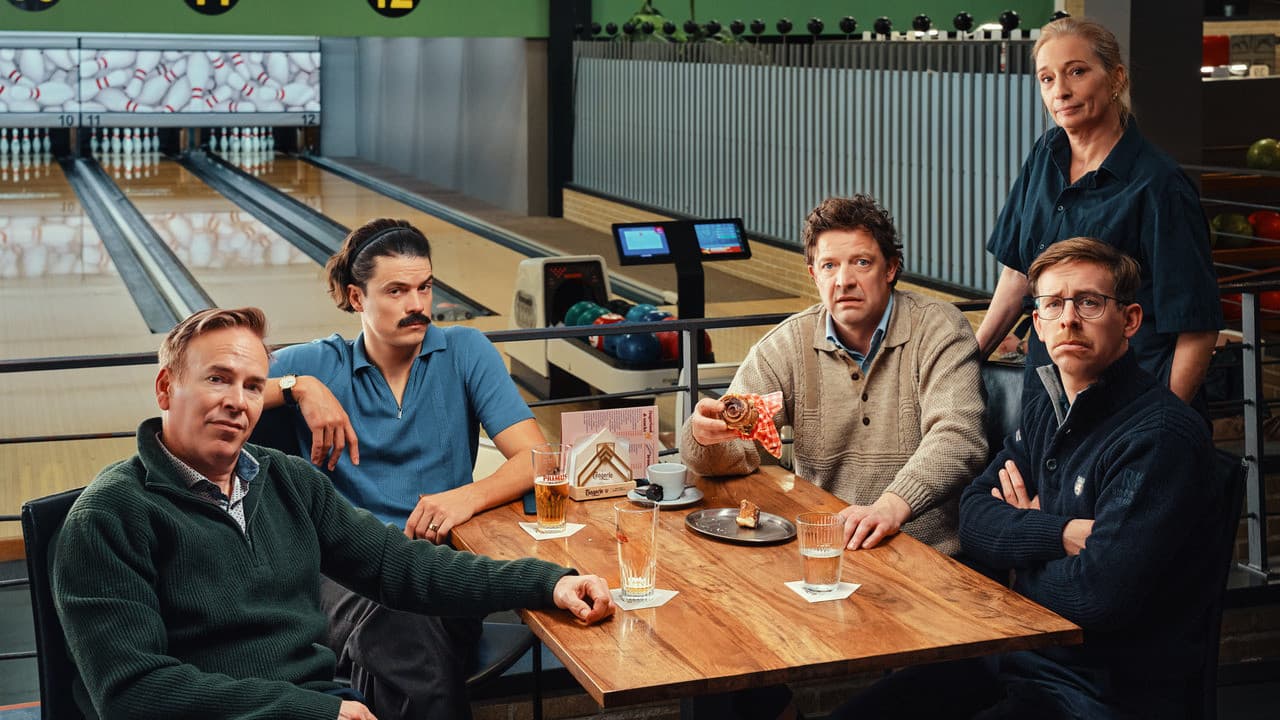
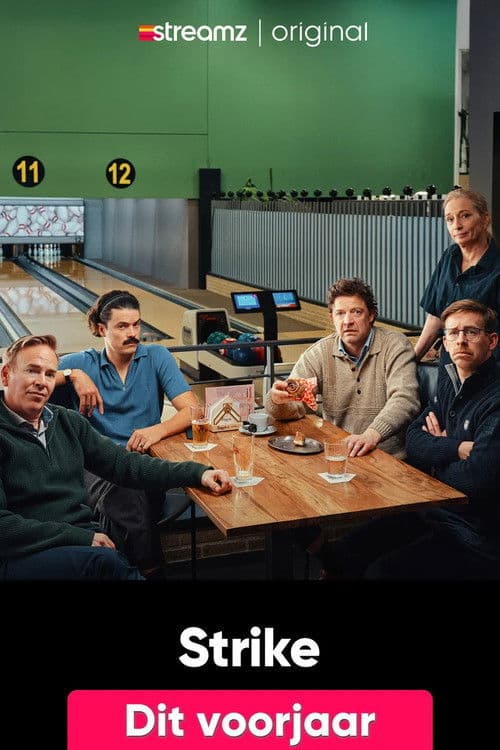
STRIKE! is a Dutch-language comedy series following the men of the Hendrickx family, who find confidence at their weekly bowling sessions only to flounder once back in their everyday lives. It premieres on May 13, 2026.
Gallery (2)
Key features
- ·Dutch-language comedy series
- ·Family ensemble cast
- ·Bowling alley as recurring setting
- ·Premieres May 13, 2026
- ·Gender dynamics as central comedic theme
FAQ
When does STRIKE! release?
STRIKE! premieres on May 13, 2026.
What is STRIKE! about?
STRIKE! follows the men connected to the Hendrickx family, who meet weekly at a bowling alley and project confidence together, but struggle individually once apart from the group.
What language is STRIKE! in?
STRIKE! is a Dutch-language series.
Who are the main characters in STRIKE!?
The series revolves around the Hendrickx family, including ex-commissioner Marcel, businesswoman Rita, their three daughters, and the sons-in-law and son Jeroen who form the group known as the "Kloefkappers".
About this release
STRIKE!, a seven-episode Flemish comedy series produced by A Team Productions, is scheduled to arrive on May 13, 2026. The show is an original Dutch-language production from Belgium, and its premise is rooted in something sitcoms have returned to for decades: the gap between how men behave in groups and how they behave when the group disperses.
The setup centers on the Hendrickx family — a household headed by ex-commissioner Marcel and businesswoman Rita, whose three daughters have each built their own lives with their respective partners. The daughters' partners, along with the family's son Jeroen, have formed a loose fraternal unit they call the "Kloefkappers," a name that carries the flavor of old-fashioned bluster. The gang convenes weekly at a bowling alley, and it is within that particular social enclosure — dimly lit lanes, rented shoes, the comforting ritual of scorekeeping — that their collective confidence inflates to an almost operatic degree. Problems seem manageable there. Decisions feel decisive. Then the evening ends.
What the series appears most interested in is that second act: what happens when each man walks back through his own front door and the borrowed confidence of the group fades. The structural contrast is the engine of the comedy. Together, the Kloefkappers operate as a kind of mutual-reinforcement machine; separately, they revert to creatures described, with some affection, as hesitant and barely keeping their heads above water. The women in their lives — the Hendrickx daughters, each navigating her own circumstances — are the ones who actually know how to handle things, including, as the source description puts it with a certain pointed humor, their husbands.
The show is positioning itself within a tradition of ensemble family comedy that has long found fertile ground in Belgian and Dutch television. Flemish television in particular has a track record of producing character-driven comedies that travel — sometimes internationally — on the strength of recognizable domestic dynamics rather than high-concept premises. STRIKE! does not appear to be built around an elaborate plot mechanism; instead, the recurring bowling-alley conceit gives the series a structural anchor, a fixed social space to which the story can reliably return, and from which the men can reliably depart, somewhat diminished.
A Team Productions, based in Belgium, is the production company behind the series. The show is presented as a single season of seven episodes, which places it in a compact format — long enough to develop multiple characters and relationships across the Hendrickx family tree, but short enough that it is unlikely to sustain elaborate ongoing storylines. That compression tends to suit ensemble comedies well; the pressure to introduce and resolve dynamics quickly keeps the pace from sagging.
What remains genuinely open at this stage is how the series distributes its attention across the three daughters and their respective partners. The premise names the sons-in-law and Jeroen as the focal comic figures, but three daughters plus an ex-commissioner father and a businesswoman mother constitute a fairly large cast, and seven episodes leaves limited room to give each strand equal weight. Whether the show concentrates its energy on one or two of the couples while the others serve as supporting texture, or whether it attempts something more evenly balanced, will shape the viewing experience considerably.
The figure of Marcel — an ex-commissioner, a man who presumably spent a career projecting authority — sitting alongside younger, wobblier men at a bowling alley is an interesting casting problem. How the series uses the father-in-law role, whether as a comic foil, a source of generational contrast, or as someone whose own insecurities are simply better concealed by decades of professional habit, is one of the more intriguing questions the premise raises without answering.
Rita, described as a businesswoman, occupies a symmetrical position. If Marcel represents a certain kind of masculine authority that is now mostly ceremonial, Rita represents competence that is still operational. The dynamic between them, and how it reads against the younger couples' dynamics, is presumably part of what gives the show its layering. But how much screen time the parental generation gets relative to the bowling-alley cohort isn't something the available information makes clear.
The bowling alley itself is worth noting as a setting. It is a social space with its own specific class and cultural associations — communal but not quite public, competitive but low-stakes, ritualistic in a way that middle-aged men tend to find comforting. As a weekly gathering place for a group of men who need the gathering to feel capable, it is a fairly efficient symbol, and the title STRIKE! draws on it directly, though whether the show uses the sport more broadly as a running metaphor is unclear.
Viewers drawn to Flemish comedy — or to European family sitcoms more generally — will find the premise immediately legible. The show asks a question that domestic comedy has always asked, and that audiences have shown consistent appetite for: how much of adult competence is performance, and what remains when the performance is over. For Belgian audiences in particular, the family-centered ensemble format will feel familiar, and the specific cultural texture of the Hendrickx household will likely register with particular clarity. For international audiences, the seven-episode structure makes it an accessible entry point into contemporary Flemish television without demanding a long commitment.
Comments
Sign in to join the conversation.
Loading…