 Hot
Details
- Language
- English
- Country
- US
- Studio
- Disney Television Animation
- Seasons
- 1 · 15 eps
- For
- kid friendly
- Format
- episodic
Popularity · Search interest now
Low
3.4
Based on TMDb activity
Hype score
leaderboard →74
/ 100
#70 globally#25 in tv
Sofia the First: Royal Magic's Wikipedia interest is climbing this week.
Starring






Where to watch
Not currently available for streaming or purchase.
Links may earn Incoming a commission at no extra cost to you.
Incoming Editorial TeamVerified
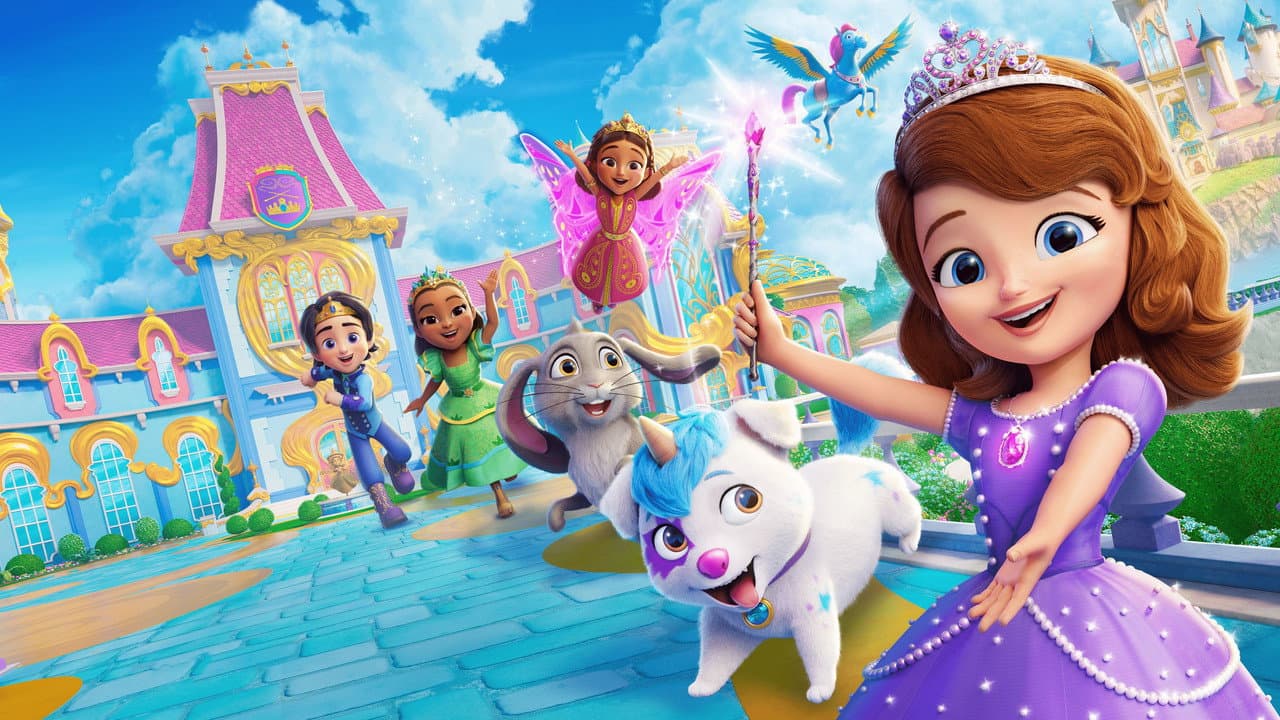
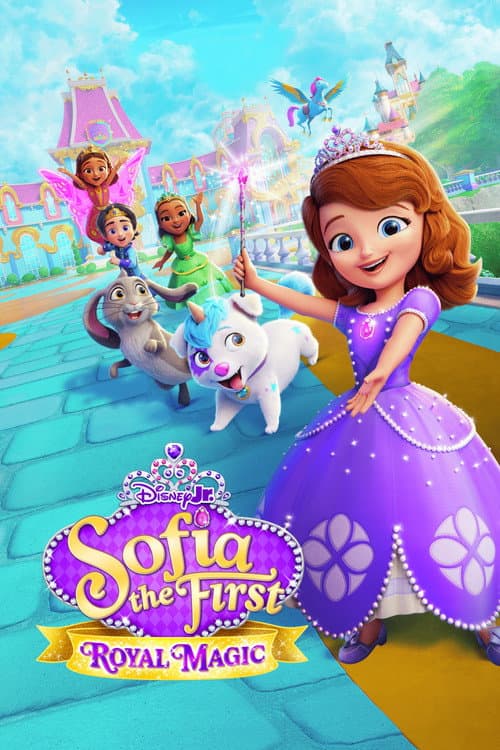
Follow Sofia as she attends The Charmswell School for Royal Magic, where she discovers she is the most magical princess in the realm and must learn how to master her powers while making new royal friends.
Gallery (4)
Episodes
✓ Previously aired
About this release
On May 25, 2026, Disney Television Animation will release Sofia the First: Royal Magic, an eight-episode series that returns to the animated kingdom first introduced in the original Sofia the First, which ran on Disney Junior from 2013 to 2018. The new series follows Sofia as she enrolls at The Charmswell School for Royal Magic, where she learns she is the most magical princess in the realm and must work to master her powers while forming friendships with a new circle of royal peers.
The original Sofia the First occupied a particular niche in the Disney Junior lineup for much of the 2010s. It was built around a young girl of common birth who marries into royalty — a premise that gave the show an accessible social hook alongside its castles-and-enchantment aesthetics. Over four seasons and a television movie finale, Sofia's world expanded considerably, incorporating crossover appearances from characters drawn from the broader Disney Princess catalog and a mythology that grew more elaborate as Sofia's connection to a magical amulet deepened. The series concluded in 2018 with what was framed as a definitive ending, which makes Royal Magic something of a deliberate reopening rather than a simple continuation. Whether the new series treats that 2018 finale as prologue or simply sets its story at a remove from those events is not yet clear from available information.
What is apparent from the premise is that the new series makes a meaningful structural shift. Rather than centering Sofia within her family's castle and the social world of Enchancia, Royal Magic transplants her into an institutional setting — a school for royal magic. That framework is familiar in children's animation and children's literature more broadly; the ensemble dynamic of a school setting allows a show to introduce multiple new characters without abandoning its central figure, and it creates a contained social world in which hierarchies, friendships, and rivalries can be established quickly. For a revival series with eight episodes in its first season, that compression may be intentional — a tighter narrative unit with room to expand if the audience responds.
Disney Television Animation is handling production, as it did with the original run, which provides some continuity of craft even if specific creative personnel for Royal Magic are not confirmed in available materials. The studio's recent output across Disney's streaming and broadcast arms has included revivals and continuations of properties with established fanbases, so Royal Magic fits a recognizable pattern of returning to worlds that generated sustained audience loyalty rather than building entirely new ones from scratch.
The central premise introduces an explicit escalation in Sofia's status: she is not merely a princess navigating royal life but, within this new context, the most magically powerful princess in the entire realm. That distinction is narratively significant. It positions her not as an outsider working to belong — the dynamic that drove much of the original series' early seasons — but as someone whose ability sets her apart in a different direction. Whether the show treats that power as straightforwardly celebratory or as the source of complications, social friction, and responsibility is among the more interesting open questions the premise raises without answering. Stories about exceptional ability in institutional settings often hinge on how the protagonist's peers respond to that exceptionalism, and the mention of "making new royal friends" suggests the series will engage with that dynamic, though the texture of those relationships remains to be seen.
The school itself, The Charmswell School for Royal Magic, is not elaborated on in any detail available ahead of the release. It is unclear whether any characters from the original series will appear, whether the school has its own established history within the show's mythology, or how it connects to the magical systems already developed across Sofia the First's four-season run. Viewers who followed the original closely will likely arrive with questions about continuity — about Sofia's family, about the amulet that was so central to the earlier series, about how much time has passed — and the available materials do not address any of that directly. Whether Royal Magic functions as a chapter in an ongoing story or as something closer to a soft reboot will probably become apparent quickly once the series is available, but that ambiguity is worth noting for prospective viewers who are invested in the original's established lore.
The series launches with a first season of eight episodes, a relatively compact order that is consistent with how streaming-era children's animation is increasingly structured — shorter seasons with self-contained arcs, as opposed to the longer broadcast runs that characterized the original Sofia the First. No platform information is confirmed in available data, though Disney Television Animation's recent work has primarily appeared on Disney Channel and Disney+.
The audience most likely to seek out Royal Magic on or around its May 25, 2026 release falls into two broad groups: children currently in the demographic that Disney Junior and Disney Channel have historically targeted, who may encounter it fresh with no particular attachment to the earlier series, and older viewers — including parents and now-teenage or adult fans of the original — who followed Sofia from 2013 to 2018 and are curious about where the character goes next. For the first group, the school setting and new ensemble offer a reasonably self-contained entry point. For the second, eight episodes is a limited but not inconsequential return to a world that, for a certain generation of young viewers, was genuinely formative.
Comments
Sign in to join the conversation.
Loading…