 Cool
↓ 16.624h
Details
- Language
- English
- Country
- GB
- Studio
- Wonderhood Studios
- Seasons
- 1 · 3 eps
- For
- adult
Popularity · Search interest now
Low
0.7
Based on TMDb activity
Where to watch
Not currently available for streaming or purchase.
Links may earn Incoming a commission at no extra cost to you.
Incoming Editorial TeamVerified
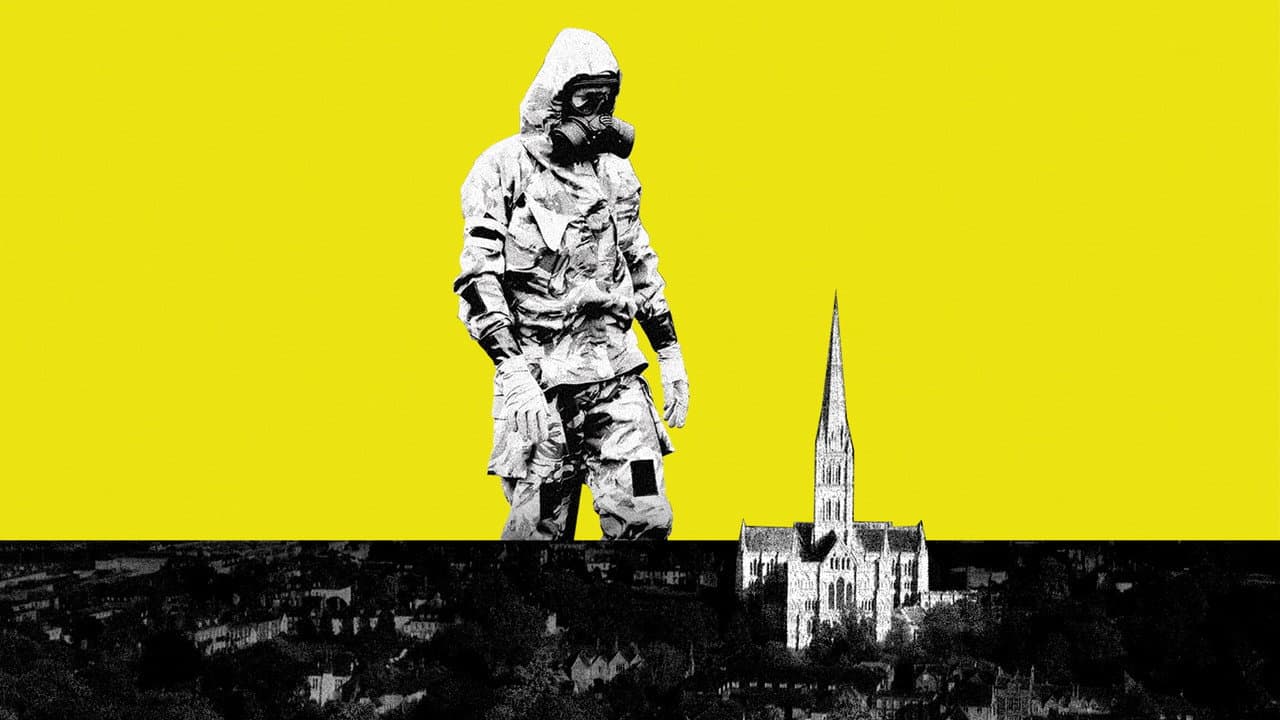
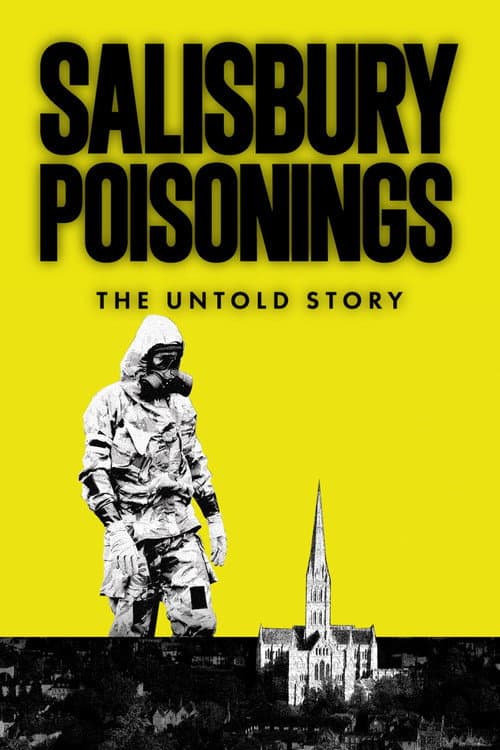
Salisbury Poisonings: The Untold Story is an upcoming television documentary recounting the 2018 Novichok poisoning of ex-Russian spy Sergei Skripal and his daughter Yulia in Salisbury, England, and the subsequent death of British resident Dawn Sturgess. It is scheduled to release on April 29, 2026.
Gallery (6)
Key features
- ·Television documentary format
- ·Covers 2018 Novichok poisoning in Salisbury
- ·Features testimony from police and government officials
- ·Includes access to doctors and military personnel
- ·Scheduled release April 29, 2026
- ·English language
FAQ
When does Salisbury Poisonings: The Untold Story release?
The documentary is scheduled to release on April 29, 2026.
What is Salisbury Poisonings: The Untold Story about?
It covers the 2018 Novichok poisoning of ex-Russian spy Sergei Skripal and his daughter Yulia in Salisbury, England, and the death of Dawn Sturgess, who accidentally came into contact with the same nerve agent months later.
Who features in Salisbury Poisonings: The Untold Story?
The documentary includes first-hand testimony from police, doctors, government officials, and military personnel who were involved in responding to the attack.
What nerve agent was used in the Salisbury poisoning?
The attack involved Novichok, a military-grade nerve agent. Both the Skripal poisoning and the subsequent death of Dawn Sturgess are linked to exposure to this substance.
About this release
A three-part documentary series about the 2018 Novichok poisonings in Salisbury, England, is set to arrive on April 29, 2026. Produced by Wonderhood Studios, a British production company, the series carries the title Salisbury Poisonings: The Untold Story and promises, according to its own description, something its makers consider genuinely new: unparalleled access to the police officers, doctors, government officials, and military personnel who responded to one of the most serious uses of a chemical weapon on British soil in modern history.
The events themselves are by now well documented in the public record, which makes the series' framing as an "untold story" worth examining carefully. On March 4, 2018, Sergei Skripal — a former Russian military intelligence officer who had been convicted in Russia of passing secrets to British intelligence before being exchanged in a spy swap — was found unconscious on a bench in Salisbury alongside his daughter Yulia. Both had been exposed to Novichok, a nerve agent developed by the Soviet Union. The attack triggered a major diplomatic crisis, with the British government expelling twenty-three Russian diplomats and its allies following suit in a coordinated response. Russia denied involvement. The two individuals publicly identified by British authorities as the likely perpetrators appeared in a now-infamous Russian television interview, claiming they had visited Salisbury as tourists to see its cathedral.
Then, in June 2018, the incident deepened in tragedy. Dawn Sturgess, a British woman and mother of three, died after her partner found a discarded perfume bottle and gave it to her as a gift. The bottle, it emerged, had been used to conceal the Novichok agent. Sturgess's death transformed what had already been a geopolitical flashpoint into a story with a civilian casualty, a family devastated, and a criminal investigation that expanded in scope and public attention. A public inquiry into her death has been ongoing in the United Kingdom, meaning that the legal and political dimensions of the case remain live at the time this documentary is being prepared.
That context — an open inquiry, ongoing diplomatic tensions, and surviving principals who have lived publicly with the aftermath — shapes what a documentary can responsibly claim to offer. The series' stated foundation is first-hand testimony from those who were present in professional capacities: the emergency responders, the clinicians who treated patients exposed to a substance many of them had never encountered, and the officials who had to make rapid decisions under conditions of considerable uncertainty. That is a distinct angle from the geopolitical story, which has been covered extensively by journalists and in prior television treatments. Whether the access Wonderhood Studios describes genuinely extends into areas that previous reporting has not reached is a question the three episodes will answer.
The structure of three episodes offers enough space to move at some deliberation across the timeline. The March attack on the Skripals, the subsequent investigation and diplomatic fallout, and then the separate strand of Dawn Sturgess's death and its aftermath could each plausibly anchor a single episode, though the series' exact architecture has not been described. The promise of testimony from doctors is particularly worth noting. The clinical response to a nerve agent poisoning is rarely narrated in detail by those who administered it; the medical professionals who treated both the Skripal family and those secondarily affected have not, to any notable degree, spoken publicly at length about what that experience involved. If the documentary delivers on that specific thread, it fills a gap that neither newspaper coverage nor prior television has addressed with primary sources.
The Wonderhood Studios credit places this production within a British independent sector that has, in recent years, produced documentary work oriented toward serious current affairs subjects. The series' origin in the United Kingdom is relevant in a straightforward sense: the events happened in England, the institutions involved — the National Health Service, the Metropolitan Police's Counter Terrorism Command, the military's Defence Science and Technology Laboratory at Porton Down — are British, and the witnesses are overwhelmingly likely to be British nationals more comfortable speaking to a domestic production. The language of access in the series description specifically references those institutions, suggesting that formal cooperation, or at least the cooperation of individuals within them, was part of the production.
What remains genuinely open is how the series handles the question of attribution. The British government has formally attributed the attack to the GRU, Russia's military intelligence directorate. That finding, while widely accepted in Western governments and press, remains contested by Moscow. A documentary relying on testimony from government officials and police is likely to reflect the British institutional view, and how the filmmakers navigate the gap between what those officials assert and what can be independently verified will be one of the more interesting editorial choices the finished series reveals.
Dawn Sturgess's story also carries a particular weight that the marketing summary acknowledges but does not dwell on. She was not a target, had no connection to intelligence or espionage, and died because a weapon was disposed of carelessly after its primary use. Her family has been actively involved in the public inquiry, and how the documentary treats her life and death — rather than treating her primarily as a data point in a spy story — will be closely watched by those who have followed the case.
The series is most naturally of interest to viewers who followed the original news coverage and want to understand what the participants experienced from the inside, as well as those interested in the broader subject of state-sponsored violence and its consequences for ordinary civilians. For the latter, the case of Dawn Sturgess is the series' moral center, regardless of how the episodes are structured.
Comments
Sign in to join the conversation.
Loading…