Details
- Language
- English
- Country
- US
- Studio
- Williams Street
- Seasons
- 9 · 91 eps
- TMDb Rating
- 8.7 (10.9k votes)
- Theme
- time travel
Rating · Quality score from voters
TMDb
8.7/10
IMDb
9.0/10
Popularity · Search interest now
Popular
162.6
Based on TMDb activity
Hype score
leaderboard →94
/ 100↑ +11.9 in 24h
#10 globally#3 in tv
30-day trendWP 94
Rick and Morty commands high Wikipedia traffic, cementing its status as a cultural phenomenon.
Starring








Where to watch
Links may earn Incoming a commission at no extra cost to you. Streaming data via JustWatch — may not reflect today's catalog.
Incoming Editorial TeamVerified
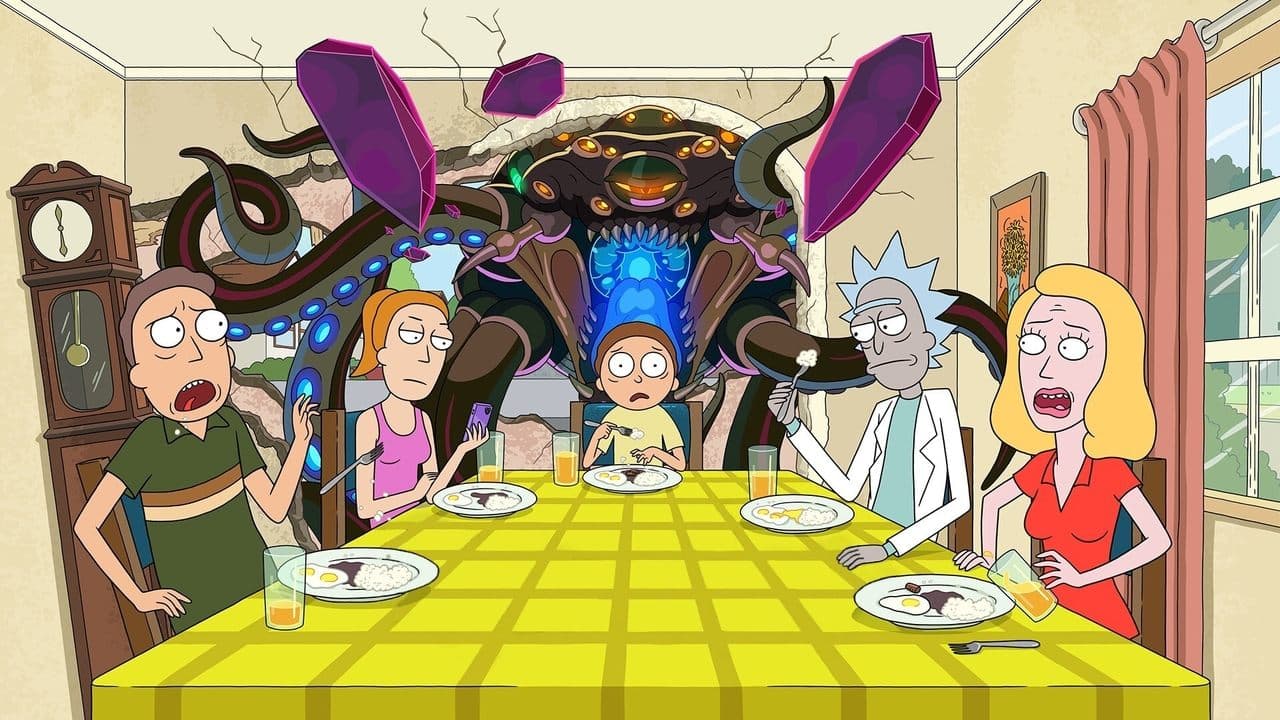
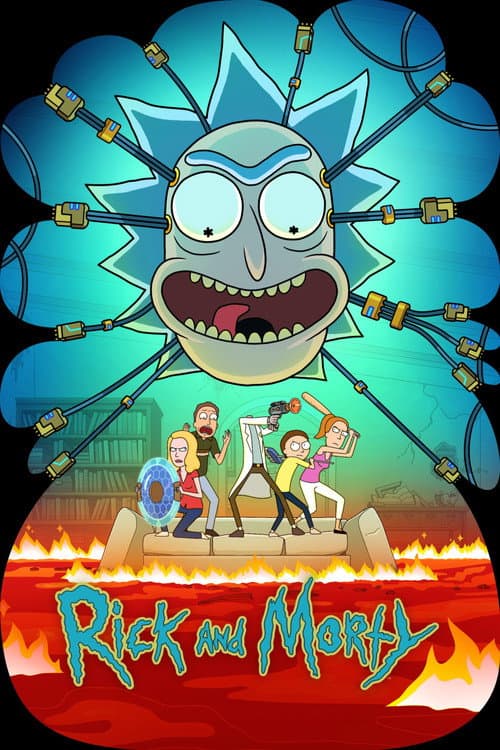
Rick and Morty is an animated comedy and science-fiction series produced by Williams Street. The show follows a sociopathic genius scientist and his timid grandson as they travel across the universe. It has aired across nine seasons totaling 91 episodes.
Trailer
Gallery (21)
Episodes
✓ Previously aired
Key features
- ·Animated comedy and sci-fi-fantasy series
- ·Nine seasons, 91 episodes total
- ·Produced by Williams Street
- ·Streams on Hulu, HBO Max, YouTube TV, Adult Swim
- ·Available to buy on Amazon Video, Apple TV, Google Play
- ·Action-adventure and comedy genre blend
FAQ
When did Rick and Morty premiere?
Rick and Morty premiered on December 2, 2013. It has since run for nine seasons, accumulating 91 episodes in total.
Where can I watch Rick and Morty?
Rick and Morty is available to stream on Hulu, HBO Max Amazon Channel, YouTube TV, and Adult Swim. Individual episodes and seasons can also be purchased on Amazon Video, Apple TV Store, and Google Play Movies.
How many episodes does Rick and Morty have?
Rick and Morty has 91 episodes across nine seasons. The series has been in continuous production since its December 2013 debut.
How many seasons does Rick and Morty have?
The series currently spans nine seasons with a total of 91 episodes. It has been broadcast and streamed across multiple platforms throughout its run.
What genre is Rick and Morty?
Rick and Morty is classified across animation, comedy, science fiction and fantasy, and action-adventure. The series follows a scientist and his grandson on universe-spanning escapades, blending comedic and speculative fiction elements.
About this release
Rick and Morty, the animated science-fiction comedy produced by Williams Street, Harmonious Claptrap, and Justin Roiland's Solo Vanity Card Productions, premiered on Adult Swim on December 2, 2013. Across nine seasons and 91 episodes, it has established itself as one of the more durably argued-about properties in American animation — a show that inspires genuine critical attention alongside the kind of obsessive fan engagement more typically associated with prestige drama.
The premise is spare enough to fit on an index card: a sociopathic genius scientist drags his inherently timid grandson on adventures across the universe. That compression is part of the show's design. Rick Sanchez, the scientist in question, functions as a nearly omnipotent figure whose intelligence is matched only by his nihilism, and Morty Smith, his grandson, serves as the moral and emotional counterweight — anxious, well-meaning, perpetually out of his depth. The tension between those two poles, one character who understands the universe completely and finds it meaningless, and another who understands almost nothing and finds it overwhelming, has provided the engine for nearly a hundred episodes of television.
The show arrives in a lineage of adult animated comedies that use genre scaffolding — space opera, horror, time travel, parallel-dimension logic — as a vehicle for something more psychologically interior. That tradition runs from the earlier, stranger corners of Saturday-morning television through the more explicit philosophical provocations of later cable animation. Rick and Morty positioned itself within that tradition from its first season but distinguished itself through a particular willingness to let its science-fiction premises carry genuine narrative weight rather than functioning purely as backdrop. Episodes built around concepts like memory alteration, interdimensional bureaucracy, and the disposability of alternate selves were not merely elaborate setups for jokes; they were, at their more ambitious moments, the actual subject matter.
Nine seasons is a substantial run for any series, and the show's production history carries some notable texture. The involvement of three separate production entities — a network-affiliated studio in Williams Street, and two vanity card operations — reflects a kind of distributed creative ownership that became more complicated as the series progressed. The original co-creator credit structure, and the circumstances around it, became a public matter in ways that affected how the show's authorship is understood. By its later seasons, Rick and Morty was moving forward without one of its original architects, which raises questions about creative continuity that 91 episodes of output can answer only partially. Whether the tonal consistency fans associate with the show's earlier seasons held across subsequent ones is the kind of question the episode count alone cannot resolve.
The show's genre classification — animation, comedy, science fiction and fantasy, action-adventure — covers considerable ground, and that breadth is reasonably accurate. Individual episodes range from something close to pure farce to sequences of sustained bleakness that would not feel out of place in more conventionally dramatic television. The comedy is often structured around the interruption of sentiment: moments of emotional sincerity tend to be punctured, undercut, or revealed as self-deception, which gives the series a characteristic tone that is simultaneously warm and corrosive. Whether that balance reads as honest or exhausting probably depends on the viewer.
With 10,919 votes on TMDB and an average score of 8.677, the show occupies a position of genuine popular esteem rather than mere cult affection — numbers that suggest a broad audience rather than a narrow one, even accounting for the self-selection inherent in active rating behavior. That breadth is reflected in the distribution footprint: the series streams on Hulu, HBO Max, YouTube TV, and Adult Swim directly, with purchase options available through Amazon Video, Apple TV Store, Google Play Movies, and Fandango at Home. For a show that originated on a late-night cable block with a historically niche audience, that kind of multi-platform presence indicates a reach that has long since exceeded its origins.
What remains genuinely open, particularly for a viewer approaching the series at this point in its run, is the question of arc. Rick and Morty has, over nine seasons, developed an increasingly elaborate mythology around its central characters — their family histories, the internal logic of the multiverse they inhabit, the psychological damage accumulating in both leads across years of increasingly extreme experiences. How that mythology pays off, or whether the show treats its own continuity as something to be honored or periodically discarded, is not answered by any summary. The show has, at various points, made both choices.
The audience most likely to seek this out with genuine investment divides roughly into two groups: viewers who have followed the series from its Adult Swim origins and are tracking how the later seasons navigate the production changes and accumulated mythology, and newer viewers drawn in by availability and reputation who are approaching it as a completed or near-completed object, able to assess the full run rather than wait week to week. Both encounters with the series are somewhat different experiences, and the gap between them — between watching a show as it develops and watching it as a body of work — is one of the more interesting aspects of how a series like this ages.
Comments
Sign in to join the conversation.
Loading…