 Cool
↑ 3.324h
Details
- Language
- Japanese
- Country
- JP
- Studio
- White Fox
- Seasons
- 1 · 85 eps
- TMDb Rating
- 7.9 (633 votes)
- For
- teen
Rating · Quality score from voters
TMDb
7.9/10
IMDb
8.3/10
Popularity · Search interest now
Popular
107.9
Based on TMDb activity
Starring








Where to watch
Links may earn Incoming a commission at no extra cost to you. Streaming data via JustWatch — may not reflect today's catalog.
Incoming Editorial TeamVerified
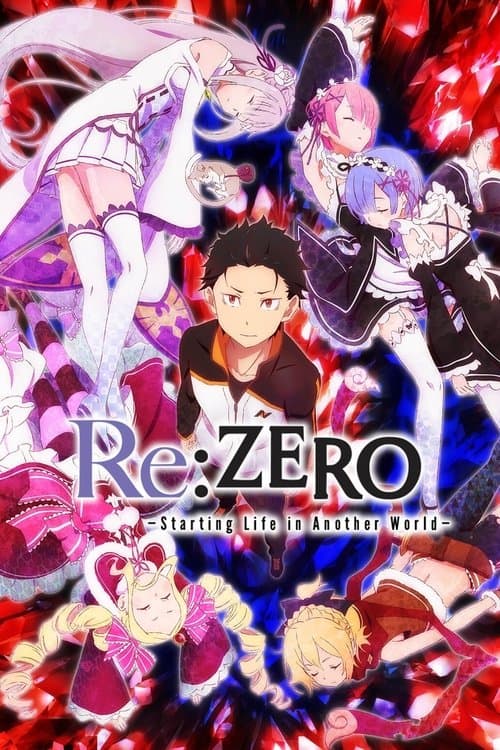
Re:ZERO -Starting Life in Another World- is a Japanese animated series produced by White Fox, premiering on April 4, 2016. The series follows Natsuki Subaru, a high school student transported to a fantasy world, across genres spanning action-adventure, mystery, and drama.
Trailer
Gallery (21)
Episodes
✓ Previously aired
Key features
- ·Japanese animated series by White Fox
- ·Genres: action-adventure, mystery, sci-fi-fantasy, drama
- ·Season 1 spanning 85 episodes
- ·Streams on Hulu and Crunchyroll
- ·Available for purchase on Amazon Video, Apple TV, Google Play
- ·Premiered April 4, 2016
FAQ
When does Re:ZERO -Starting Life in Another World- Season 1 premiere?
Season 1 premieres on April 4, 2016. The series is a Japanese-language production from studio White Fox.
Where can I watch Re:ZERO -Starting Life in Another World-?
The series is available to stream on Hulu, Crunchyroll, and the Crunchyroll Amazon Channel. Episodes can also be purchased on Amazon Video, Apple TV Store, and Google Play Movies.
How many episodes does Re:ZERO -Starting Life in Another World- Season 1 have?
Season 1 comprises 85 total episodes. This accounts for the full run of the first season of the series.
What genre is Re:ZERO -Starting Life in Another World-?
The series spans animation, action-adventure, mystery, sci-fi-fantasy, and drama. It follows a protagonist navigating an unfamiliar fantasy world after being transported there from present-day Japan.
How many seasons does Re:ZERO -Starting Life in Another World- have?
The series has one season, consisting of 85 episodes in total.
Who developed Re:ZERO -Starting Life in Another World-?
The series was produced by White Fox, a Japanese animation studio. The show is based on the light novel of the same name and is presented in Japanese.
About this release
When Re:ZERO -Starting Life in Another World- premieres on April 4, 2016, it arrives as a Japanese animated series produced by White Fox, KADOKAWA, and Hakuhodo DY Music & Pictures. Running to 85 episodes across its single listed season, it is, by the measure of contemporary anime, a substantial commitment — not a tight cour experiment but a long-form narrative with room to expand its premise well beyond a pilot's worth of setup.
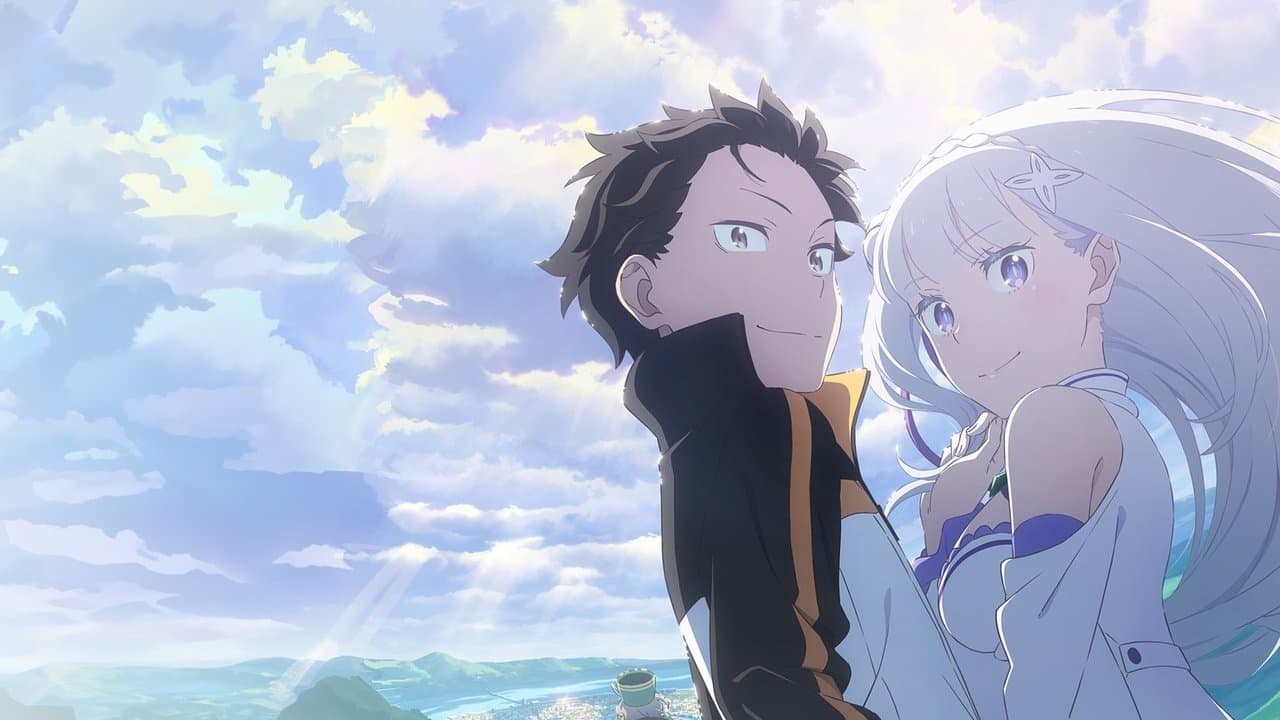
The premise is, on its surface, familiar to anyone who has followed the isekai genre over the past decade or so. Isekai — literally "another world" — is a category of Japanese light novel and anime storytelling in which an ordinary person from contemporary Japan is transplanted, usually without warning or explanation, into a fantastical realm. The form has accumulated enough titles by 2016 that audiences can be expected to arrive with a set of genre expectations already in place: a confused protagonist, a world built on quasi-medieval or game-like logic, and some form of special ability that distinguishes the newcomer from the population he lands among. Re:ZERO begins exactly there. Natsuki Subaru is a high school student walking home from a convenience store — the mundanity is deliberate — when he is pulled into an unfamiliar world. Lost and disoriented, he encounters a silver-haired girl who extends help to him. He, in turn, agrees to assist her in searching for something she has lost.
What separates this opening from a rote genre entry is less the setup than what the production has elected to layer onto it. The genre list attached to the show — animation, action-adventure, mystery, science fiction and fantasy, drama — is unusually broad for what could have been filed simply as fantasy adventure. The presence of mystery alongside drama in particular suggests a tone that is not purely propulsive. Isekai series tend to foreground their protagonists' growing competence and power; Re:ZERO's marketing and description place considerable weight on Subaru's confusion and dependency. He does not arrive with an obvious ability catalogued in a status screen. The girl with silver hair is the one who saves him. The direction of the debt runs opposite to what genre convention typically sets up.
White Fox, the animation studio behind the project, brings a production history that includes other genre-adjacent titles, and their involvement here is worth noting simply because 85 episodes represents a significant resource allocation for any studio. That episode count, more than almost any other piece of available information, implies a production that anticipated sustained audience interest — or was structured around source material substantial enough to warrant the length. KADOKAWA's involvement as a co-producer is similarly notable, given the company's position as a major publisher and media conglomerate in Japan, with a track record of shepherding light novel adaptations through to animation.
The silver-haired girl at the center of Subaru's first encounter is the figure most likely to draw viewer attention beyond the protagonist himself. She is described as reaching out to him in his most disoriented state, and the narrative as laid out follows their pairing into what appears to be a joint search — for what, the available description does not specify. That omission is not incidental. The object of the search, the nature of the world, the rules governing Subaru's presence in it, and whatever mechanism might explain how a convenience store trip becomes a dimensional crossing are all held back, which is standard promotional practice for a mystery-inflected narrative. Whether the show treats these as questions to be answered or conditions to be inhabited is something 85 episodes will eventually make clear, but the early framing positions uncertainty as a feature rather than a gap.
There is also the question of tone. Action-adventure and drama sit in the genre list alongside mystery, and the episode count suggests the series has time to modulate between registers. Isekai series have historically ranged from relatively light wish-fulfillment to extended meditations on powerlessness and psychological strain. The emphasis in the available description on Subaru's despair — the silver-haired girl saves him from it, not merely from a physical threat — tips a hand toward the latter. That word, despair, is precise and carries weight. It is not a word typically used to describe a protagonist who is merely confused about a new map.
For viewers in 2016, the show is accessible through Crunchyroll, the Crunchyroll Amazon Channel, and Hulu for streaming, with purchase options on Amazon Video, Apple TV Store, and Google Play Movies. Its availability across major platforms suggests a distribution strategy aimed at capturing both simulcast audiences and viewers who prefer to own.
The audience most likely to seek Re:ZERO out in its opening weeks will include viewers already following the isekai genre who are curious whether the series engages critically with its own conventions, and those drawn by the unusually high episode count, which implies a story ambitious enough to require sustained telling. Viewers who prefer resolved, compact narratives may hesitate at 85 episodes; those who have learned to trust long-running anime with their time — and who find the word despair in a premise summary more interesting than off-putting — are the ones this series appears to be addressing.
Comments
Sign in to join the conversation.
Loading…