Details
- Language
- English
- Country
- GB
- Studio
- Binocular Productions
- Seasons
- 1 · 6 eps
- Theme
- redemptionworkplace
- For
- adult
Popularity · Search interest now
Low
4.2
Based on TMDb activity
Starring



Where to watch
Not currently available for streaming or purchase.
Links may earn Incoming a commission at no extra cost to you.
Incoming Editorial TeamVerified
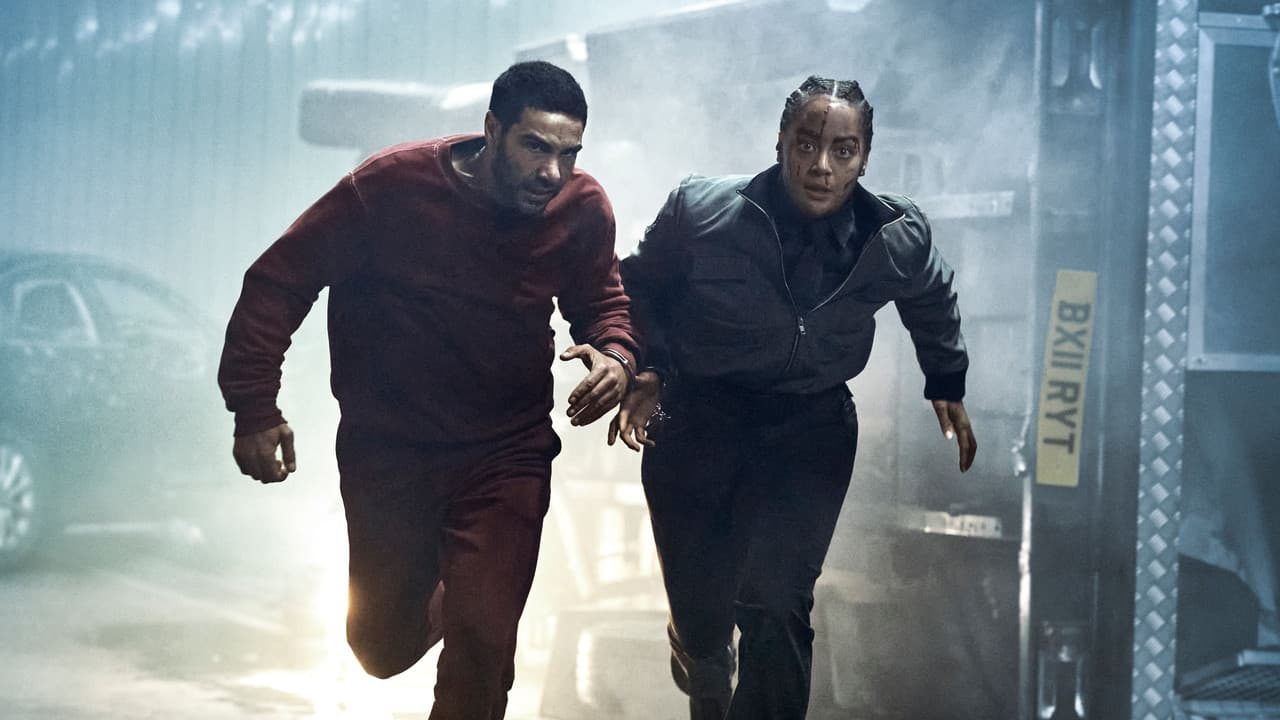
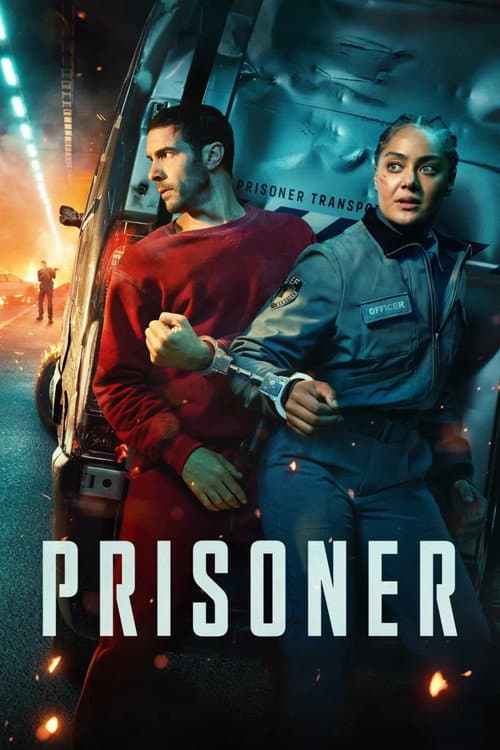
A young and ambitious prison officer finds herself in the middle of a battle for the criminal underworld as crime lords try to evade justice. But in order to do that, she will have to learn quickly to put her faith in one of the very men she wants to put behind bars.
Gallery (2)
Episodes
✓ Previously aired
About this release
A six-episode crime series called Prisoner is scheduled to arrive on April 30, 2026, produced by Binocular Productions and Sky Studios, a British co-production originating in the United Kingdom.
The premise centers on a young prison officer who becomes entangled in a struggle for control of the criminal underworld. The setup is one familiar to British crime television — an institutional insider, nominally on the side of law and order, pulled into the orbit of the very people that institution exists to contain. What distinguishes this particular iteration of that premise, at least on paper, is the specificity of the protagonist's position: not a detective working the street, not a barrister working the courtroom, but someone whose professional world is the prison itself. She is, in a sense, already inside the machine. The crime lords she is watching are, literally, her charges — and their attempts to evade justice are being conducted from within the walls she oversees.
The core dramatic tension as described rests on a forced alliance. To navigate the war playing out around her, the protagonist must extend her trust to one of the men she would ordinarily be working to keep incarcerated. This is a well-worn structural device in crime fiction — the reluctant informant, the enemy turned asset — but its placement inside a prison setting gives it a different texture than the standard undercover-cop construction. There is no pretense of distance here. The officer and the criminal are already in proximity, already locked into a relationship defined by power and surveillance. The question the series appears to be asking is what happens when that relationship has to be renegotiated on terms neither party would choose.
Sky Studios is a prolific producer of British prestige television, with a broad catalog of crime and thriller programming, making Prisoner a recognizable fit within its output. Binocular Productions is credited as a co-producer, though little about the creative team — writers, directors, lead cast — is publicly available at this stage. The absence of attached names is notable for a release now roughly a year out. Whether that reflects a production still assembling its pieces or simply a deliberate pace of announcement is not yet clear.
The six-episode order places Prisoner in a format that has become standard for British drama on streaming-adjacent platforms: compact enough to sustain a single narrative arc without the procedural filler that longer orders tend to invite, long enough to develop character and atmosphere with some patience. Six episodes can support the kind of slow-burn trust-building that the premise seems to require — a protagonist learning, incrementally and under pressure, to rely on someone whose interests fundamentally oppose her own is not a story that resolves in two hours.
What remains entirely open at this point is tone. British crime television operates across a considerable range, from the grim social realism of shows rooted in northern urban environments to glossier, more kinetic productions that prioritize plot momentum over atmosphere. The genre classifications attached to Prisoner — crime and action-adventure — suggest the series leans toward the latter, with more interest in the mechanics of the underworld conflict than in institutional critique or psychological study. But that is inference, not confirmed fact. The protagonist's characterization as both "young" and "ambitious" implies a certain arc — the naïf navigating a world she underestimated — though whether the series treats that arc ironically, earnestly, or with some complication is unknown.
The prison setting itself is an element worth watching. British drama has a long tradition of using carceral spaces as narrative environments, from older theatrical works to more recent television. A prison is a closed system with its own hierarchy, its own economy, its own codes — a natural pressure cooker for drama. Series that take that setting seriously, rather than using it as mere backdrop, tend to find something distinct to say about power and complicity. Whether Prisoner is interested in the institutional realities of British prisons, or whether the prison is primarily a convenient container for a thriller plot, is one of the more interesting open questions about the show.
The action-adventure classification alongside crime also raises questions about scale and register. If the series is staging a "battle for the criminal underworld" with that phrase taken at something close to face value, it implies a scope that goes beyond the intimate. Crime lords — plural — are named as antagonists, which suggests a landscape of competing factions rather than a single villain. How a six-episode run manages that landscape, and whether the prison officer protagonist can plausibly stand at the center of it, is something the series will need to establish quickly once it begins.
The audience most likely to seek out Prisoner will be viewers already oriented toward British crime television — a genre with a loyal and internationally distributed following — who are drawn specifically to institutional settings and to protagonists whose moral position is complicated by circumstance rather than by native corruption. The forced-alliance structure, if handled with any nuance, tends to appeal to audiences interested in character dynamics as much as plot, since the relationship between the officer and her reluctant partner will necessarily carry much of the dramatic weight across six hours.
Comments
Sign in to join the conversation.
Loading…