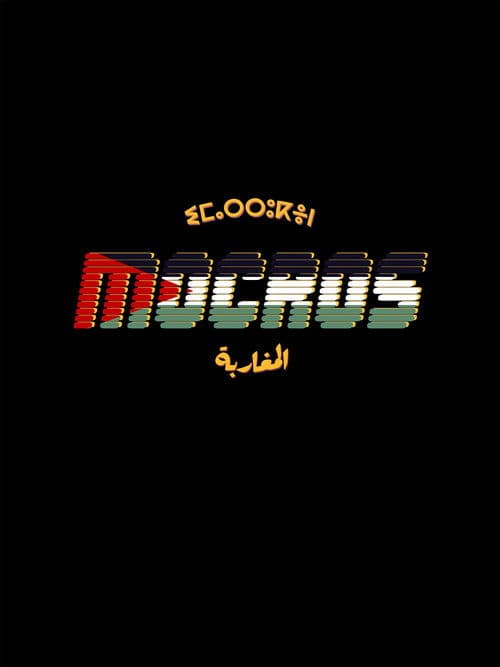
 Cool
tvReleased
MOCROS
Released May 1, 2026
→ stable24h
Details
- Language
- English
- Country
- US
- Seasons
- 1 · 1 eps
Popularity · Search interest now
Low
0.1
Based on TMDb activity
Where to watch
Not currently available for streaming or purchase.
Links may earn Incoming a commission at no extra cost to you.
Incoming Editorial TeamVerified
A comedy-drama series about Rotterdam-born Soufiane and his friends. Souf lives a double life between the awkward world of film and his demanding Moroccan-Dutch bubble in Rotterdam. He tries to keep both worlds separate, but his house of cards built on lies is starting to collapse.
Gallery (1)
About this release
A comedy-drama series called MOCROS is set to arrive on May 1, 2026, centered on a Rotterdam-born young man named Soufiane and the increasingly unstable double life he has constructed around himself.
The premise is compact but recognizable in its architecture: Soufiane, known as Souf, moves between two distinct social worlds — the film industry, which the show describes as awkward, and the Moroccan-Dutch community in Rotterdam where he was raised, which carries its own dense set of expectations and obligations. He has, for some time, kept these spheres from touching. By the time the series begins, that arrangement is deteriorating. The lies he has told to maintain the separation are accumulating into something structurally unsound.
That tension — a person performing different versions of themselves for different audiences, and the specific comedy and pain that emerges when those versions start to bleed together — is a durable engine for television storytelling. What distinguishes MOCROS from the general type is its specificity of place and community. Rotterdam is not Amsterdam; it carries a different demographic and cultural identity within the Netherlands, a port city with a large Moroccan-Dutch population whose particular generational experience — children of immigrants navigating between inherited expectations and adopted national culture — has received serious fictional treatment in Dutch literature and film over the past two decades. A comedy-drama built around that milieu, and set explicitly in the film world, has some obvious room to work with: the creative industries present their own brand of social performance, their own hierarchies and pretensions, which sit in interesting friction against the community Souf comes from.
The "film world" setting is worth noting on its own terms. It isn't described in any further detail from what's available — whether Souf is an aspiring director, an actor, a crew member, or something adjacent — but placing a protagonist from a working-class immigrant community inside an industry that tends to present itself as progressive while remaining structurally exclusive gives the show a built-in source of irony that doesn't require the writers to manufacture conflict artificially. The awkwardness the show attributes to that world is presumably not accidental phrasing.
The metadata surrounding the show raises some questions that the available information doesn't resolve. The series is listed with a single season and a single episode, which may simply reflect incomplete data ahead of a full rollout, or it could indicate a pilot structure, a limited series model, or a release pattern that hasn't been publicly clarified. The associated Wikipedia title points toward Videoland, the Dutch streaming platform, which would situate this as a Dutch production for a Dutch-language streaming audience — though the metadata also lists the original language as English and the origin country as the United States, a discrepancy that the available information cannot reconcile. That ambiguity around platform and language is not trivial: a show built around the Moroccan-Dutch experience in Rotterdam would carry quite different stakes and resonances depending on whether it is made primarily for a Dutch audience familiar with that context or for an international streaming audience encountering it from a distance.
The title itself — MOCROS — is Dutch slang, a colloquial and contested term for people of Moroccan descent in the Netherlands, one that has been reclaimed and used self-referentially within the community even as it carries external connotations that are not always benign. Using it as a series title is a direct statement about point of view and intended register; this is not a show positioning itself as an outsider's tour of a community, but rather one that plants its flag inside it. Whether the execution honors that positioning is, of course, unknowable before the release, but the title choice alone signals an intention toward specificity rather than generality.
The comedy-drama form is well suited to what the show is describing. Pure comedy risks undercutting the real costs of the double life Souf is living — particularly the weight of familial and community expectation that tends to operate in these narratives not as cartoon obstacle but as something more genuinely loving and difficult. Pure drama, meanwhile, risks solemnity about material that the people living it often approach with considerable dark humor. The hybrid form gives the series room to hold both registers without forcing a resolution between them, which tends to be where the more honest versions of this kind of story operate.
There is no cast information available in the current data, no director or showrunner attached by name, and no indication of episode count beyond the ambiguous single-entry listing. For a show releasing in May 2026, that absence of credited names is notable, and the picture of what the production actually looks like remains thin.
Viewers likely to seek this out early are those already familiar with the Dutch comedy-drama tradition and with the broader genre of hyphenated-identity television — the kind of storytelling that has found substantial international audiences through shows built around similar second-generation experiences in other European contexts. Audiences with personal or cultural proximity to the Moroccan-Dutch community, particularly in Rotterdam, will bring the most textured reading to it, but the structural premise — a person whose carefully maintained lies are about to catch up with him — is accessible enough that interest is unlikely to be limited to that group alone.
Comments
Sign in to join the conversation.
Loading…