Details
- Language
- English
- Country
- US
- Studio
- A24
- Seasons
- 1 · 8 eps
- TMDb Rating
- 8.1 (77 votes)
- Mood
- earnest
Rating · Quality score from voters
TMDb
8.1/10
IMDb
7.3/10
Popularity · Search interest now
Rising
46.2
Based on TMDb activity
Starring






Incoming Editorial TeamVerified
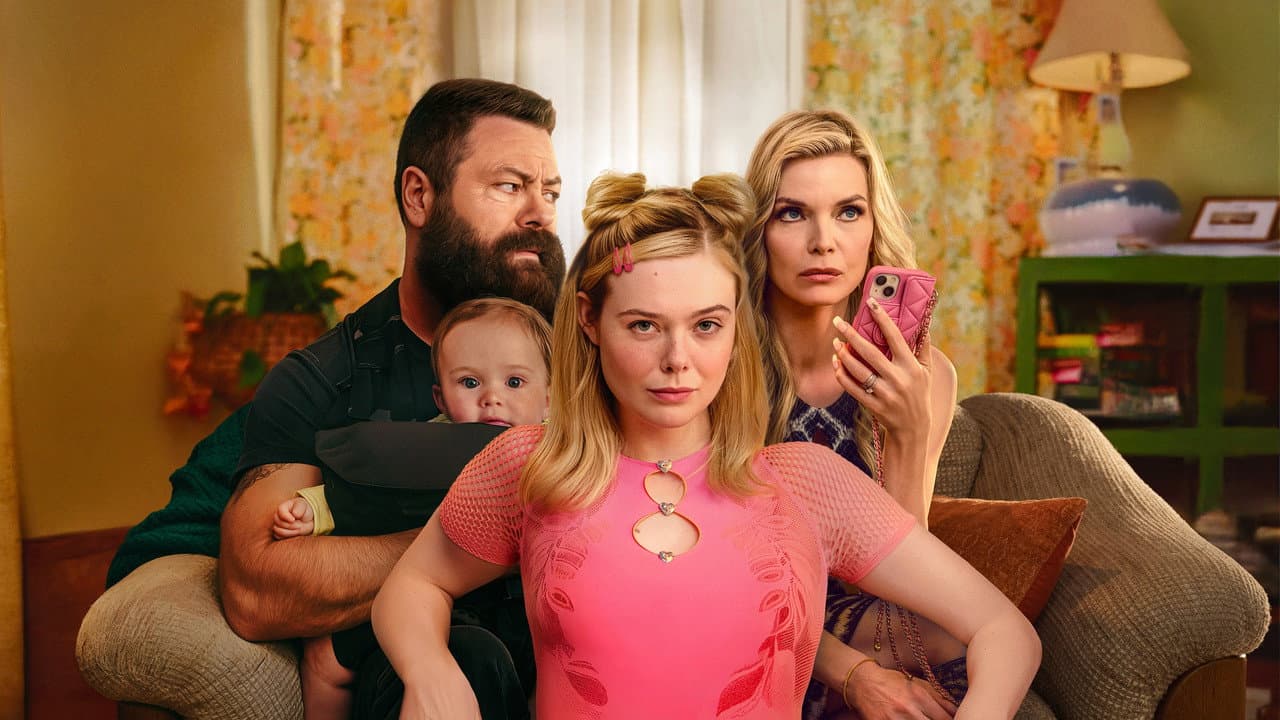
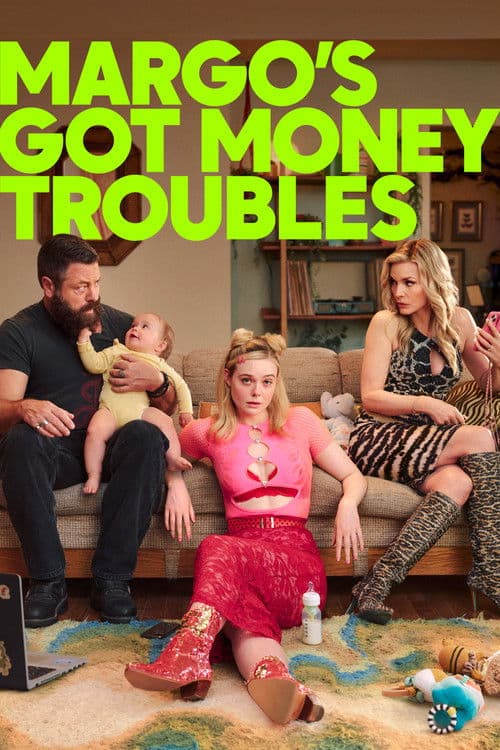
The daughter of a former Hooter's waitress and an ex-pro wrestler, Margo is a recent college dropout and aspiring writer. Faced with a new baby, mounting pile of bills, and dwindling number of ways to pay them, Margo must find a way forward.
Trailer
Gallery (21)
Episodes
✓ Previously aired
About this release
A new limited series from A24, David E. Kelley Productions, and Lewellen Pictures, Margo's Got Money Troubles is scheduled to arrive on April 14, 2026, streaming on Apple TV and the Apple TV Amazon Channel. The show runs eight episodes across a single season, and its premise is compact and precise: Margo, the daughter of a former Hooters waitress and an ex-professional wrestler, has recently dropped out of college with aspirations of becoming a writer. She is now facing a newborn, a stack of bills, and a rapidly shrinking set of options for addressing both.
The combination of production companies here is worth pausing on. A24 has built a reputation over the past decade for backing work that sits at an angle to genre convention — projects that carry the surface markings of familiar forms while pressing on them from unexpected directions. David E. Kelley Productions, meanwhile, carries a long television pedigree rooted in legal and medical dramas with satirical edges, series that tend to foreground characters navigating institutional and personal pressures simultaneously. Lewellen Pictures rounds out the trio. What these three entities share, on the evidence of their respective histories, is an appetite for character-driven material that uses genre — in this case the drama-comedy hybrid — as a frame rather than a formula. Whether that convergence produces something coherent or simply complicated remains to be seen.
The logline itself sits in a recognizable tradition of American working-class comedies about young women in precarious circumstances, a genre that spans prestige cable, streaming, and independent film. Stories about new mothers with few financial resources and thwarted creative ambitions have appeared with some regularity in recent years, and the territory carries its own set of conventions: the mordant humor of debt, the indignity of jobs taken out of necessity, the friction between who a person believes herself to be and what her circumstances are demanding of her. What distinguishes Margo's particular setup from the generic baseline is the specificity of her background — not simply a young woman under economic pressure, but one whose origins include the particular American subcultures of professional wrestling and chain-restaurant hospitality work. That specificity suggests the show is at least interested in texture, in the details that make a character feel located rather than archetypal.
The eight-episode structure is worth noting in itself. Limited series of this length have become something of a standard unit for prestige streaming drama-comedies — long enough to develop character with patience, short enough to resist the narrative drift that longer runs can invite. Whether Margo's Got Money Troubles uses those eight episodes to tell a complete, self-contained story or leaves threads open for a potential continuation isn't clear from the available information. The metadata designates this as a single season, but that designation says nothing about how the narrative resolves, or whether it does.
There are questions the available information doesn't answer that any attentive viewer would reasonably want addressed. The show's tone is described by its genre tags — drama and comedy — but the balance between those two modes is entirely unknown. A story about a young mother drowning in debt could play as wry social observation, as something closer to tragedy with comedic relief, or as a fairly sharp satire of the economic conditions that produce that kind of precarity. A24's involvement suggests the project may lean toward a more idiosyncratic register than straightforward dramedy, but that is inference from a company's track record, not from anything the production has disclosed about this specific show.
The creative team behind the writing and direction is not named in the available information, which makes it difficult to situate the show within any individual artist's body of work. David E. Kelley's involvement at the production level is noted, but whether he is writing, showrunning, or functioning in a more purely executive capacity isn't established. For a show whose premise hinges so heavily on voice — Margo is, after all, an aspiring writer, a detail that tends to signal a series interested in its own language — the absence of credited writers in the available data is a meaningful gap.
The casting, similarly, is not part of the structured information available here. In a character study this tightly focused on a single protagonist, the performance at the center will determine nearly everything else. The show's premise requires an actor capable of playing economic desperation without collapsing into either pathos or sitcom broad strokes, someone who can make Margo's specific background feel inhabited rather than costumed. Who fills that role will shape whether the specificity baked into the concept — the wrestler father, the Hooters mother, the dropped degree, the notebook full of ambitions — registers as genuine texture or as quirk standing in for depth.
The Apple TV platform suggests the show will reach a relatively self-selecting audience: subscribers who tend to seek out prestige productions and are accustomed to the service's pattern of backing limited series with literary pretensions and working-class or domestic settings. Viewers drawn to A24's film output who have been curious about the company's television work will likely find this on their radar, as will anyone who followed David E. Kelley's more recent television productions. Eight episodes is a manageable commitment, and the premise is specific enough that it will either confirm or deny its own premise fairly quickly.
Comments
Sign in to join the conversation.
Loading…