
Details
- Language
- Urdu
- Country
- PK
- Seasons
- 1 · 1 eps
- Theme
- redemptionsurvival
- For
- adult
Popularity · Search interest now
Low
2.0
Based on TMDb activity
Starring


Where to watch
Not currently available for streaming or purchase.
Links may earn Incoming a commission at no extra cost to you.
Incoming Editorial TeamVerified
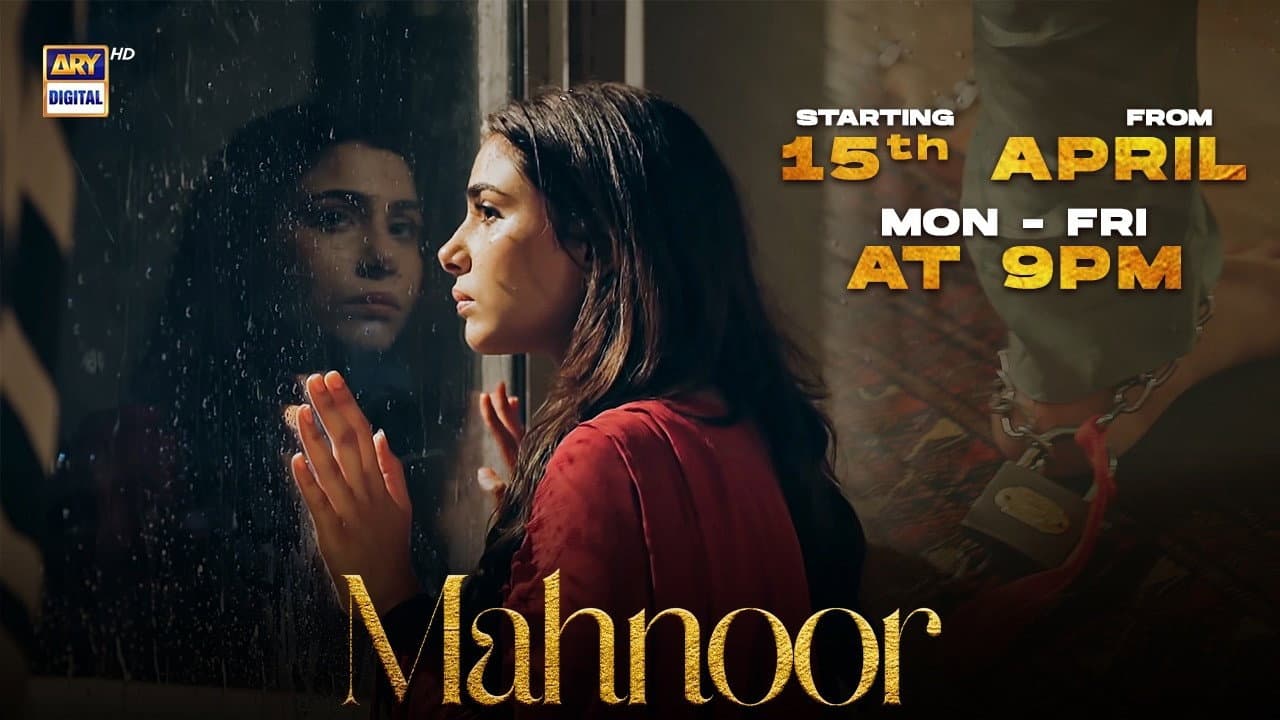
Mahnoor is an upcoming Urdu-language television series scheduled to release on April 27, 2026. The show centers on themes of choices, consequences, and survival.
Episodes
✓ Previously aired
Key features
- ·Urdu-language television series
- ·Premieres April 27, 2026
- ·Themes of choices and survival
FAQ
When does Mahnoor release?
Mahnoor is scheduled to release on April 27, 2026.
What language is Mahnoor in?
Mahnoor is produced in Urdu.
What is Mahnoor about?
The series deals with themes of choices, consequences, and survival, following a character confronting an inescapable truth.
About this release
A Pakistani drama series titled Mahnoor is scheduled to release on April 27, 2026. Produced in Urdu and originating from Pakistan, it is positioned within the drama and family genres — a pairing that sits squarely within one of Pakistani television's most durable and commercially robust traditions.
Pakistani drama, particularly the kind produced for domestic broadcast, has long occupied a distinctive place in the South Asian television landscape. Where Indian soap operas have historically leaned toward melodrama stretched across hundreds of episodes, Pakistani productions have often favored tighter, more contained storytelling — serials that prioritize psychological interiority and moral complexity, frequently centering women navigating constrained circumstances. Whether Mahnoor belongs to that tradition or departs from it in some meaningful way remains to be seen, but the genre categorization and country of origin place it within a lineage that audiences across Pakistan, and increasingly across the broader Urdu-speaking diaspora, will recognize immediately.
The premise, as described, follows a character named Mahnoor in what is framed as a story of choices, consequences, and survival. The descriptor offered — that she is running not from a place but from a truth she cannot escape — establishes a psychological rather than purely physical tension at the center of the narrative. This framing suggests the series intends to locate its conflict in the interior life of its protagonist, in the weight of knowledge or complicity or self-reckoning, rather than in purely external circumstance. That is a reasonable inference, though the language is sufficiently elliptical that the specific nature of the truth in question, the circumstances of Mahnoor's life, and the world she inhabits remain entirely opaque at this stage.
The series is listed as comprising a single season with a single episode, which is an unusual structural configuration worth noting. It could indicate a feature-length standalone film presented in a serial format, a pilot that has not yet been expanded, or simply a metadata entry that is incomplete at the time of this writing. Pakistani television has historically produced content in formats ranging from single-episode telefilms — often released around Eid or other cultural occasions — to multi-episode serials running across several months. A single-episode drama is a recognized form in that context, one that asks writers and directors to compress their storytelling considerably and tends to reward work that is focused and economical rather than expansive. If Mahnoor is indeed a telefilm rather than a serialized drama, the expectations a viewer brings to it — in terms of pacing, resolution, and character development — would shift accordingly.
What is not yet known publicly is who wrote or directed the production, which network or streaming platform will carry it, and who plays the title character. These are not trivial omissions. Pakistani drama has a recognizable ecosystem of writers, directors, and performers whose involvement tends to signal a production's tonal and aesthetic register quite clearly. A script by certain writers carries particular expectations about how female interiority will be rendered; the presence of certain directors suggests a visual approach and a pace of storytelling. Without that information, the production exists as a premise and a release date, but not yet as a fully legible cultural object.
The April 2026 release window is itself a point of interest. Late April sits adjacent to the period of Eid al-Adha, depending on the lunar calendar for that year, and Pakistani broadcasters and streaming platforms have long treated Eid windows as prime release periods for high-profile dramas and telefilms. Whether the April 27 date is tied to any such occasion or is simply an independent broadcast decision is not clear from the available information, but the timing is worth registering as context.
The framing around survival is a word that carries considerable weight in Pakistani drama specifically. The genre has, particularly in the past decade, produced a substantial body of work examining what survival looks like for women in circumstances defined by family pressure, social expectation, economic precarity, and the particular forms of moral accountability that attend private life in a conservative social context. Survival in these narratives is rarely triumphant in a straightforward sense; it tends to be complicated, compromised, and achieved at some cost. Whether Mahnoor participates in that tradition or uses the language of survival in a different register — psychological, literal, spiritual — is a question the premise alone cannot answer.
The title itself is simply a woman's name — Urdu in origin, meaning luminous or radiant — which centers the individual rather than a situation or a relationship. Pakistani dramas named for their female protagonists in this way are often character studies, productions whose interest is finally in mapping the interior landscape of a single person across the course of events that test her. That is a reasonable expectation to carry into April 27, though it remains an expectation rather than a confirmed premise.
Viewers likely to seek this out will be those already oriented toward Urdu-language drama, whether through Pakistani broadcast television or through the streaming platforms and YouTube channels that have significantly expanded the international reach of Pakistani content in recent years. Audiences who have followed the genre's sustained engagement with female-centered narratives of domestic and social pressure will find the described premise familiar in its broad outlines, and the question they will arrive with is whether the execution distinguishes Mahnoor from the considerable body of similar work that surrounds it.
Comments
Sign in to join the conversation.
Loading…