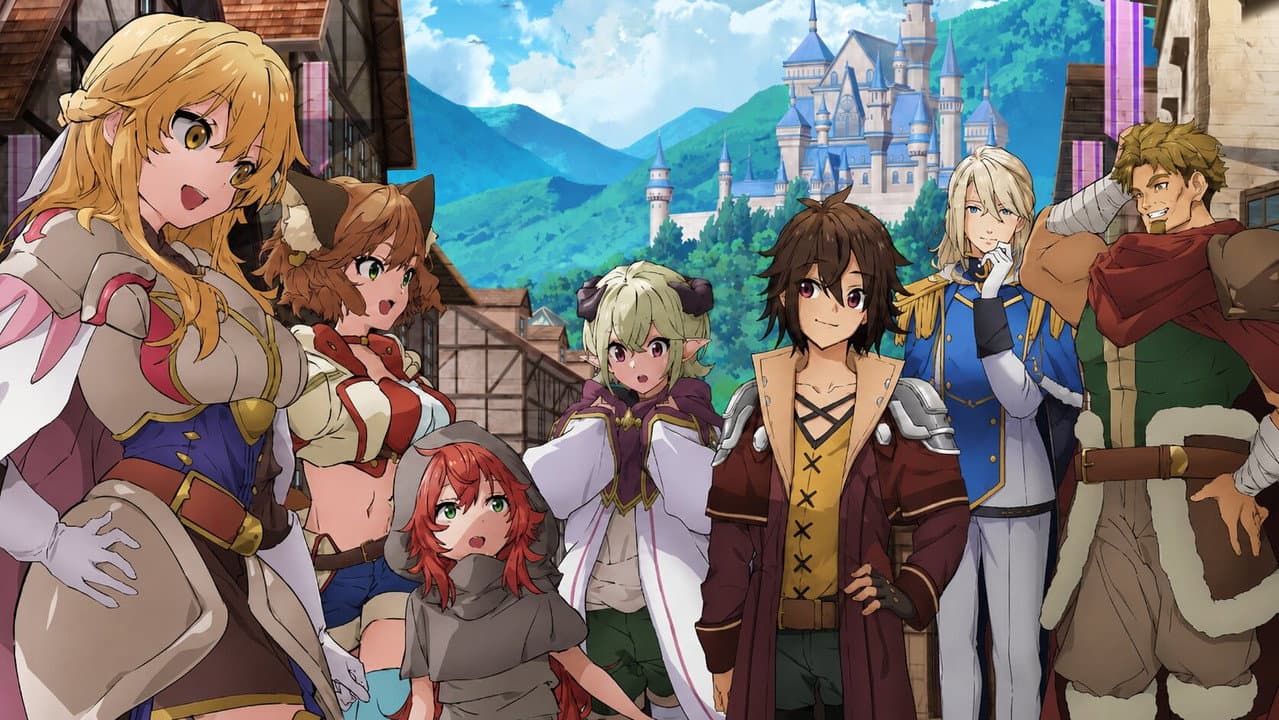

I Became a Legend After My 10 Year-Long Last Stand
ここは俺に任せて先に行けと言ってから10年がたったら伝説になっていた。
Released July 6, 2026
2 episodesDetails
- Language
- Japanese
- Country
- JP
- Studio
- GEKKOU Production
- Seasons
- 1 · 2 eps
- Theme
- redemptionunderdog
Popularity · Search interest now
Rising
14.1
Based on TMDb activity
Starring


Where to watch
Links may earn Incoming a commission at no extra cost to you. Streaming data via JustWatch — may not reflect today's catalog.
Incoming Editorial TeamVerified
I Became a Legend After My 10 Year-Long Last Stand is an upcoming Japanese anime television series adapted from a light novel or manga source, set to premiere on July 6, 2026. The story follows Luck, an S-rank mage who held off the Demon King while his companions escaped, only to return a decade later to find the world believes him dead.
Trailer
Gallery (2)
Episodes
✓ Previously aired
Key features
- ·Japanese-language anime television series
- ·Premieres July 6, 2026
- ·Fantasy adventure genre
- ·Protagonist begins as F-rank adventurer
- ·Identity-concealment narrative premise
- ·Based on existing source material
FAQ
When does I Became a Legend After My 10 Year-Long Last Stand release?
The series is scheduled to premiere on July 6, 2026.
What is the original Japanese title of the series?
The original title is ここは俺に任せて先に行けと言ってから10年がたったら伝説になっていた。
What is the story about?
The series follows Luck, an S-rank mage who defeats the Demon King after a ten-year-long last stand. Returning to find himself celebrated as a dead legend, he hides his identity and restarts his life as an F-rank adventurer named Lock.
What genre is I Became a Legend After My 10 Year-Long Last Stand?
It is a fantasy adventure anime series involving heroes, mages, and rank-based adventurer guilds.
About this release
On July 6, 2026, the Japanese animated series I Became a Legend After My 10 Year-Long Last Stand — whose original title, ここは俺に任せて先に行けと言ってから10年がたったら伝説になっていた。, translates roughly as "Ten Years Have Passed Since I Said 'Leave This to Me and Go Ahead'"— begins its run under the production banner of GEKKOU Production. The series arrives as a two-episode first season, positioning it either as a limited event release or an introductory installment in what could become a longer adaptation.
The premise is instantly recognizable to anyone who has spent time with Japanese fantasy light novels or the isekai-adjacent genre that has dominated anime programming for the better part of a decade: a hero, defined here as Luck, an S-rank mage within a hero's party, sacrifices himself in a climactic battle against the Demon King so that his companions can escape and complete their journey. The twist the series hangs its narrative on is temporal. Luck survives. Ten years have elapsed by the time he returns to the world, and in his absence that world has canonized him as a martyr, a legendary figure who died in battle. The reality of his survival finds no comfortable place in the mythology that has grown up around his memory.
This is a variation on a structure that appears with some regularity in the genre: the returning hero who is either unrecognized, disbelieved, or inconvenient to the official story. What distinguishes I Became a Legend from simpler takes on that premise — at least on paper — is the specificity of the identity problem Luck faces. He is not merely unknown; he is, in a cultural sense, dead. The world has processed his loss, erected whatever monuments or stories it builds around fallen heroes, and moved forward. His companions have aged a decade. Whatever relationships, debts, or ambitions he carried into that battle belong to a different era. Reclaiming his identity would require dismantling a legend that other people have invested in, and the series uses that friction as its engine: rather than attempt it, Luck chooses concealment. He re-enters society as "Lock," registering at the lowest possible adventurer rank — F — and effectively beginning his professional life from scratch, in a world that no longer has a slot for who he actually is.
The decision to restart as an F-rank adventurer, rather than leveraging his real abilities from the outset, is a familiar fantasy device — the overpowered protagonist operating under a deliberately imposed ceiling — but the emotional rationale here is slightly different from the straightforward power-fantasy version of that setup. Luck is not hiding his strength to avoid trouble or accumulate resources; he is hiding his identity because there is no longer a legitimate place for it. The gap between his S-rank history and his F-rank present is less about capability than about belonging. That distinction, if the series commits to it, gives the premise room to do something more considered than the genre's default.
GEKKOU Production is the studio credited with the animation. The two-episode count for the first season is a practical detail worth noting. Two episodes represents a limited footprint — enough to establish character and situation, not enough to resolve much of anything. Whether this reflects a cautious rollout strategy, a production timeline that is still ongoing, or a format choice made at the source is not clear from available information. Viewers approaching the series expecting a complete narrative arc should calibrate accordingly.
The source description does not specify whether I Became a Legend is adapted from a light novel, manga, or web novel, though the title's length and construction — a full sentence rather than a compressed phrase — is characteristic of the web novel tradition that has supplied a significant portion of recent anime adaptations in this genre. That context, if accurate, would situate the series within a publishing pipeline that has produced properties with highly variable adaptation fidelity and pacing, depending on how much source material exists and how compressed the anime format requires it to be. Two episodes compresses things considerably regardless of origin.
What the available information does not address is the visual style GEKKOU Production is bringing to the material, the composition of the voice cast, or how the series plans to handle the decade-long gap narratively — whether through flashback, exposition, or simply a fast-forward that drops Luck, and the audience, into his anonymous present. The question of tone is also open. The premise accommodates both a melancholy character study about displacement and loss, and a lighter action-comedy in which an effectively invincible mage fumbles through beginner adventurer tasks for comic effect. Those are quite different shows, and the available information does not resolve which register the series occupies, or whether it attempts to hold both.
The audience most likely to seek this out first is already fluent in the fantasy-adventurer genre's conventions — the rank systems, the hero's party structure, the Demon King as narrative anchor — and is looking to see whether the particular angle this series takes on that material sustains itself across episodes. The two-episode format means that question will be answered quickly, one way or another.
Comments
Sign in to join the conversation.
Loading…