Starring



Where to watch
Links may earn Incoming a commission at no extra cost to you. Streaming data via JustWatch — may not reflect today's catalog.
Incoming Editorial TeamVerified
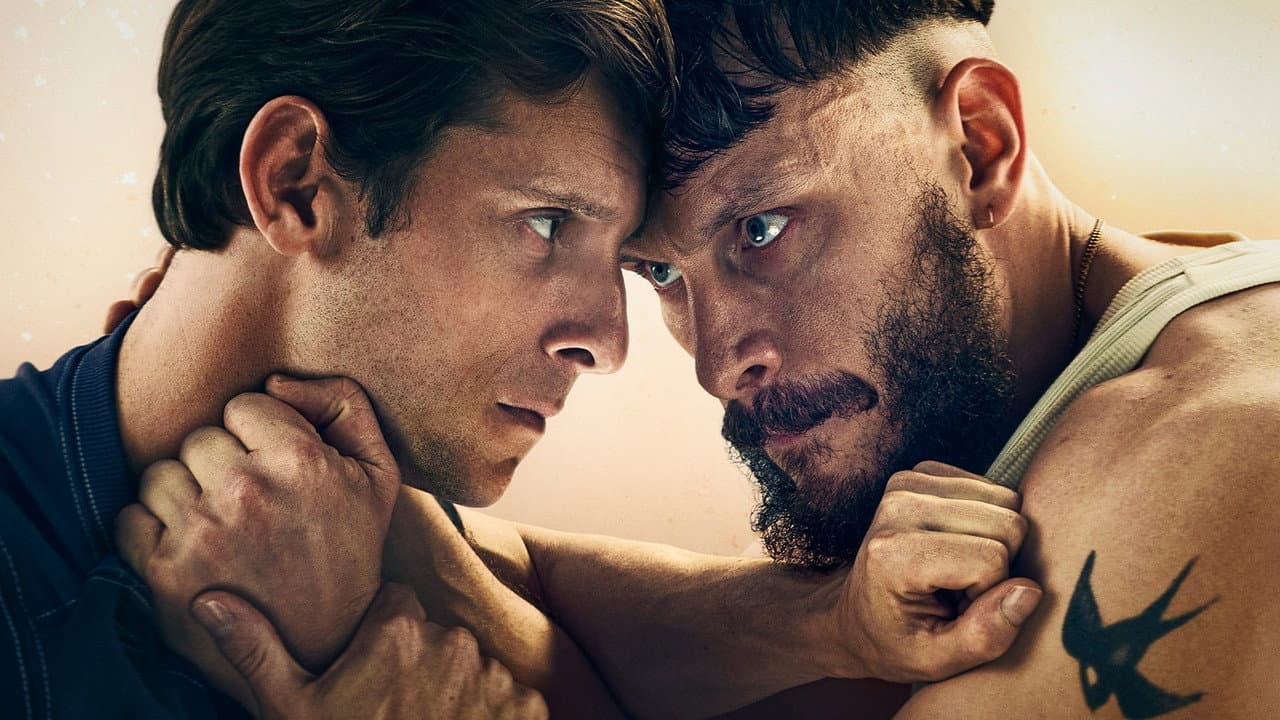
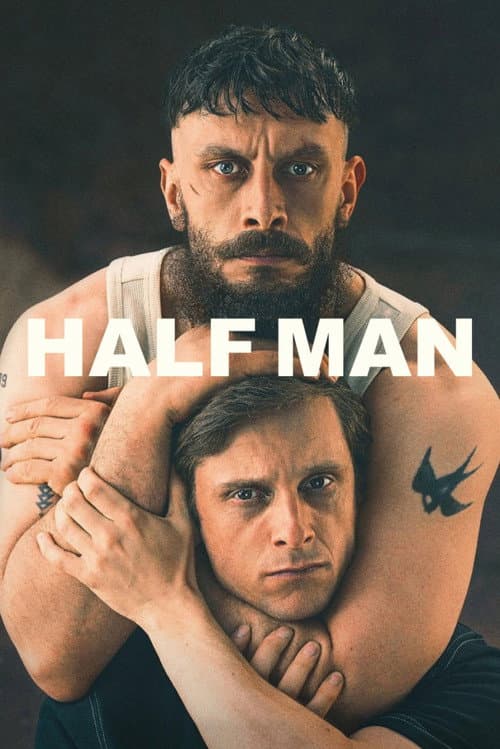
Half Man is an upcoming television series releasing on April 23, 2026. The show follows Niall, whose estranged brother Ruben arrives at his wedding, triggering a violent confrontation that unspools the history of their relationship.
Trailer
Gallery (14)
Episodes
✓ Previously aired
About this release
A six-episode British drama called Half Man is set to arrive on April 28, 2026, streaming on HBO Max and the HBO Max Amazon Channel. The series is a co-production between Mam Tor Productions, Thistledown Pictures, and the BBC, and it originates in the United Kingdom. Its premise is structured around a single, volatile incident — the arrival of a man named Ruben at the wedding of his estranged "brother" Niall — which detonates into violence and sends the narrative spiraling backward through the two men's shared history.
That reverse-chronology framework, or something close to it, has become a recognizable mode in prestige British television over the past decade or so. Series built around a catalytic event that anchors the present while episodes excavate the past have a sturdy tradition on both sides of the Atlantic, from fractured family dramas to psychological crime pieces. What distinguishes Half Man on paper, at least, is where it plants its inciting moment: not a death, not a disappearance, but a wedding — a ceremony built on the premise of witnessed commitment — interrupted by a figure whose relationship to the groom is already complicated enough to require quotation marks around the word "brother." The scare quotes in the source description are doing real work. Whether Niall and Ruben are half-siblings, foster brothers, childhood friends who adopted the language of family, or something else entirely is not specified in any available material, and that ambiguity is presumably the series' first organizing mystery.
The drama and mystery genre tags in the metadata are not mutually exclusive here — they rarely are in contemporary British television, which has grown adept at threading psychological character study through structures borrowed from crime and thriller narratives. The limited series format, six episodes on a single season, suits that kind of tightly controlled unspooling. There is no sprawl on offer, no ongoing procedural machinery. The shape of the thing appears to be a closed question: what happened between these two men, and what does the violence at the wedding reveal or settle?
The production background is relatively sparse in publicly available form. Mam Tor Productions and Thistledown Pictures are both British companies, and their collaboration with the BBC places Half Man squarely within the tradition of BBC drama co-productions that have found second lives on American streaming platforms. The HBO Max placement suggests a transatlantic distribution deal of the kind that has become increasingly standard for British prestige drama — the BBC produces, a U.S. streamer acquires rights, and the series reaches audiences on both sides of the Atlantic more or less simultaneously or in close succession. What is not yet clear from the available information is who wrote the series, who directed it, or who plays Niall and Ruben. For a drama so thoroughly organized around two central performances — the weight of a broken brotherhood, the physicality of violence at what should be a celebratory occasion — the casting is not a trivial unknown. The dynamic between the two leads will determine whether the backward journey through their lives feels like genuine excavation or mere mechanism.
The violence itself merits attention as a structural element. The description frames it not as an endpoint but as a launchpad: the explosion "catapults us back," which implies that the series is less interested in the consequences of the incident in real time than in what the incident reveals about accumulated history. This is a meaningful choice in terms of how the audience will be positioned. Rather than watching the fallout unfold forward — legal consequences, family rupture, social aftermath — the viewer is apparently sent in the opposite direction, toward origin. That structure places enormous pressure on the writing to make each backward step feel necessary rather than arbitrary, and to sustain the tension of a known outcome while making the journey toward it feel unresolved.
The wedding setting layers in its own complications. A wedding is already a ceremony of defined roles and public declarations, a moment when family configurations are made visible and legible. Introducing an estranged figure into that setting — someone whose relationship to the groom is ambiguous enough to require the word "estranged" and the qualifier around "brother" — generates a particular kind of social and emotional pressure before anything violent has occurred. The drama presumably understands this. The question is how much of the series' interest lies in the mechanics of the mystery (what exactly happened between them, what the violence consists of, how it resolves or fails to resolve) versus the emotional texture of two lives that were once intertwined and are no longer.
At six episodes, Half Man is compact enough to attract viewers who have found longer British drama series difficult to commit to, while still offering more room than a feature film to develop the dual portrait its premise requires. Audiences drawn to character-driven British drama with structural ambition — the kind of television that uses genre conventions as scaffolding for something more interested in psychology and relationship than in plot resolution alone — are the obvious constituency. The BBC pedigree and HBO Max placement will give it visibility in markets where that combination has built reliable goodwill. Whether the execution matches the architectural neatness of the premise is, of course, the question that April 28 will begin to answer.
Comments
Sign in to join the conversation.
Loading…