
Details
- Language
- Chinese
- Country
- CN
- Seasons
- 1 · 1 eps
- Theme
- supernaturalsurvival
Popularity · Search interest now
Low
0.6
Based on TMDb activity
Starring





Where to watch
Not currently available for streaming or purchase.
Links may earn Incoming a commission at no extra cost to you.
Incoming Editorial TeamVerified
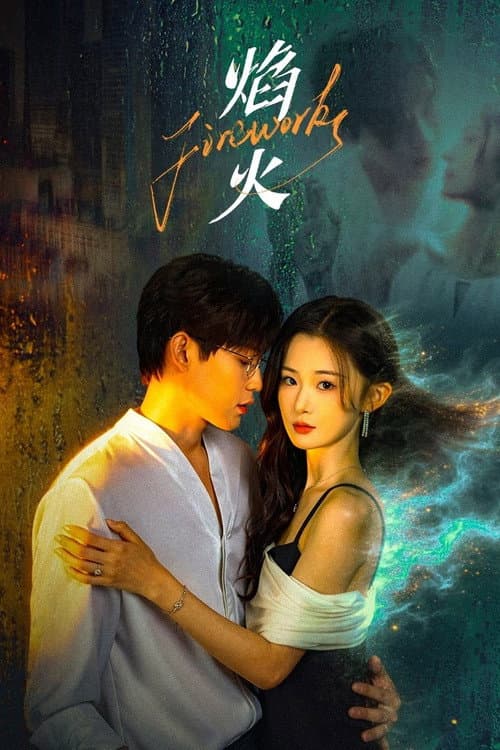
Fireworks (焰火) is a Chinese-language television series set to premiere on April 26, 2026. The show centers on Qiao Nian, the daughter of a wealthy family, whose spirit possesses a man named Jiang Zechen after she falls from a building.
Gallery (2)
Key features
- ·Chinese-language television series
- ·Supernatural mystery premise
- ·Soul-possession narrative
- ·Seven-day countdown storyline
- ·Based on original title 焰火
FAQ
When does Fireworks premiere?
Fireworks (焰火) is scheduled to premiere on April 26, 2026.
What is Fireworks about?
The series follows a wealthy family's daughter whose spirit, after she falls from a building, possesses a man named Jiang Zechen. He has seven days to recover her missing body before her soul is lost forever.
What language is Fireworks in?
Fireworks (焰火) is a Chinese-language production.
About this release
A Chinese drama titled Fireworks (焰火) is scheduled to release on April 26, 2026. The single-season series arrives with a premise that sits squarely at the intersection of supernatural thriller and domestic melodrama — a combination that has sustained a long and commercially reliable tradition in Chinese television.
The setup is established clearly in the show's premise: Qiao Nian, described as the obedient daughter of a wealthy family, falls from a building. Whether that fall is accidental, intentional, or the result of foul play is not answered in anything the production has released so far. What follows is a body-possession narrative — Qiao Nian's spirit enters Jiang Zechen — and a seven-day countdown during which Jiang Zechen, guided by Qiao Nian's ghost, must locate her missing physical body before her soul is permanently lost. The urgency is structural: a hard deadline built into the premise itself, the kind of ticking-clock mechanism that has driven everything from stage melodrama to prestige streaming series.
Body-swap and spirit-possession storylines occupy a specific and well-worn lane in East Asian popular fiction. In Chinese drama in particular, the device has appeared repeatedly across both modern and period settings, often as a vehicle for exploring questions of identity, class, and female autonomy that might otherwise be handled more obliquely. Fireworks appears to be working in a contemporary register rather than a historical one, and the class dimension is already flagged by Qiao Nian's characterization as the daughter of a wealthy family — a detail that typically, in this genre tradition, carries implications about social pressure, family expectation, and the costs of compliance. The word "obedient" in the premise description is doing quiet but considerable work.
What the available information does not clarify is the nature of Jiang Zechen — whether this character is male or female, a stranger to Qiao Nian or someone already connected to her, and whether the possession is mutual or one-directional. That ambiguity is not trivial. The dynamic between the inhabiting spirit and the person whose body is being used is, in most genre examples, the central dramatic engine. If Jiang Zechen is a man, the series enters more charged territory around gender and bodily autonomy. If Jiang Zechen is a woman, the story's emotional texture shifts considerably. The marketing, such as it is, has not resolved this.
The title itself — Fireworks, rendered in Chinese as 焰火 — carries connotations of brightness, spectacle, and brevity. Fireworks are by definition temporary, which maps reasonably onto the seven-day soul countdown at the heart of the plot. Whether the title operates as pure metaphor or carries a more literal significance within the story is unclear from what has been released.
No director, writer, or cast members are identified in the available information. That absence makes it difficult to situate the series within any particular creative lineage or production context. Chinese drama in recent years has developed a recognizable ecosystem of platforms, production companies, and showrunners whose involvement tends to signal certain production values and tonal registers — the distinction between, say, a series produced for iQIYI versus one developed for Youku or Mango TV carries real meaning for informed viewers. Without knowing who made Fireworks or where it will air, that kind of placement is not yet possible.
The episode count metadata lists a single episode, though this may reflect incomplete data at the time of cataloguing rather than a definitive format. Chinese dramas in this genre typically run in the range of twenty-four to forty episodes, occasionally shorter for more prestige-oriented productions. A genuine single-episode format would be unusual and would push the series toward something closer to a television film — a format that exists in Chinese television but is less common for supernatural drama of this type. Viewers checking platform listings closer to the premiere date will presumably have a clearer picture of what they are committing to.
What the premise does establish with some precision is genre tone: the combination of drama and science-fiction/fantasy classifications suggests the supernatural elements are foregrounded rather than incidental. This is not a drama that happens to feature a ghost; the ghost and the possession are the mechanism through which every other story element — the wealthy family, the missing body, the seven-day limit — is activated. The fantasy scaffolding is load-bearing.
The audience most likely to seek out Fireworks on or after its April 26, 2026 release will be viewers already oriented toward Chinese drama who follow the body-possession and supernatural romance subgenres, as well as those drawn to countdown-structure narratives where the dramatic stakes are clearly defined from the first episode. The title's Chinese-language origin and Mandarin dialogue will be the natural entry point for that audience, though the genre's international circulation through streaming platforms has consistently produced viewership well beyond mainland China.
Comments
Sign in to join the conversation.
Loading…